
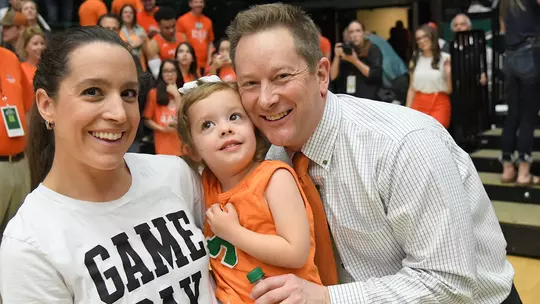
Missing the Feel of Family During Basketball Season
From pregame winks to postgame hugs, Rams find ways to make up for missing moments
Mike Brohard
Rita Thorson couldn’t make it for the first half of the season opener.
She was doing mom things, errands which had to be run, so she sat in her car and listened to Brian Roth and Adam Nigon on the radio call. As she was driving home, the wife of Colorado State assistant basketball coach Dave Thorson could hear her phone.
Ding. Ding. Ding.
When she parked her car in the garage, she looked down at her phone – 46 missed messages.
“That was the first half,” she said. “They’re all on there, and part of that was because we had been talking about having a virtual Christmas party, where we just drop a present at the door. And the guys are going to be here, not go home for Christmas, and I can’t believe they can’t be around family and we can’t have them over.
“So we’re all going to get something together for Christmas. We have a thread that’s going every day. I have to delete it every couple of days because there’s so much stuff and it’s using up so much space on my phone. It’s really active right now.”

I feel bad for the players. I can feel sorry for myself all I want, but the ones who are suffering are the players. They work so hard. They deserve to have fans.Mallory Farokhmanesh
Welcome to the wives’ text thread for the CSU men’s basketball team -- Thorson, Erica Medved, Mallory Farokhmanesh and Ashley Blount -- all coach’s wives -- and including Radhika Frazier (wife of team trainer DeVante Frazier) and Natalie Phillips (wife of strength and conditioning coach Jason Phillips).
The number of texts would have been normal for a road game. But this was the season opener at home, and none of them were in the stands at Moby Arena. The early rub was they were having trouble getting the stream to work, making the reality they couldn’t have these conversations in person, make plans and divvy up tasks during timeouts, all more frustrating. That, and making sure the kids weren’t getting too rambunctious in the stands.
This is a close group of wives. Consider this is the fourth year CSU head men’s basketball coach Niko Medved has kept his staff of Thorson, Ali Farokhmanesh and JR Blount together -- an occurrence which should be counted in dog years in the college basketball universe – spanning two schools. Add in Aaron Katsuma, the director of operations, too.
All of their wives are friends. They are confidants. They are family. And they miss each other, the aura of a game day and the little family moments which COVID has taken away. None of them consider this to be travesty in the big picture. Especially Mallory, who is a nurse and knows what’s happening in the world better than most. It doesn’t mean they don’t feel a void in a very important part of their lives.
“You miss it greatly. I think fundamentally it’s very important to both Niko and me that everyone within the program feels supported, and COVID had made that much more difficult, as we’re missing a lot of that human connection,” Erica said. “We’ll text photos, and we have a number of jokes going back and forth. We have text chains during the game. That face-to-face is so important. Our kids play together. Because you do have those strong relationships you’ve built over the years, you know each other well enough you can rely on text chains to check in and support one another.
“I think everyone feels everyone is just a phone call away, but you do miss the human element. Especially with the kids. They change so quickly in a short period of time, but we do the best we can, just like everyone else is doing.”
Team Together was the program’s mantra last year, as Niko entered his second year guiding the Rams. The message was targeted toward bonding, to building something bigger than themselves, and it translated on the court into a 20-win season.
If you thought it stopped in the team huddle you’d be absolutely wrong. No one is more vested in the success of the program than the families of the coaches, and they are all a huge part of what takes place.
“I can’t speak for other programs, but I think when we’re recruiting guys and having conversations with their family, we look at these guys as, yeah, they’re grown men, but they’re my kids,” Ashley said. “We view them as family; if they’re hurting, we’re hurting. The three weeks they had off, we knew they were struggling, our partners were struggling, so we’re struggling. It’s so tied into everybody, at least here for the Rams. We really have a big family.
“It’s hard not to be able be there with them and supporting them and cheering.”
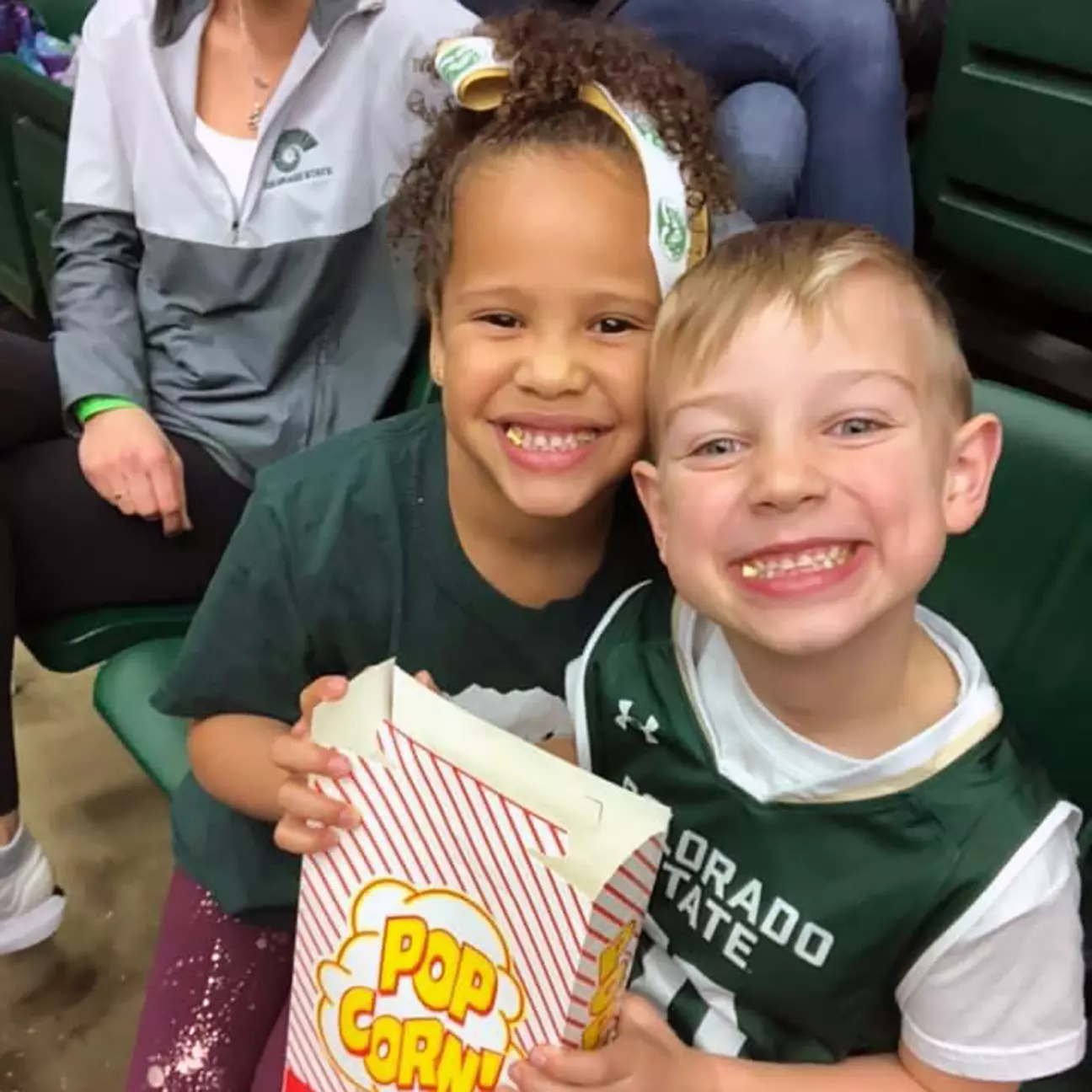
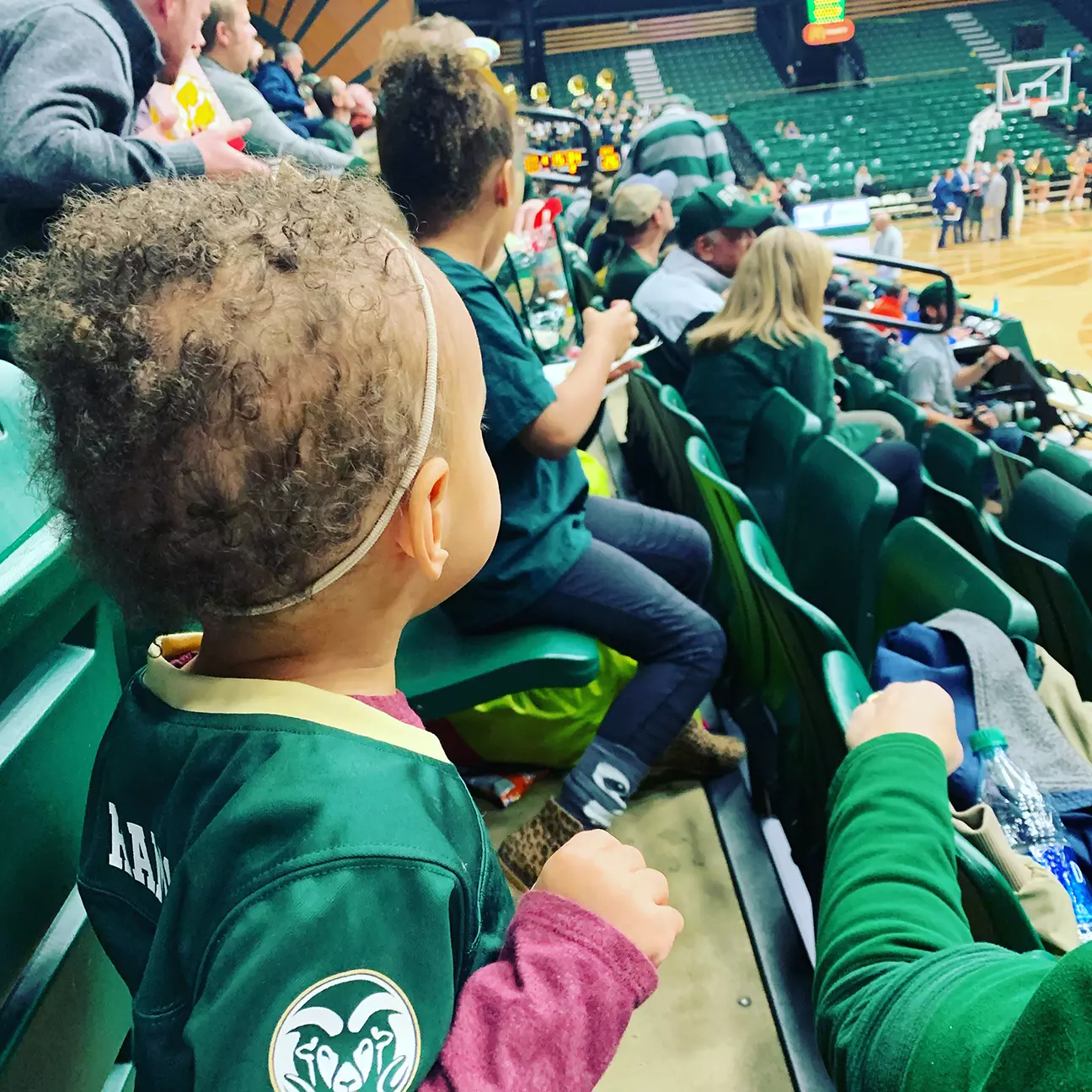
The support is still there, it’s just coming in different forms. It’s a phone call, or an email. Definitely a text message or 10 throughout the day.
They share pictures of the children, or of what is happening in the living room on game day. That’s the day which feels the most surreal. But most importantly, they are all doing their part.
For their husbands and their children. Most of all, the players. They have to be protected at all costs.
Watching them have the chance to play is the most important aspect of all. Whatever they can do to help that process, they do. That means staying away, no matter how much it hurts. It’s taking all the precautions in public when they venture out to work or shop.
None of them wants to be the person who gives COVID-19 to their husband, who then takes it to the team.
Missing games is painful. That scenario would be a nightmare.
“We’re being extra careful, because we want our guys to play,” Rita said. “That’s the other thing. I want to be in Moby Arena, and when I can’t get the stream, it’s tempting for me to go over and try to break in just to watch the game, but we also know we just want them to play. Especially having the first six games canceled, it’s been enlightening. It’s a reminder we’re fortunate they can play. We can be patient. We miss out on that time, and its’ harder to explain that to younger kids, but it’s also something we’re enduring because we know it’s important.
“If they can just play, then I’m happy with that, too.”
That’s easier to accept for the adults. Explaining it to their children and have it all make sense, that’s the hard part.
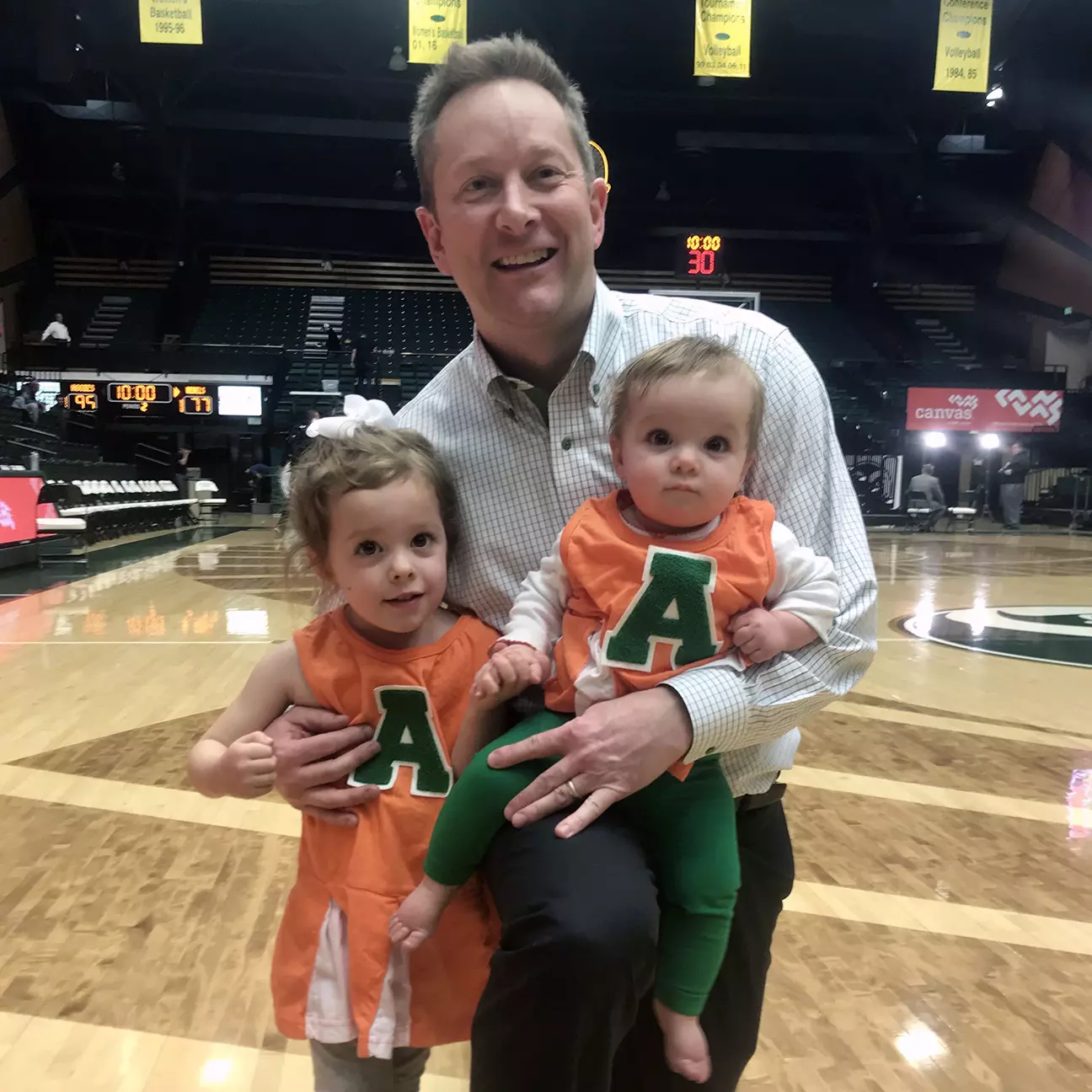
The Medveds have two daughters, Aly (3) and Taylor (1); as do the Blounts; Maya (5) and Zuri (2); Ella Thorson is 12; and there is the Farokhmanesh trio of Tai (6), Mila (2) and Liam (1).
One day, Aly was on the couch with her dad watching a game and noticed there were some fans in the stands. Her natural question was why? Why couldn’t she go to her daddy’s games?
The younger they are, the parents have found it’s harder to explain. How does Erica or Niko explain to Aly that some schools, some parts of the country, have different precautions? That some areas of the country are experiencing spikes, while others are leveling out?
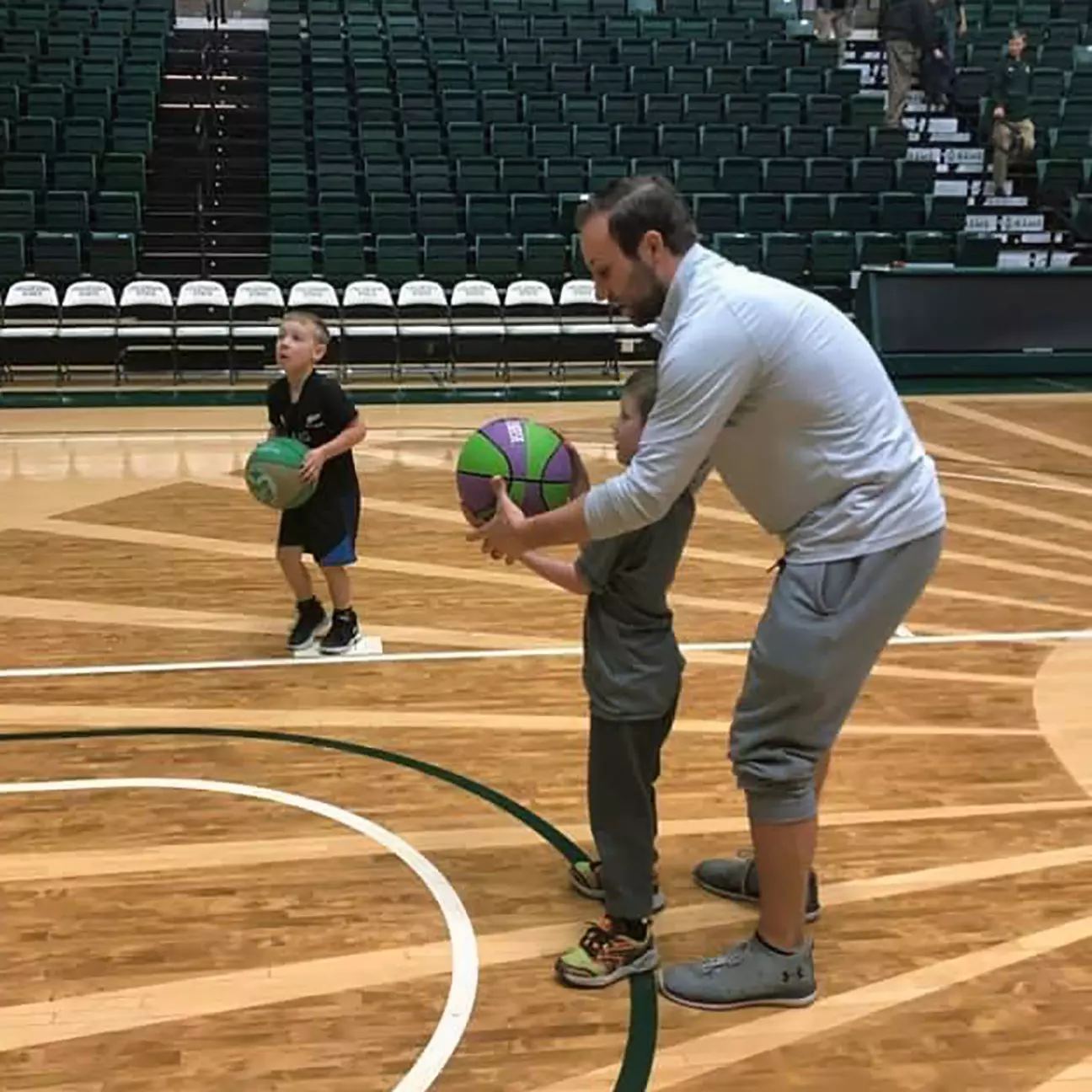
For someone like Ella, understanding doesn’t have to equal happy. If she had her way, she’d spend all summer at the gym rebounding for Adam Thistlewood as he takes extra shots. She just wants to be around the players and around her dad.
She’s the caretaker of the group, and she loves hanging out with the younger kids; she even brings a bag of toys for them to play with on game day. And already, Mallory is counting the moments missed.
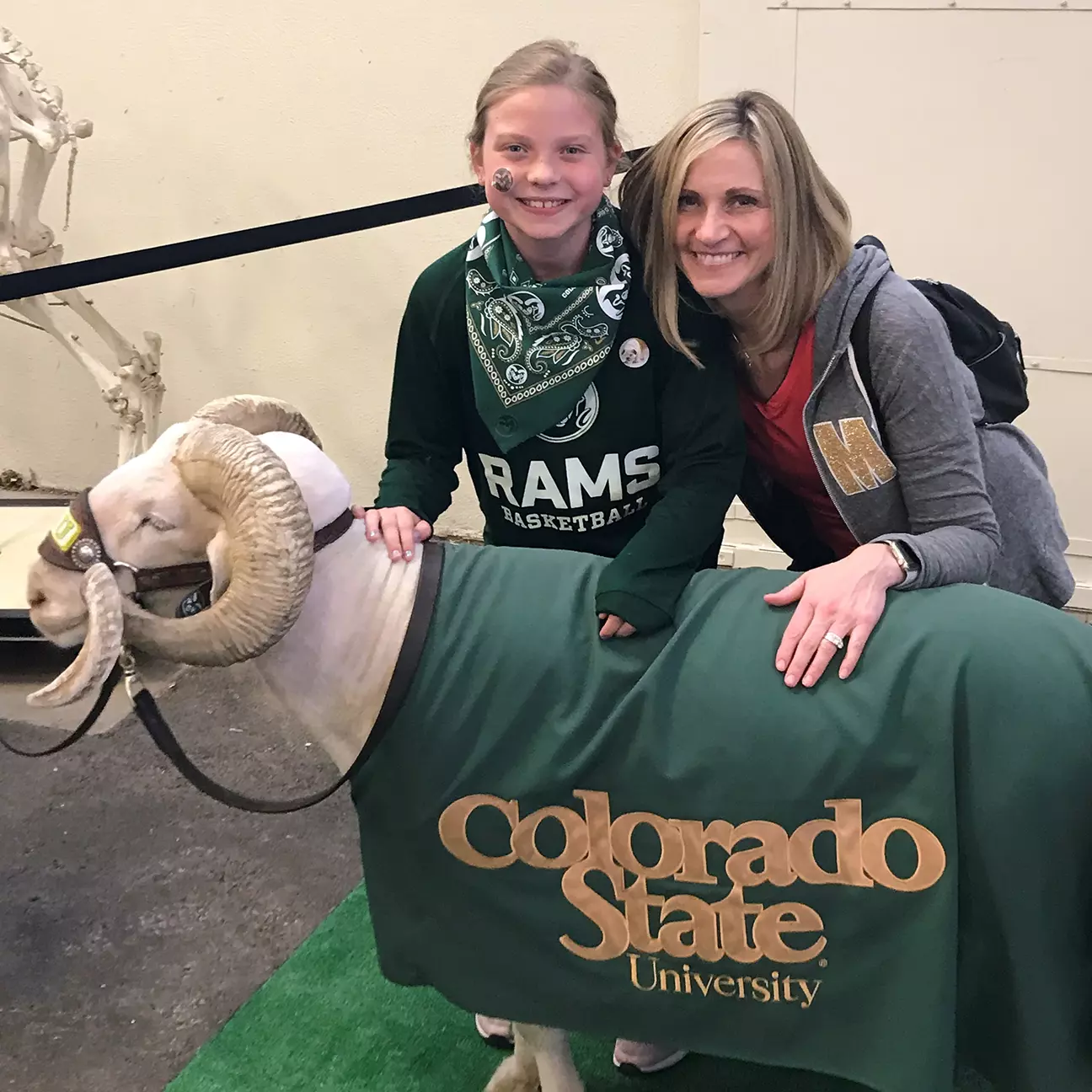
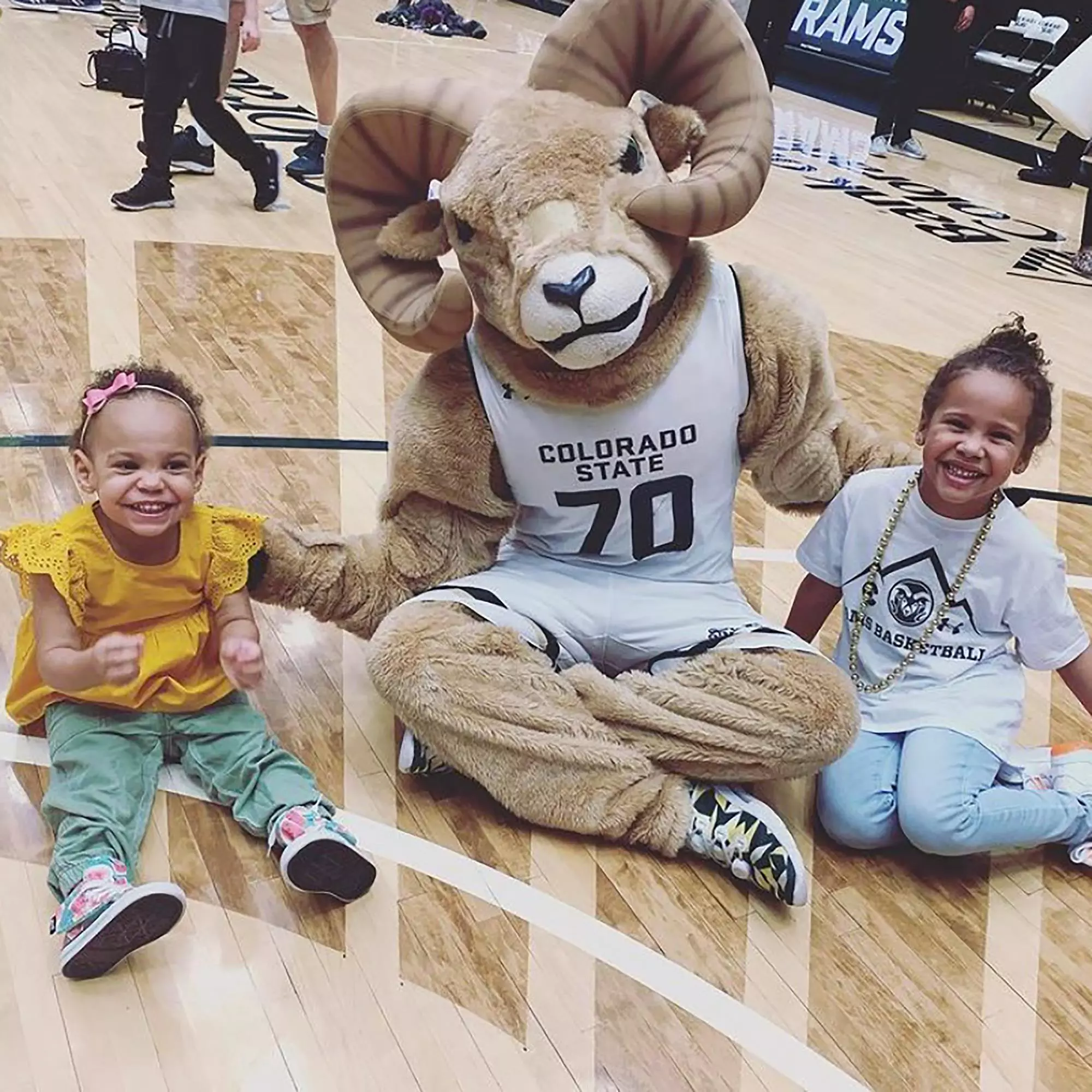
“I was just looking at pictures the other day at a Drake game, and they were so young. They grew up going to games together,” she said. “They always tried to get pictures with the mascot. Every year, we have all these pictures, all these memories. Not this year.
“So many times this summer and during season so far, my oldest could have gone to practice and watched and hung out. He’s missing out on all of that. We used to bring Ali lunch every now and then, and not even being able to go into his office, there’s so many aspects of our life that have been impacted because of this.”
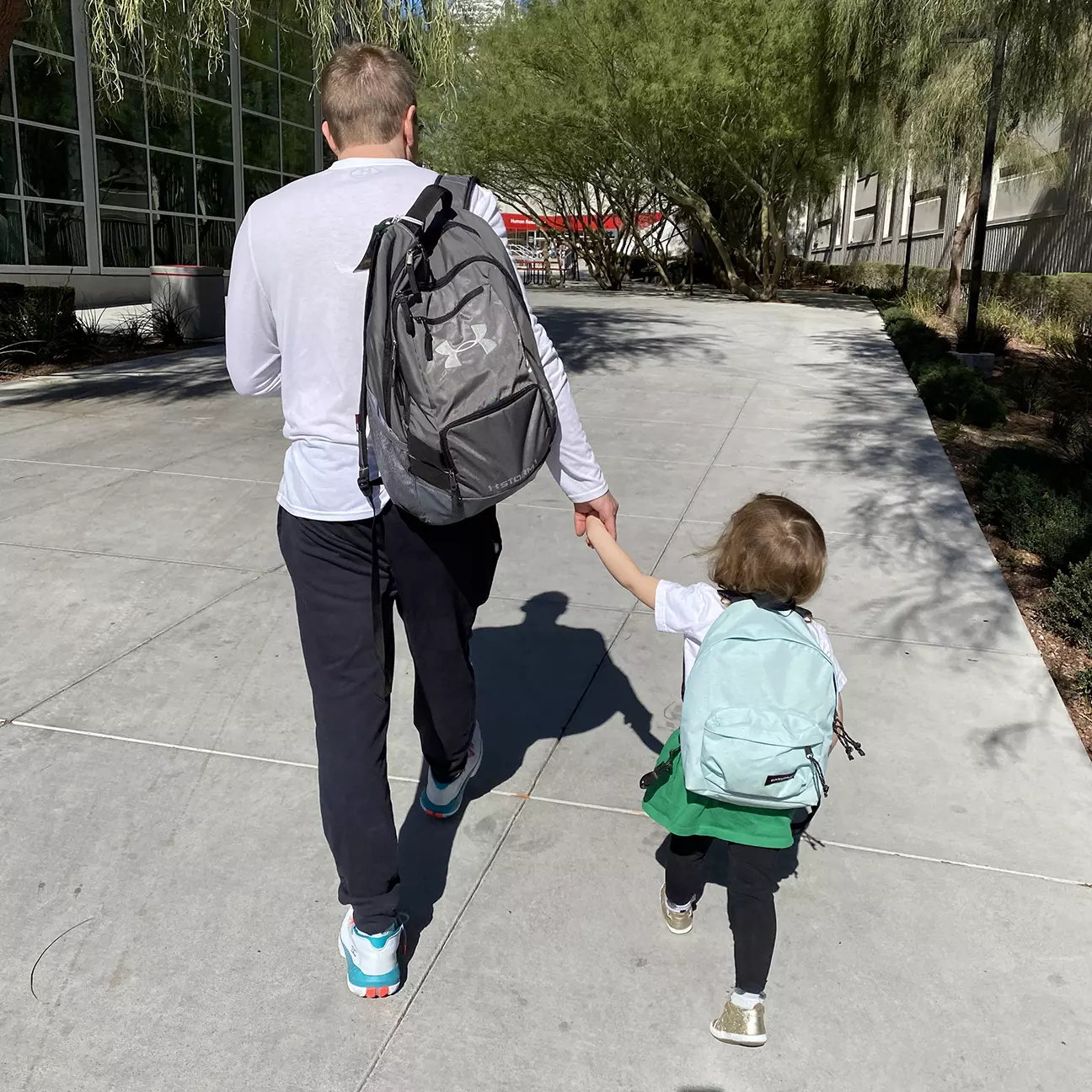


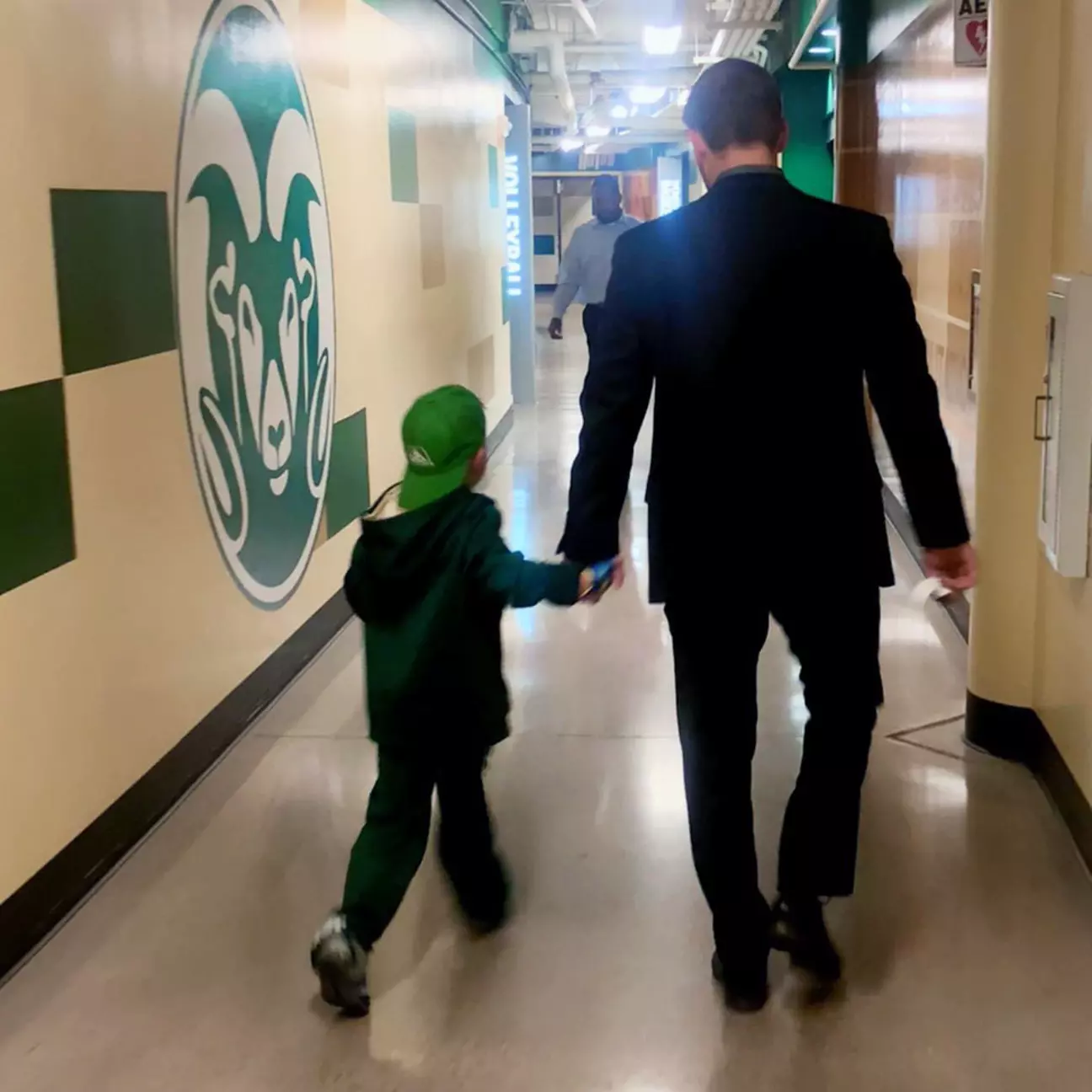
I think everyone feels everyone is just a phone call away, but you do miss the human element. Especially with the kids. They change so quickly in a short period of time, but we do the best we can, just like everyone else is doing.Erica Medved
During the season, family time is precious in the middle of hundreds of hours of coaching or watching game film. A visit from the family at lunch time was precious. So was a stop by the office to bring dad lunch. Or to have them give their infant child a bottle.
Walking out on the court for the first time was an awakening for the coaches. The stands were pushed back, creating extra room on the court for the benches. The chairs are spread out so there is 6 feet of room between the players and coaches.
Where their families used to sit is now just an open void. There is no walking out and looking up for that supportive look from the people who love you most. The coaches miss that, too.
“Oh man, that’s awesome, and it just brightens your day like you wouldn’t believe, to have the moment with your wife and kids and have them show up at a practice, to walk out on the floor for a game and look up into the stands and have Erica and the kids smile and wave at you and say, ‘Go Rams!,” Niko said. “It puts everything into perspective. One of my favorite times is after the game on the court, win or lose, your daughters run up and give you a hug. Sometimes your wife does, too.
“That stuff is awesome. You don’t always get to see them. This is not like a job, it’s a lifestyle, and your family becomes such an integral part of your lifestyle. When you feel like during so much of this now that it’s not just taken away from us as coaches but taken away from them – I know how much they look forward to being a part of the games and being there.”
So as parents, they find ways to make up for those lost, special visits. Maybe the kids get to stay up past bed time to watch a game or comb through game film with dad. When they have meals together, they are really tied in to the family conversation, not distracted by the next opponent. Erica drove the kids to the McGraw Center parking lot so they could wave at dad, who was standing out on the balcony. It was fun, because it was something new. It was a way to see daddy.
They can even help dad prepare for a road trip.
“They helped Niko pack. Well, Aly was helping pack and Taylor was taking everything out, and it was a hot mess,” Erica said. “You just do what you can. We’ve always done a good job when you have that time; it really matters. You’re going to drop what you’re going and make it matter.”
The children are missing their friendships, too. With each other and with the players, who serve as big brothers to the older kids, even role models. They are there for family dinners, even birthday parties.
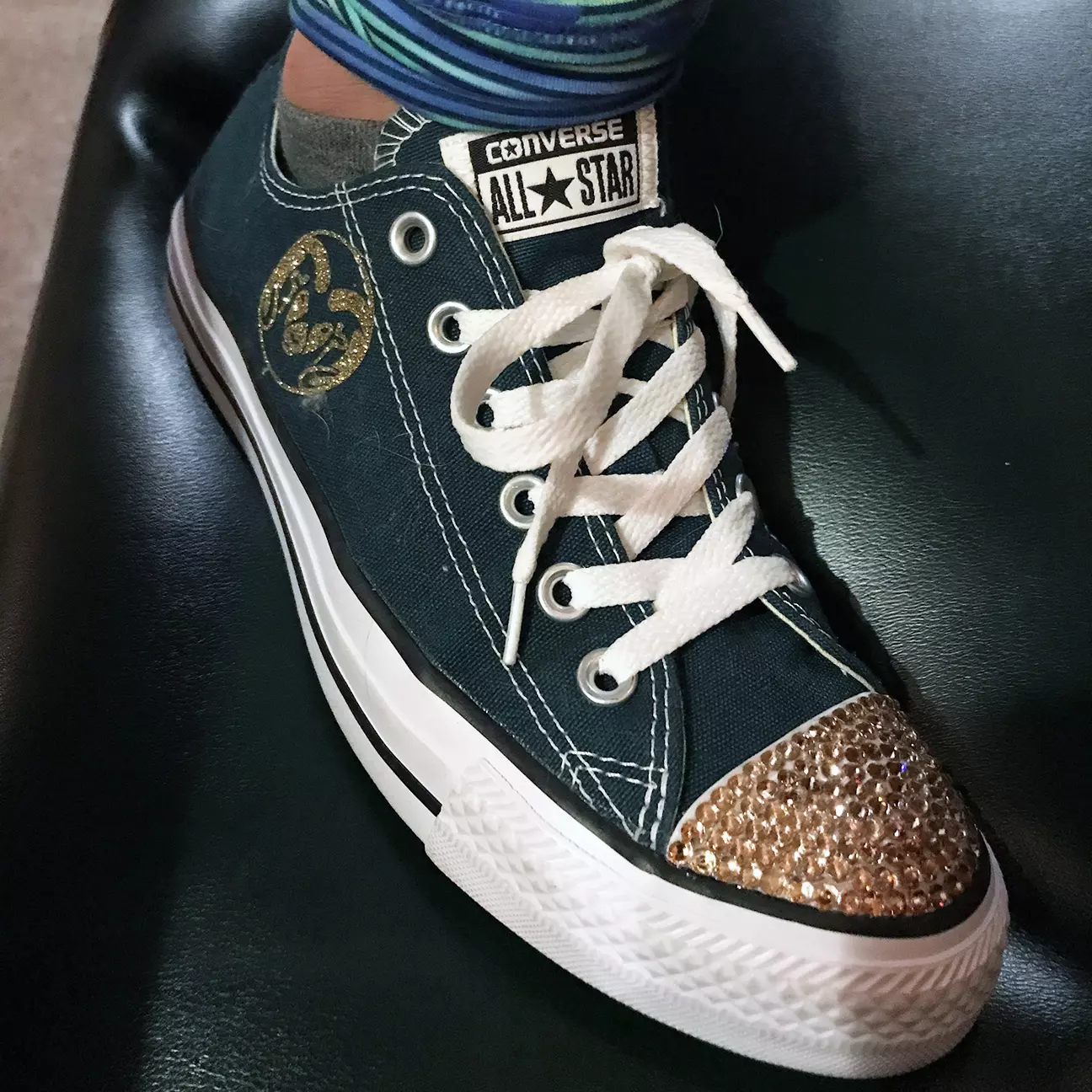
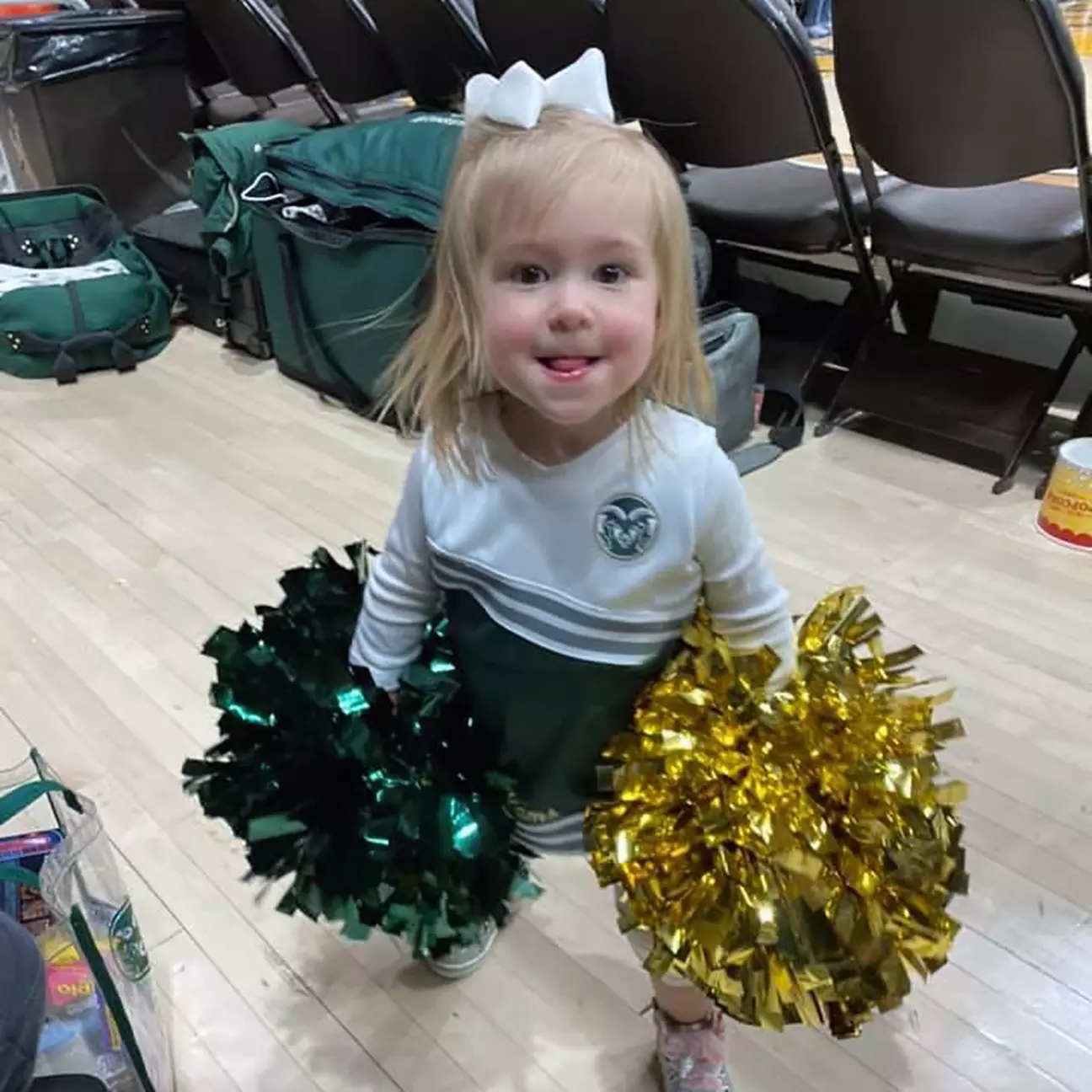
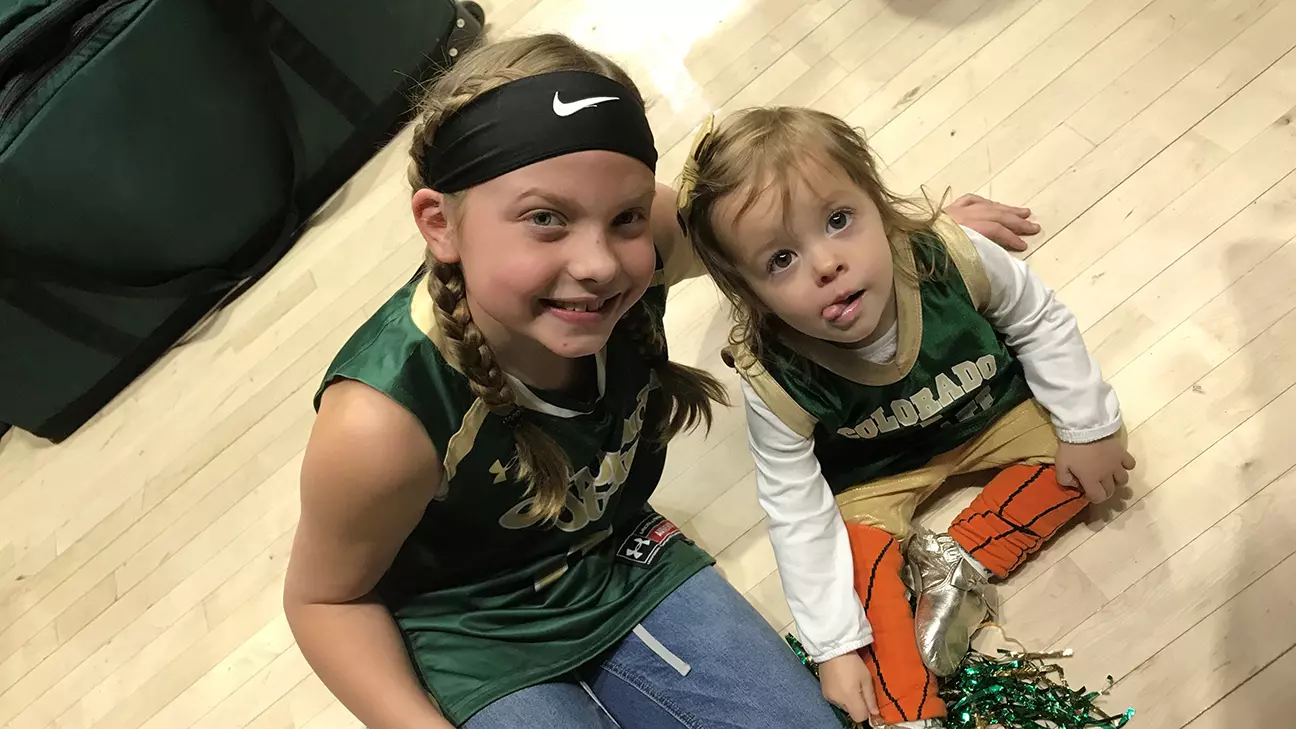
Mostly each other. They have grown up together, with basketball a common bond. They play together in the Bob Davis Hall before games. When moms high-five at games, so do the kids. They dress up in cheerleading outfits or bedazzled Ram shoes.
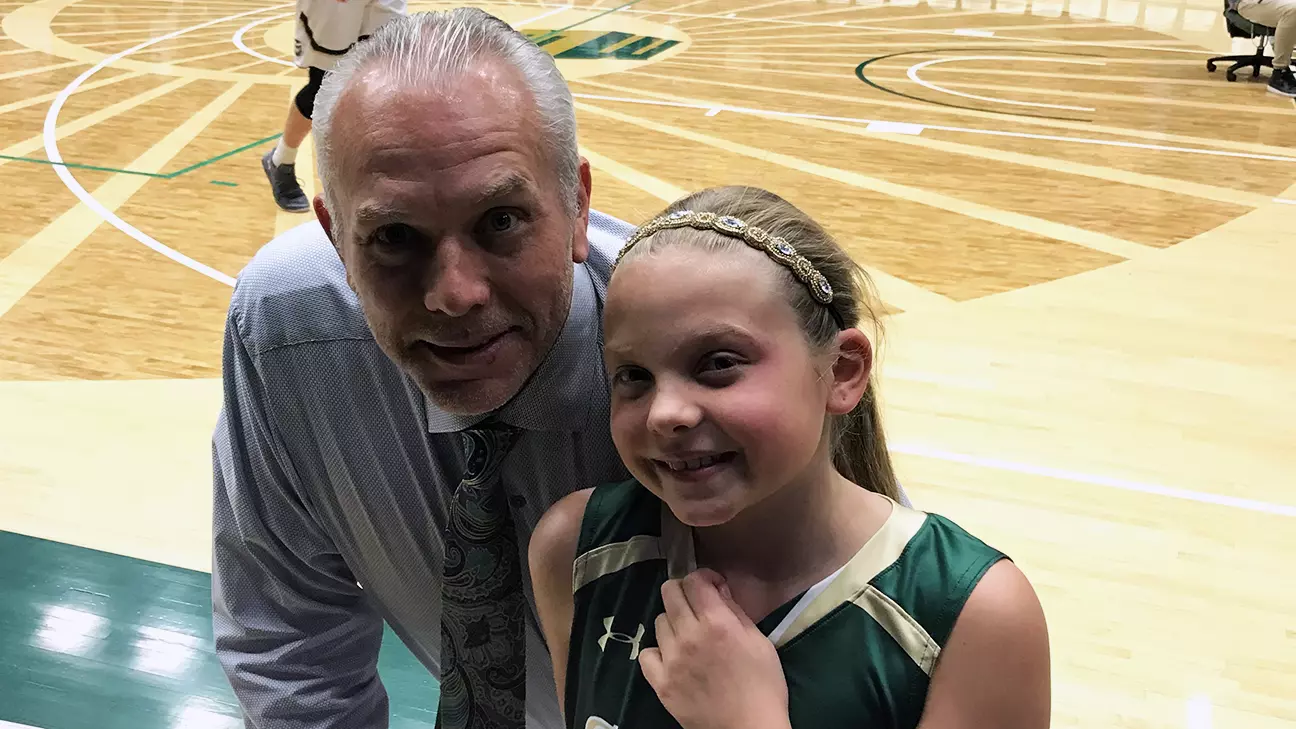
Afterward, they await their heroes as a unit. And they stay on the court until they’ve seen them all.
“Tai and Maya have basically grown up together, so they’re best friends,” Ashley said. “For the younger ones, it’s not as difficult. Maya, Tai and Ella, even Aly, it is difficult. After the games, being able to go on the floor and wait for the guys to come out, and they pick them up, little things they really miss. Getting high-fives before the game, or getting a wink or a kiss from dad before the game, we’re missing out on a lot of those relational things.”
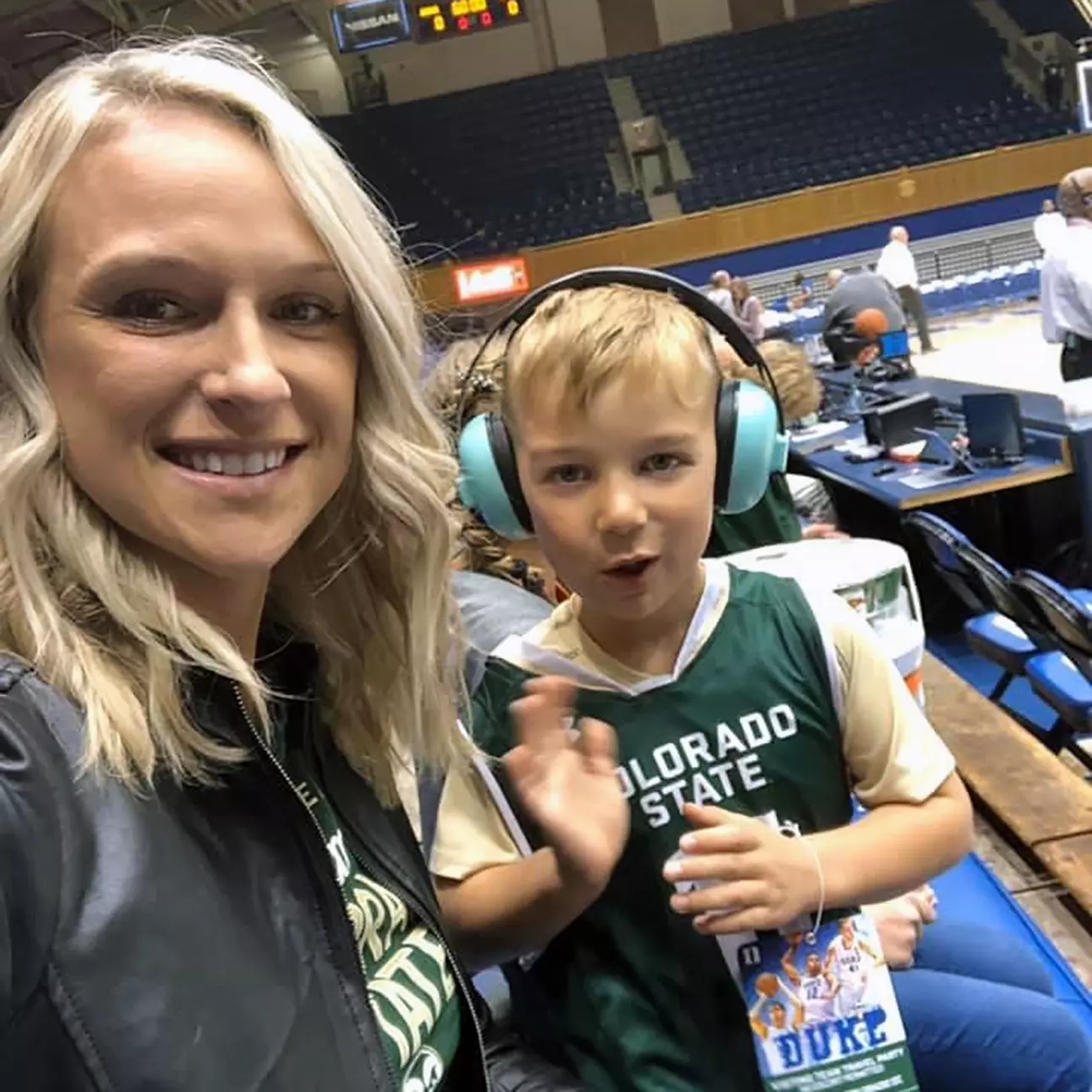
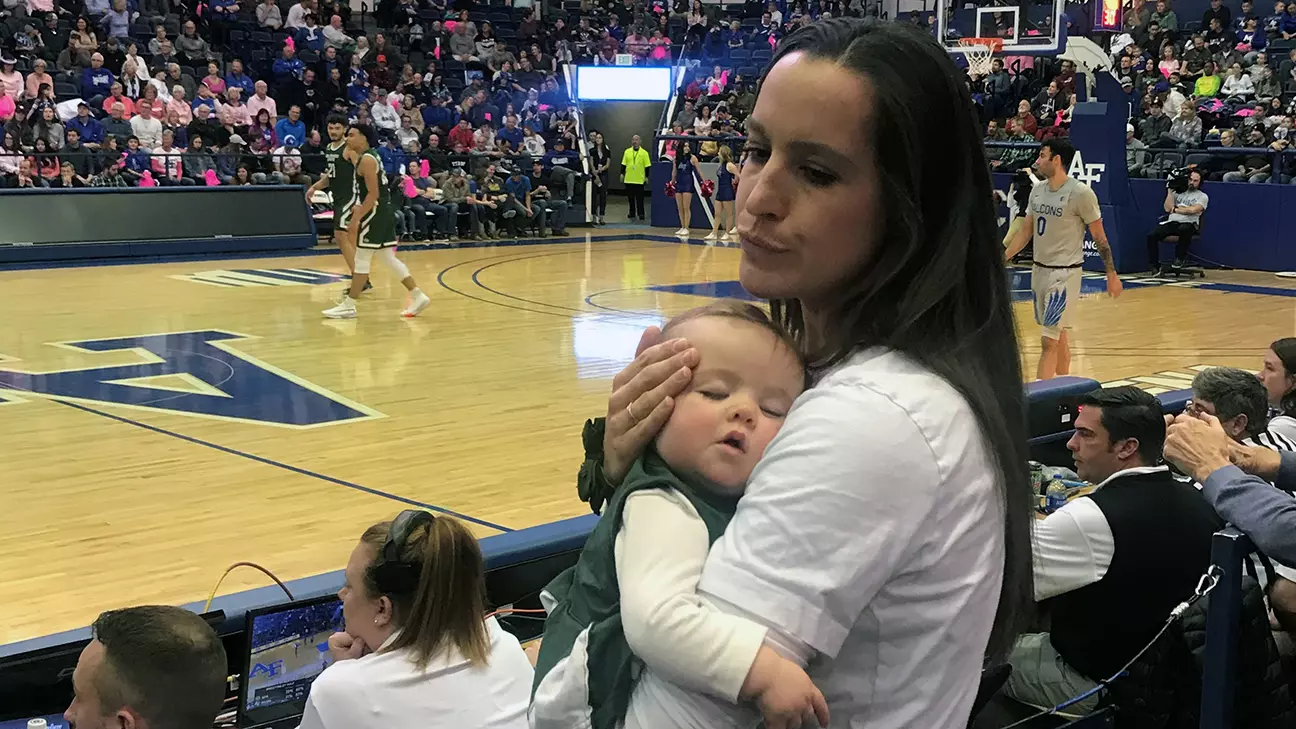
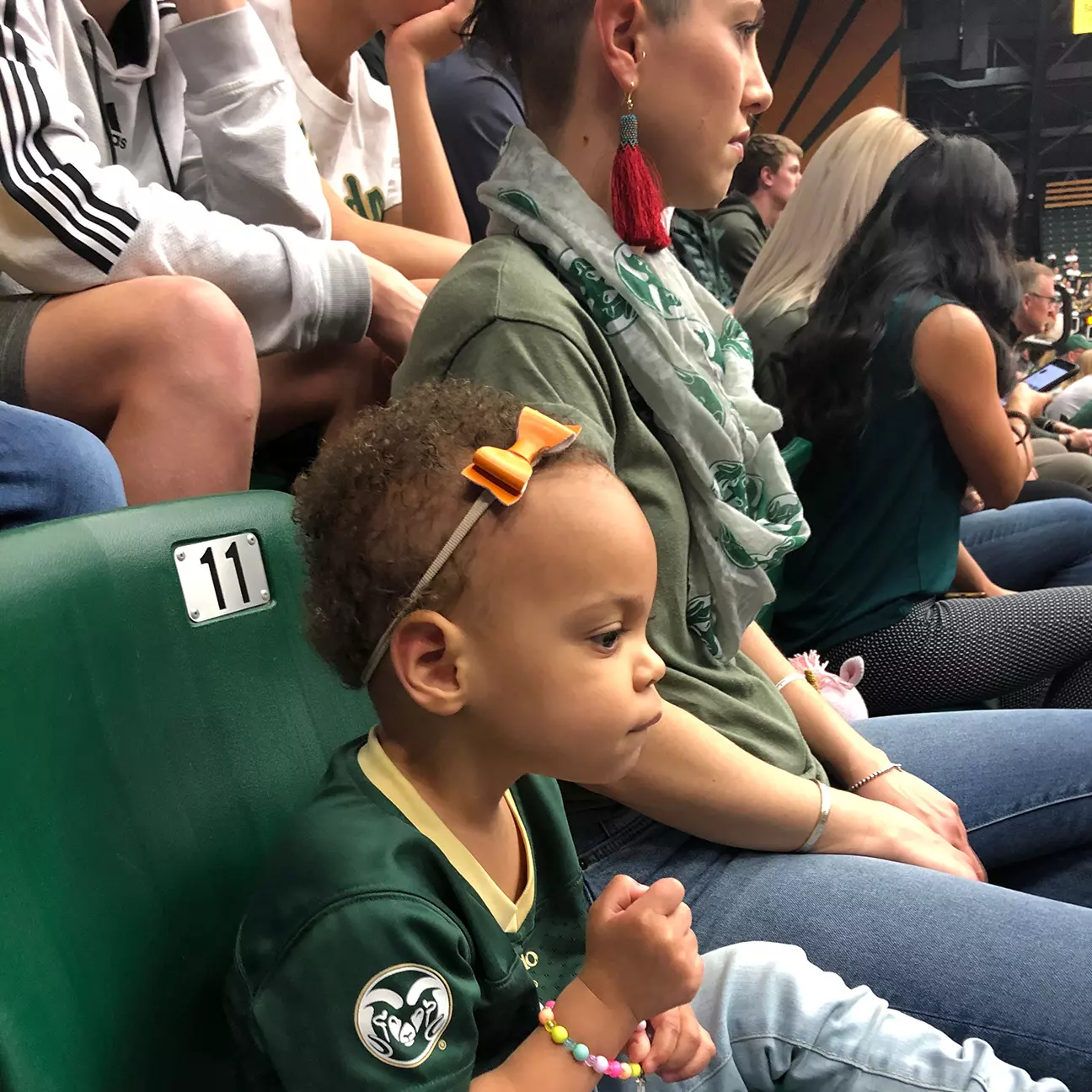
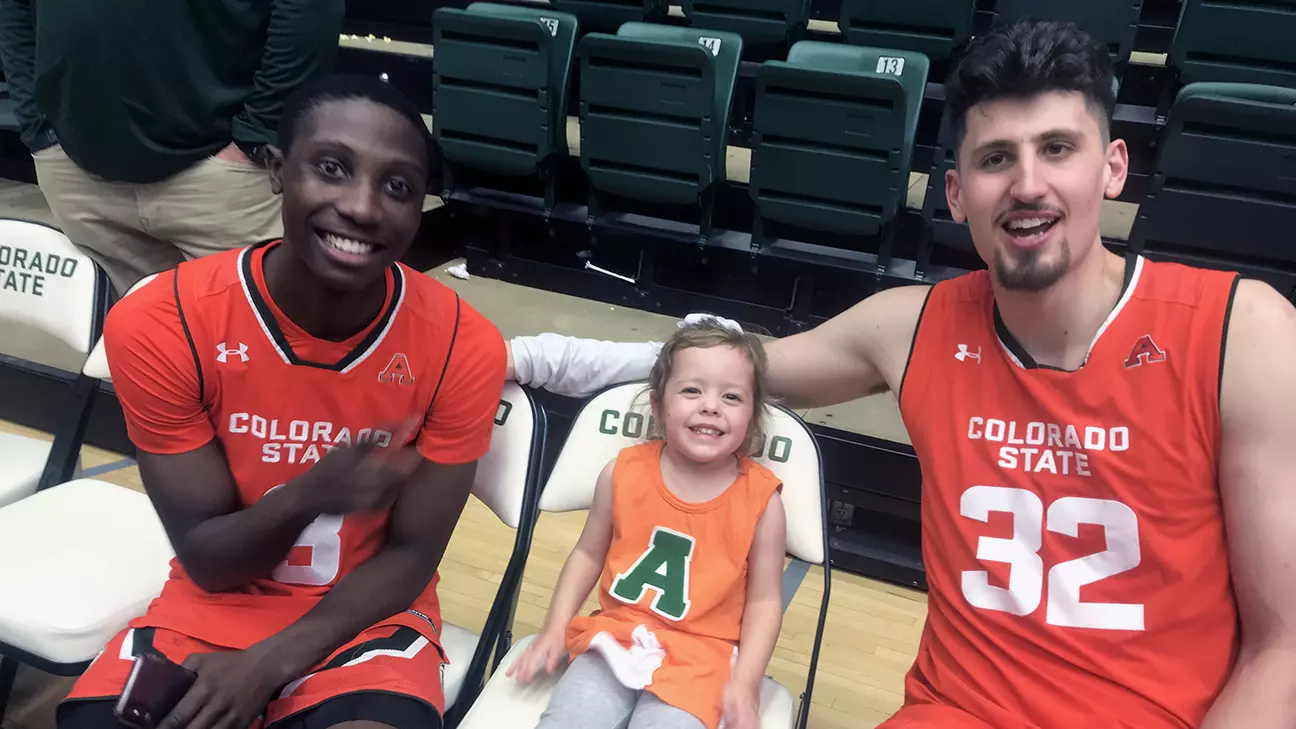
For all the concern the wives have over what the pandemic has altered for their families, particularly their children, they always come back to one central theme – the really big kids.
What they miss is what the players are missing out on, as well.
“It’s our players, too. The people they love, and not being able to go home or not being able to look up in the stands and give their mom and dad, brother or sister or a grandparent a hug after the game,” Niko Medved said. “That’s different. We all know for all of us in order to be where we are and do what we do, you have to have that support system around you, and it’s definitely a void in that way.”
Each time they consider an aspect of family life they have had stripped away, they think about what the players are missing. Every time they think of what they can do to make up for it in their homes, they lament they cannot do the same for the players.
To a person, that’s really the worst part for them, even though they know it is absolutely necessary.
“Man, it just stinks. It’s hard, because for my kids, especially on game day, seeing their dad coaching, sometimes that’s the longest they’ll be in the same room with their dad for that day,” Mallory said. “My children suffer, because they go so long without seeing Ali. The other aspect, the players, we have them over for dinners, we have them come over for lunches, they go to my son’s games. To not be able to reciprocate that -- hey, we’re here for you, we’re here to cheer for you -- that’s really hard, and they deserve that. Being in college is hard, being away from family and friends, so we are kind of are that for them. It stinks all around.
“I feel bad for the players. I can feel sorry for myself all I want, but the ones who are suffering are the players. They work so hard. They deserve to have fans.”
The sooner the better. With games being played, there is gratitude. With a vaccine rolling out, there is hope.
Somewhere in the future – soon, they hope – they can all come together again. They’d do it in masks, to be sure, but eventually, they can’t wait to see each other in a group. The kids playing together, the adults conversing. Players back in their homes for a pick-me-up meal, or just to get a feel of family which has been missed for far too long.
It’s coming, and they are all sure of one thing: That Mallory, the social chair of the group, already has a host of ideas. Plural, not as in to choose either/or, but to do one after the other. Rita figures it may be a weeklong event with no pauses.
“I already have a bunch of things planned, Emma and I do,” Mallory admitted. “Yes, it is in the works. I cannot wait.”
There’s so much lost time to make up. But for now, at least the guys are playing. That’s a start. They can cheer as loud as they want in their homes, and they’ll work the officials from afar in a way that would make their husbands proud.
But the stream better be up, and the internet connection has to be strong. Take that away too, and all bets are off.