
Cross Country Could See a Boon From Extended Training
Coach Art Siemers finds silver lining through coronavirus
Mike Brohard
From the start, the roads were open.
When coronavirus started leading to school and business closures and stay-at-home orders started to be enacted, Art Siemers could lace up his running shoes, head out the door and get in a good run.
It was a way to release the stress, as it always had been. And the longer people were shut inside, the more invigorating those runs became.
Being able to do so, Colorado State’s cross country coach gained some empathy for some of his cohorts, fellow coaches he knew didn’t have it so easy. There are swimmers who still have not been in a pool since March, many court athletes remain locked out of gyms.
“That’s almost like a tragedy. For almost all the student-athletes, their sport is part of their life, it’s their passion, it’s what they live for,” Siemers said. “When you can’t do that, it helps you reflect to see how much you have a passion for the sport. The students who are happy not to be able to train, those are the ones who aren’t going to have the careers that the ones who do whatever they can to find some way to train, even if it’s not directly related to their sport. They are going to come out huge.”
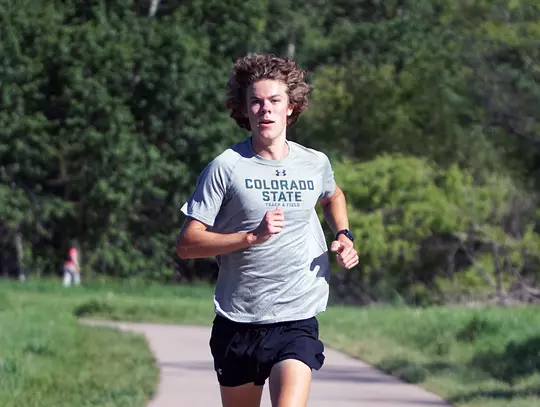
In a way, the sport of cross country may see a surge nationally due to the break. The distance runners missed an outdoor track season of competition, but in turn, it became a training ground for them to explore. For months, they’ve been stockpiling miles the way shoppers did toilet paper in the early portion of the pandemic.
“Oh yeah, definitely. My highest in the last training block was 90 miles,” said sophomore Brock Dykema. “I had done 85 consistently, then bumped it up to 90 a couple of times. In high school, 55 in a week was my highest.
“I think especially in the longer workouts, in those races, it’s going to pay off. I think it’s helpful. I obviously miss racing a lot, just because the races build their own fitness within themselves and help you build mental toughness, and finding out what kind of racing works best for you, especially in college with the new distances. But, the higher-mileage training will definitely help in the future.”
Siemers set out to find the silver lining. Knowing the outdoor season was not happening, he turned the time into a training block, devising voluntary plans his team could follow in the break from action. The aim was no longer to get ready for the Mountain West Outdoor Championships, but the fall cross country season.
Building strength was a starting point, but speed work was not forgotten, either. Siemers took into account not all of them would have a track to use, so he became a bit creative with what all of them would have at their disposal.
“We did a lot more on the strength side, hill workouts and Fartleks, and I tried to use some speed,” he said. “Even if they didn’t have a track, we did some speed play where you run hard for a certain amount of time then time to recover and then go fast again. Everything was based on effort as opposed to time, and mentally that can be a nice break, since we are in season virtually nine months a year with small breaks in between.”
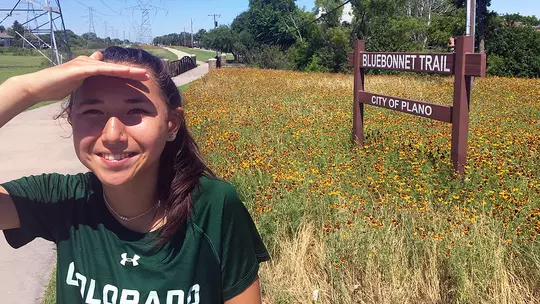
Down in Plano, Texas, Ashlyn Hillyard has seen it all pay off. Recently, the training set them up for a mile time trial, and she shaved two seconds to reset her personal best. On the trails, she has bumped her mileage up to 60 miles per week, a 20-mile improvement from her peak training in the summer of 2019.
Summer has always been the time for distance runners to build, but it’s generally a timeframe of two months. This will be nearly six by the time the scheduled season is set to start. The benefits, while immediate, are also seen as long term by Hillyard.
“It’s definitely disappointing we didn’t have an outdoor track season, but having this time to really build a base is really important for cross country,” she said. “Just having this time to be able to run more mileage and really have that foundation before we start cross country season and start putting in more speed, I think that’s really beneficial. During this time, I know I’ve really focused on strength training, and if we had that outdoor track season, that’s hard when you have competitions every weekend. Through the strength training, I think it’s going to help me prevent injuries and hopefully make me a stronger runner in cross country.”
While the Rams may not be training in a pack at the time, they can track each other through technology. The Strava app charts everything, from run distances to pace and time, and it can be shared with the rest of the group. Dykema said the men are using it, and it helps push him when he sees what his teammates are doing.
Hillyard doesn’t have the app, but she’s charting everything and sharing it with her teammates, and she and her female classmates have turned the training into a competition. For now, that’s all they can do. While they did miss not competing in the outdoor season, what they do see coming is exciting.
“I think this cross country season is going to be pretty insane, because everybody is going to be so fit,” Dykema said.
I think this cross country season is going to be pretty insane, because everybody is going to be so fit.Brock Dykema, Cross Country Runner
Which is what Siemers believes will happen. While other sports will be shaking off rust, the most dedicated cross country runners are expecting to see an explosion in performance when the extended training takes a turn toward competition.
He knows his team will be stronger; he can see that already. He’s also pretty sure the Rams’ most intense Mountain West competitors will be stronger than ever, too. And nationally, some amazing performances could be on the horizon.
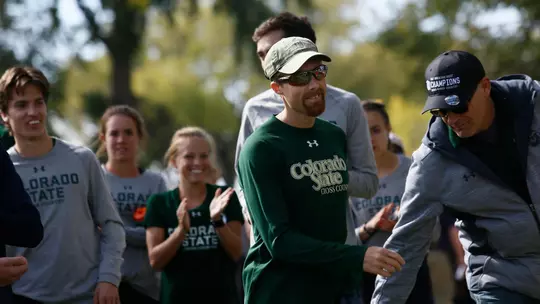
“What I told the team -- and I truly believe this -- this is an advantage for the teams that are really dedicated,” Siemers said. “Not every athlete has the motivation to go out there and train on their own, and there’s probably some on our team. For the ones who are self-motivated, who are ultra-passionate about the sport, yes, they can get a huge leg up. We have a pretty young team, so this could be a big advantage for our team.
“In Colorado, New Mexico, Utah and Wyoming, states that have some good programs and COVID-19 didn’t seem to hit our areas quite as hard as on the coasts, we definitely can come out of this stronger than ever. And we do have such a strong conference. The Mountain West is just phenomenal, one of the top in the country in our sport. I have a feeling most of the teams are not just sitting on the couch eating potato chips.”
Even right now, most of them can’t put their work to a full test. Some of the local road races they may have taken part in to gauge themselves are either cancelled, or at least on hold. The time to race will eventually come, and when it does, the majority of the Colorado State contingent is ready to let it fly.
There are still aspects of returning as a group to sort out for Siemers, and even the sport as a whole. He said college coaches and the NCAA have looked at possible changes to races to make it safer during the pandemic, but Siemers is hopeful the sport’s committee will allow for the traditions to hold firm.
Missing competition is a given, because during training, it provides a focus. For now, Hillyard said they have to do with the target being set further out.
“I miss it a lot. Just having my teammates there and having a sense of direction in my training, because I know I would be training for a competition,” she said. “I know that we still have a goal to make it to nationals in cross country this season, so I just have that in my mind in place of a race. I still have something I’m striving for.”
The good news for all of them is the open road has never been closed. They are grateful for that, as they have friends in other sports not so fortunate. They can set out at any time to train, but also to get their minds away from what is happening in the world.
They have time to think, and also to decompress. Their secret is spreading, as most of them are seeing more people either running, or at least walking, anything to get out of the house. What they know is good for their health, as well as their performance, has equally been good for the soul.
“What I would say, the silver lining is our sport, the beauty of it is, you can do it virtually anywhere and it’s outside,” Siemers said. “It’s easy to social distance, and I believe it’s a huge stress reliever. I know myself, personally, if I wasn’t able to run every day over the last two months, I’d probably go a little crazy. I know for the mass majority of our cross country runners and our distance runners on the track team, the fact they’ve been able to keep some type of normalcy and still keep doing a training program through the school years, even if it’s been remotely, has helped them get through a challenging time.”
In the end, the sport itself may rise to a new level.