
Student-Athletes Starting to be Phased in on Campus
Adjustments made to counter risks of coronavirus
Mike Brohard
FORT COLLINS, Colo. -- Everybody was excited to get back.
The players, they wanted to work out. The strength and conditioning staff for Colorado State football, as well as their sports medicine counterparts, were anxious to interact and guide their student-athletes once again.
Returning was important to them all, maybe even more mentally than physically. Yet, getting back wasn’t enough, and all of them understand the importance of the first step.
“It’s our duty to help each other out. Not just think of ourselves, but help each other out, because that’s our duty as we’re doing this transition,” CSU football head strength and conditioning coach Scott McLafferty said. “We owe it to the university, we owe it to everyone. We’re the first ones back on campus. It’s our job to get this right and do the best we can at it and be a professional.”
The plan to reintroduce student-athletes to campus started to formulate soon after all student were ushered back home in March. As more became known about the coronavirus pandemic, alterations were constant, with multiple Colorado State groups involved.
For Terry DeZeeuw, the senior associate athletic director for sports performance, the teamwork has been remarkable, starting with the university’s pandemic response team. Blending in local, state and federal health and safety guidelines into the specifics of the campus took shape through the course of weekly meetings, as well as sidebar discussions as new information was circulated.
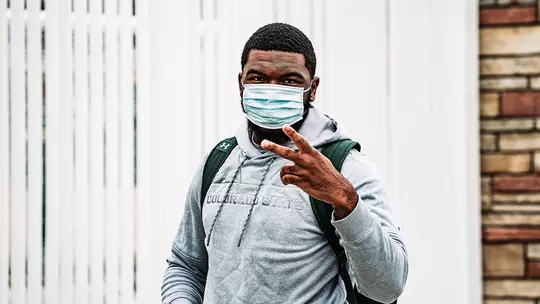
It led to the arrival of a football players on Monday, all of whom were tested for the virus, and each day as they return, they are screened. As of now, only a select few people have been granted access to Canvas Stadium, keeping down traffic as much as possible.
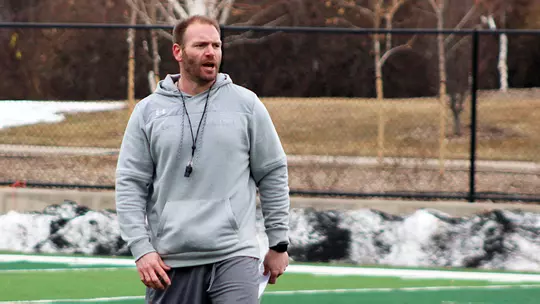
We owe it to the university, we owe it to everyone. We’re the first ones back on campus. It’s our job to get this right and do the best we can at it and be a professional.Scott McLafferty, Football Head Strength and Conditioning Coach
So far, moving football players in and out of the stadium – none of whom are allowed in the actual building – has progressed smoothly.
“It has gone well. Like any process, you’re going to learn a few things along the way, timing and what things go quicker than you expected, what things take a little longer,” DeZeeuw said. “Our student-athletes, they’re smart. They pick up on things quickly, they know the expectations. We spent a lot of time educating what the process was going to look like and what the expectation was going to be. I think that made the implementation of the process a lot easier. The temperature checks are done daily upon entry to the workout, the screening questionnaire, which is going to be consistent with all employees as we return back to campus, that’s been a pretty streamlined process, so it’s gone really well.”
Colorado State athletic director Joe Parker noted the phasing in process for student-athletes was set up with the direct intent not to overload any part of the university staff, including the sports performance, facilities and custodial departments, all of whom are heavily involved in keeping the workspaces safe and healthy. In addition, the university took into consideration outside health-care partners UCHealth and Orthopaedic & Spine Center of the Rockies.
The football team, with the largest roster, leads the way, giving the university a template for future sports. Plans are in place for the teams which occupy Moby, to work their way back to campus, though Parker said no specific dates have been established.
“Everything was considered. The one thing we wanted to be really cognizant and careful with was not to overwhelm any of our resources, so custodial services, our own sports medicine staff, our outside health care partners,” Parker said. “We want to be able to manage things appropriately, so that’s why we’ve really elected to do this phased approach.
“Every time we bring a group back on campus, we can incorporate learning that occurred before. The first step has been football, but we’re already working with the pandemic team that is helping people plan their return to campus for our other fall sports programs.”
All activities have been moved outdoors. No meeting rooms are being used, nor is the locker room. Athletic training is taking place outside, except for pre-scheduled appointments or if an immediate circumstance arises.
When Canvas Stadium was being built, Parker said one of his favorite features was the concourse, allowing for full view of the field as fans walked around. He probably never envisioned it as the perfect landing place for strength training during a global pandemic.
Now, essentially, it is the football weight room.
“The transition has been pretty good. We spent a couple of days trying to make a mock weight room up,” McLafferty said. “We got to thinking about it, and we were going to train on the practice facility, and both of them are open, but we were sitting there going, we have this beautiful concourse, it’s still outside, you still have direct sunlight and you can keep your stuff a little cooler because the sun isn’t beaming on it. You don’t have to worry about tents and all that other stuff, and it’s not going to get rained on.
“We walked the concourse and we were, this is beautiful. It’s sectioned off perfectly where we keep our social distancing, we can keep our groupings as they progress and they’re moving to a different station, so there is never an overlap. There is nothing you’re ever going to be concerned about where there’s other interactions. The flow of it was better.”
All they had to do was move equipment up there. Not all of it, of course, but essentials. They put down drop-zone flooring, and now they’re getting creative about what else they might add, keeping in mind they don’t want to go too far.
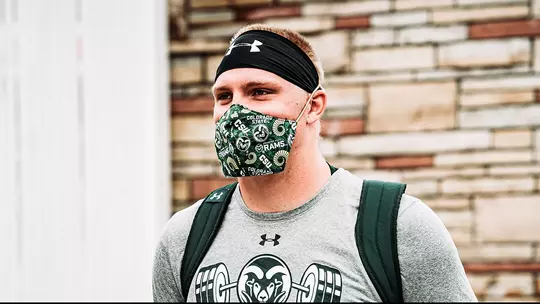
The players and staff all wear masks while they lift, but during running on the field, medical experts have told them with 10-15 yards of distance between personnel, they were not required based off of medical guidelines.
This first week, McLafferty has spent most of his time allowing his staff to direct lifts while he makes sure everybody is following medical protocol in terms of spacing and sanitizing equipment. When it comes to establishing workout groups, he added they’ve tried to keep players who are living together in the same group, cutting down on the possibility of spreading the virus.
“I feel good about our process. I feel good about all of the things we put in place,” DeZeeuw said. “I feel really good about our plan to maintain daily monitoring, and I think it’s going to be really important we continue to stay diligent and not get comfortable. I think that’s probably the biggest things all of our student-athletes and staff stay aware of the responsibility we have to continue to manage the details the right way.”
As all of them are aware, this has been an ongoing concern, and the guidelines are constantly changing. The test kits they are using for athletes are costing the department $85 each, and Parker is not sure what the final price tag will be for all of the student-athletes, factoring in surveillance tests down the road. He added as research is ongoing – some at CSU’s Tier 1 research program -- prices will adjust, and have already dropped on some testing. In the end, he said the university is looking at a six-figure expenditure.
The goal of the athletic department is to stay in front of the issue, understanding the need to adjust on the fly as new information comes to light. What this means in regards to the season starting on time or fans being in the stands when the first game is played remains unknown. All they can focus on now is bringing student-athletes back and doing it in the safest manner possible.
All of them have had to adjust, especially the athletes. DeZeeuw knows the athletic culture is to power through when one isn’t feeling at their best, but he’s seeing that change, too.
“The athletes have been great,” DeZeeuw said. "They’re buying in and they’re excited to be back. They have a lot of questions, like all of us. When questions come up, were trying to figure out how we can better support them and adjust on the fly as we go.”
They all agree doing it right is the primary target, because taking steps back will be counterproductive in the end.