

Hassan Turned Excuses Into Opportunity
Bedard shares moral of thrower's story to his track and field program
By nature, Brian Bedard isn’t into excuses.
The championship-winning coach of Colorado State track and field doesn’t make them and he doesn’t want to hear them.
“I don’t respond to that very well. I love when an athlete takes ownership with what’s going on, be it their training, performance or whatever,” said Bedard, whose CSU teams have won 15 conference championships. “I need to do this better. They may even say, ‘coach can you look at how maybe we can work better together?’, but they first off own where they’re at and accept and own the situation they are in. I love that.”
Which is one of the reasons he always loved working with Mostafa Hassan. He won two national championships while at Colorado State and never whined a bit. Not when it was cold, not when he was injured, not when he wasn’t seeing the results he hoped.
Bedard loved him even more after watching Hassan tackle the perfect opportunity to change his stripes. Trying to make the Olympics in a COVID world where basically everything was shut down in his home country of Egypt. There was nowhere to train. No coaches to work with, no real support anywhere. The only vaccine available to him was one with questionable testing out of Russia, so he ended up contracting the virus while training.
The complaints were written for him. Never used them.
Instead, he found solutions, eventually becoming the first athlete from Egypt to qualify for an Olympic final, which he did in the shot put.
“The main thing I learned is to never give up no matter how things seem hard and against you,” Hassan said. “I learned that when I hurt my groin badly four weeks before the Olympics. From not being able to walk the first week of hurting myself to reaching the Olympic final three weeks later taught me a lot.”
Throughout the process, Bedard would share tidbits of Hassan’s journey with his athletes, especially the throwers who hear their coach’s voice in their sleep. It’s not about what you don’t have, but what you can make of what you do. How an athlete can find a way to piece things together and find a way to reach goals, not reasons why they can’t.
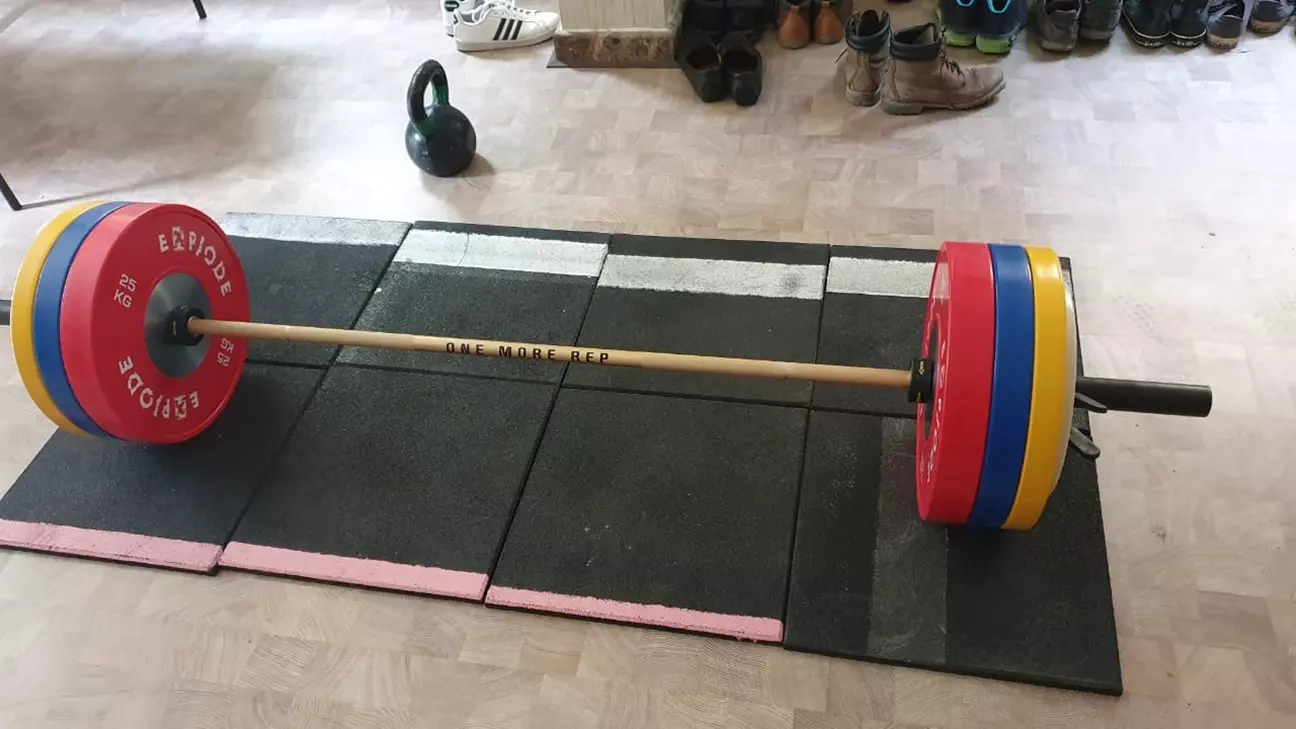
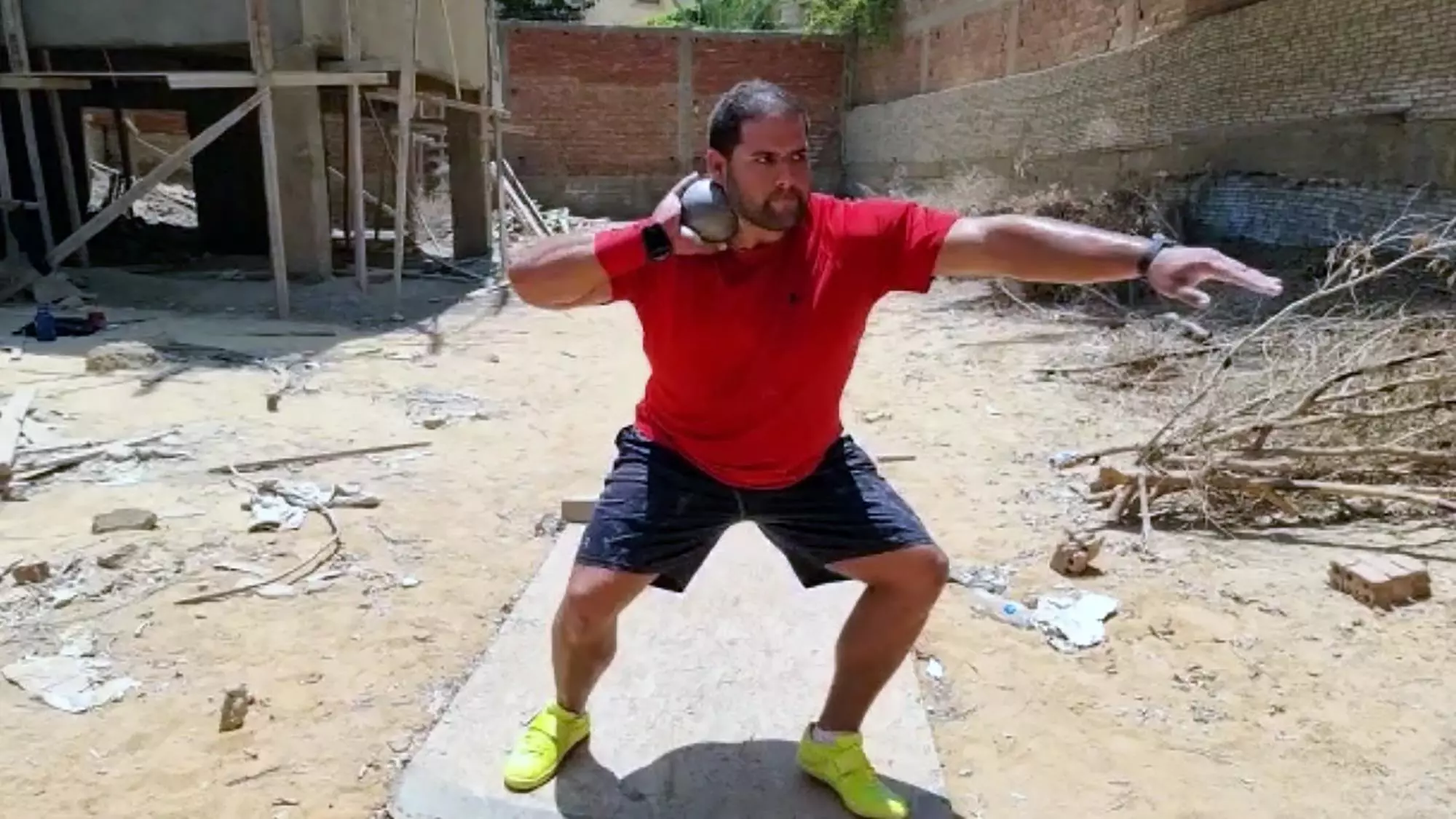
At first, Hassan couldn’t find a place to throw, nor was there a place for him to lift. So he built things himself.
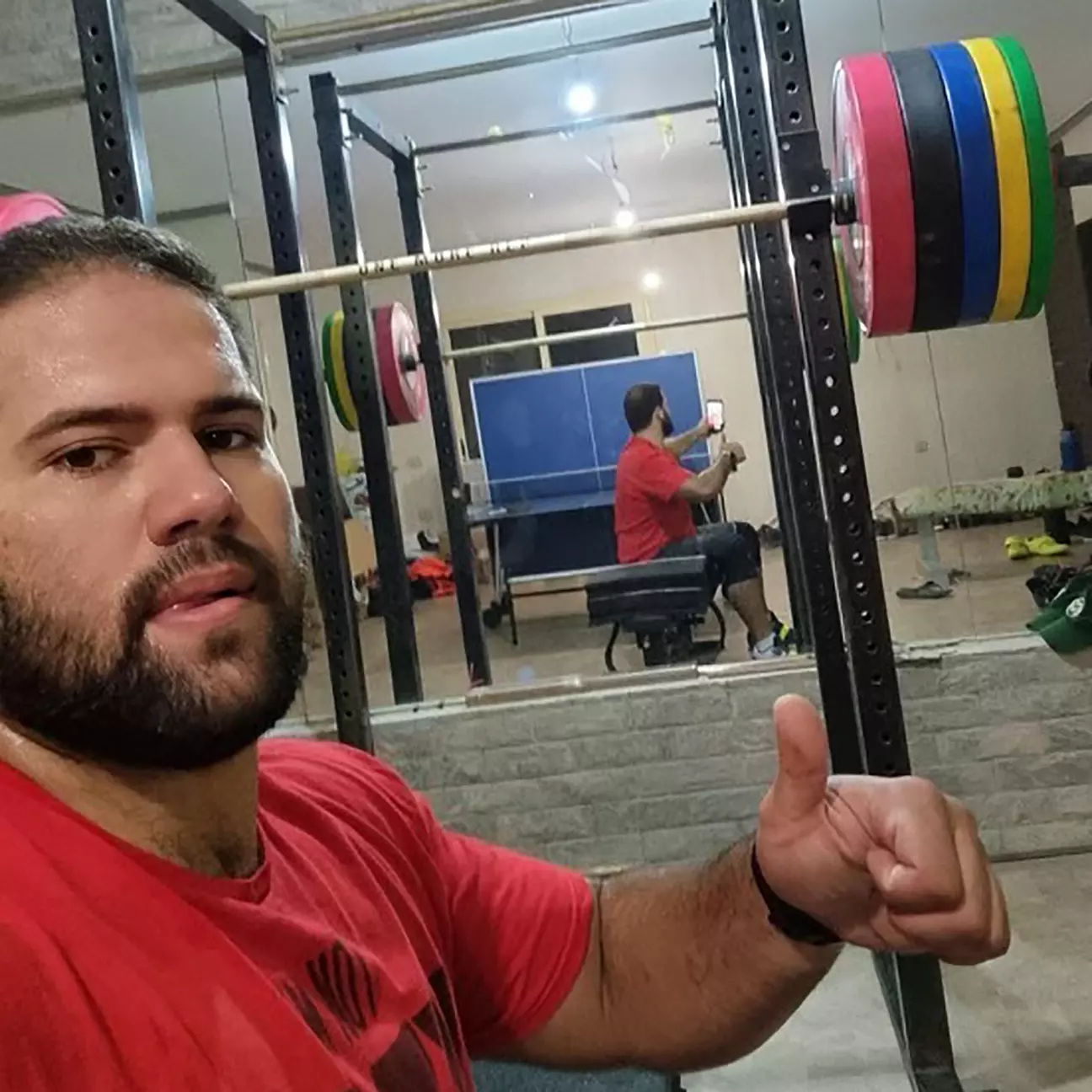
“Fortunately, my uncle owns a house that is empty and under construction near where I live, so I used the back yard for my throwing training,” he said. “For the ring, I found an old plywood box at home that I took apart to make the ring. For the toe board, I found a broken one at my club that I repaired and nailed it down to the plywood. As for the gym, all I needed was a squat rack and some weights. I bought the weights. As for the squat rack, the ones in the market were too weak to handle 300-plus kilos, so I found a design online and custom built one using very thick square tubing.”
Hearing these stories does affect the athletes in a positive way. For Jackson Morris, it gives him hope.

The main thing I learned is to never give up no matter how things seem hard and against you.Mostafa Hassan
He has been dealing with an injury similar to what Hassan had at CSU, one he overcame in the shadows to win his second NCAA Championship in the shot put in 2018. Morris was a young thrower at the time, and he’s just as amazed now when talking about what Hassan overcame.
The Olympic journey also makes him think very hard about himself.
“He was there the whole first half, and he threw through indoor season, and then he hurt his groin, and after that, I really didn’t see him, but coach told me a lot about his recovery process and what he had to do, because he couldn’t skip to next year, so his recovery with his groin was just amazing,” Morris said. “I have the same injury on my right side, and I have no idea how he recovered that fast and threw that well at nationals. It’s amazing.
“It definitely makes you think, right? He definitely had nothing and he still figured out a way to train, building his own ring, building his own stuff. He’s determined. He was the same way in school, being an engineer. He’s a determined guy, and it’s inspiring, for sure.”
Bedard helped Hassan any way they could. He would watch videos and offer critique. They would chat via messaging when they could, but for the most part, he was listening to how Hassan was tackling all the issues as they arose on his own.
When the coach spoke to those around him back home, he hoped everybody in the program as listening intently.
“I want them to hear his story and what he went through. One, for them to appreciate the opportunity they have here and how well supported they are,” he said. “I would like to think I’d hear less excuses from them or my staff or anybody else, even in the department, of what we don’t have or what we need. Find a way. Make a way. I would like to think it would inspire some of the athletes and even our staff and motivate them. Also take away some of the excuse making. Everybody can do that, make excuses for why they can’t perform, didn’t perform, but just be honest and real with yourself and people around you and say maybe this is what I need to do better and not make excuses.”
Hassan wasn’t about to let the injury be a setback for him, the same way he bounced back from COVID. It hit him hard, keeping him out of training for two full weeks. He said the shot put felt double the weight the next time he picked it up, and he actually passed out. It set him back, but didn’t keep him down.
There was a lot on the line for him, starting with representing his country at the Olympics. Despite everything, he delivered.
He qualified out of Group A third with a throw of 21.23 meters. He placed eighth in the finals at 20.73, but in the process, became a trailblazer for his country.
“I wasn't really surprised when I qualified, because I knew I had it in me to throw the standard, but I was still very excited to become an Olympian,” Hassan said. “As for the competition, it was the best feeling in the world seeing the shot land past the automatic qualifying line for the final. I finally felt the results of all the hard work I put in the past two years. As for the final I was aiming for a lot more, but I just couldn't line it up like the qualifying, but I'm proud to say that even though I wasn't at my best, I placed eighth in the strongest Olympic final in history.
“It feels like a huge honor to be the first person in Egyptian history to reach the final, but it is humbling seeing how far other competitors are throwing and how much I need to work to get on the podium.”
Hassan had his personal motivations for doing all he did to chase a dream uniquely his. Bedard knows not everyone will have the same goals as Hassan, but they can have the same drive. Even a similar mentality to go after whatever it is they want.
It could simply be a personal best, or a Mountain West championship. They may want to follow his footsteps in becoming an NCAA Champion or an Olympian. The point is, whatever the goal is, there’s a solution to be found if one is willing to look hard enough.
“I think it sends a message. Be thankful for what we have, thankful for the resources we have and the support staff we have, and he definitely was thankful when he was here,” Bedard said. “Some of our kids, I think at times can be a little bit spoiled; the staff can be a little bit spoiled. I think once you strip away all the excuses and what it takes to get the job done, all things are possible. If that means we have to create that experience, then we do it.
“When an athlete tells me, ‘I tried,’ it usually means they put out a half-assed effort and come up short. It’s not about trying, it’s about doing. Many athletes – or even coaches – have goals, but no plan to achieve those goals. Or, they have a plan, and when there are barriers and hurdles that arise and slow progress, the excuses start to mount. Instead of excuses, let’s look at how we can tackle the issues and hopefully grow from the experience and still reach your goals.”
Because Jack Christiansen Track doesn’t look like a construction site. The Morris Fieldhouse may be old, but the history there holds success stories. The weight rooms are not hand constructed, but rather state-of-the art.
Bedard sees it all, and he can’t find an excuse anywhere. That doesn’t mean he can’t see problems, but somewhere around him, he knows there is a solution.