

Jackson Wants to Give Back What Was Offered to Him
Three programs provided him mentors and turned him into one himself
Mike Brohard
In recognition of Black History Month, Colorado State student-athletes are sharing what the month-long celebration means to them.
By the time Dequan Jackson was asked to meet with members of the Senate, he was well rehearsed.
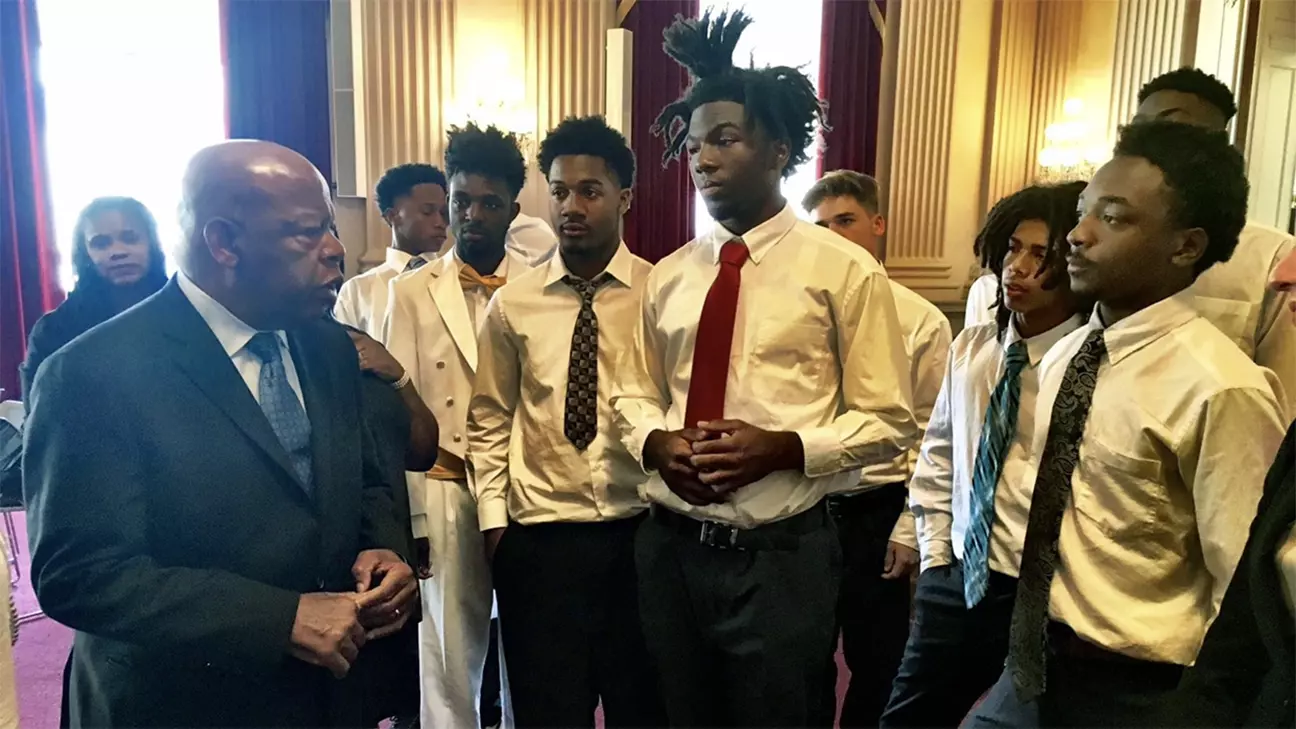
He was summoned by the lawmakers after an article about his situation ran in the New York Times and he brought members of his EVAC class along for the occasion.
He met and talked with a panel, and chatted a bit more off to the side with Senator John Lewis. If it had happened a few years earlier, the then-teenager from Jacksonville, Fla., is pretty sure he would have been a bit more intimidated and unsure about his presentation in the arena where it took place.
“Those were real Senators that you see on TV. People who matter, who held reign to make the laws,” Jackson said of his 2016 appearance at the Capital. “Just being around that environment, I felt important, but overall, I was overly excited that we even got the opportunity.
“I wasn’t actually nervous when I spoke. I had told my story at least five times before that, so being in there, I was still nervous, because this was a different caliber of people. I think I did well, and they presented me with a plaque from the New York Times. It was nice.”
But through his years at Robert E. Lee High School, Jackson was given the opportunity to meet important people in the community. He was able to mentor those younger than himself, youths who were growing up in the same neighborhood as him, living the same challenges.
Those programs – three in particular – shaped the way Jackson started to view the world and how it worked. They allowed his confidence to grow, his voice to be heard and his personality to take shape into the leader everyone around the Colorado State football program has come to admire.
It’s why he wants to run a program himself when his college days are finished.
“I think it’s so important. If programs like this aren’t put in front of kids, I don’t think they will ever get to experience that until they’re adults, and they’ll already have their perception of the world,” Jackson said. “I just think growing up, especially kids who are at risk or maybe missing a parent, or they don’t have as much as others around them, it’s kind of like an isolation thing. Those kids isolate themselves, and if they can’t find a program or a mentor who can guide them, then I feel that’s when we lose a lot of them to the streets.”
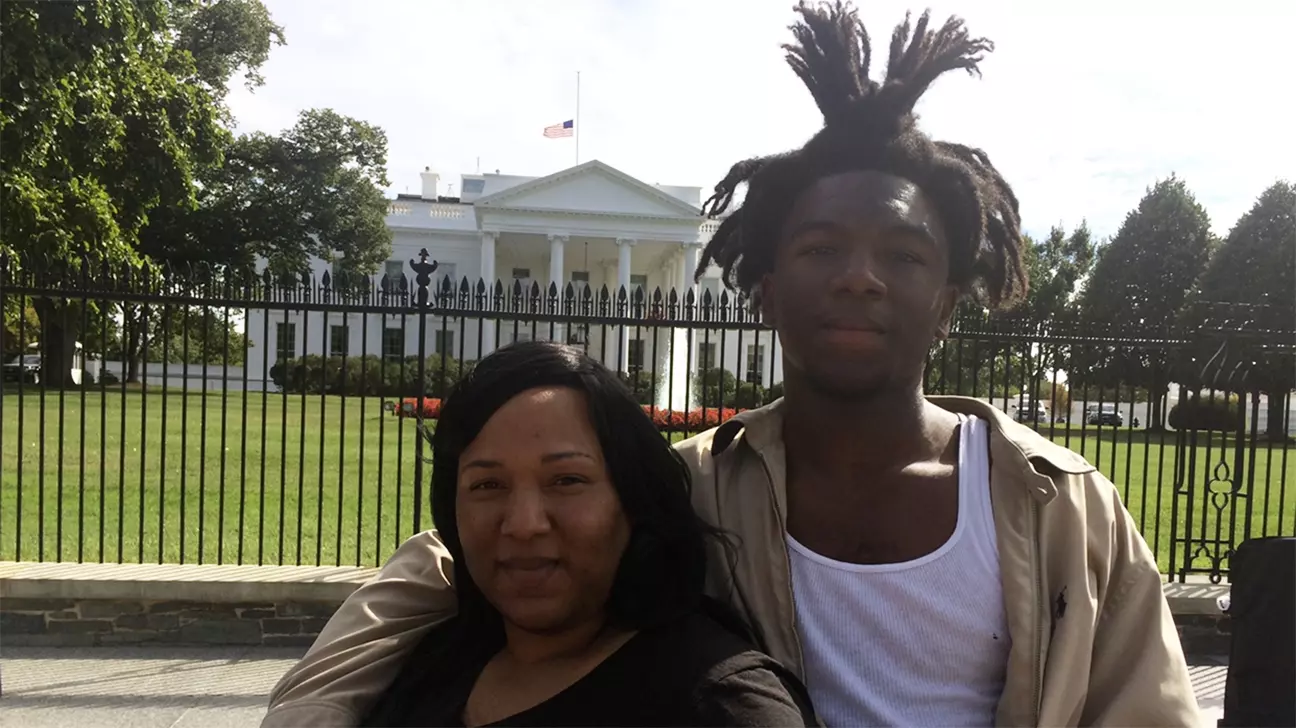
Through 5,000 Role Models of Excellence, he was introduced to leaders in and around his community, men he had never met. Through EVAC, which started as a class and blossomed into something much grander, Jackson was able to have dialog with police officers, and it was the class which accompanied him to Washington D.C. on a few occasions, even to California. Through the I’m A Star Foundation, Jackson became a role model himself.
All of them were important, he said. He gained confidence, but even more importantly to Lee athletic director Rosalyn Bloxom-Johnson, he gained something much more crucial.
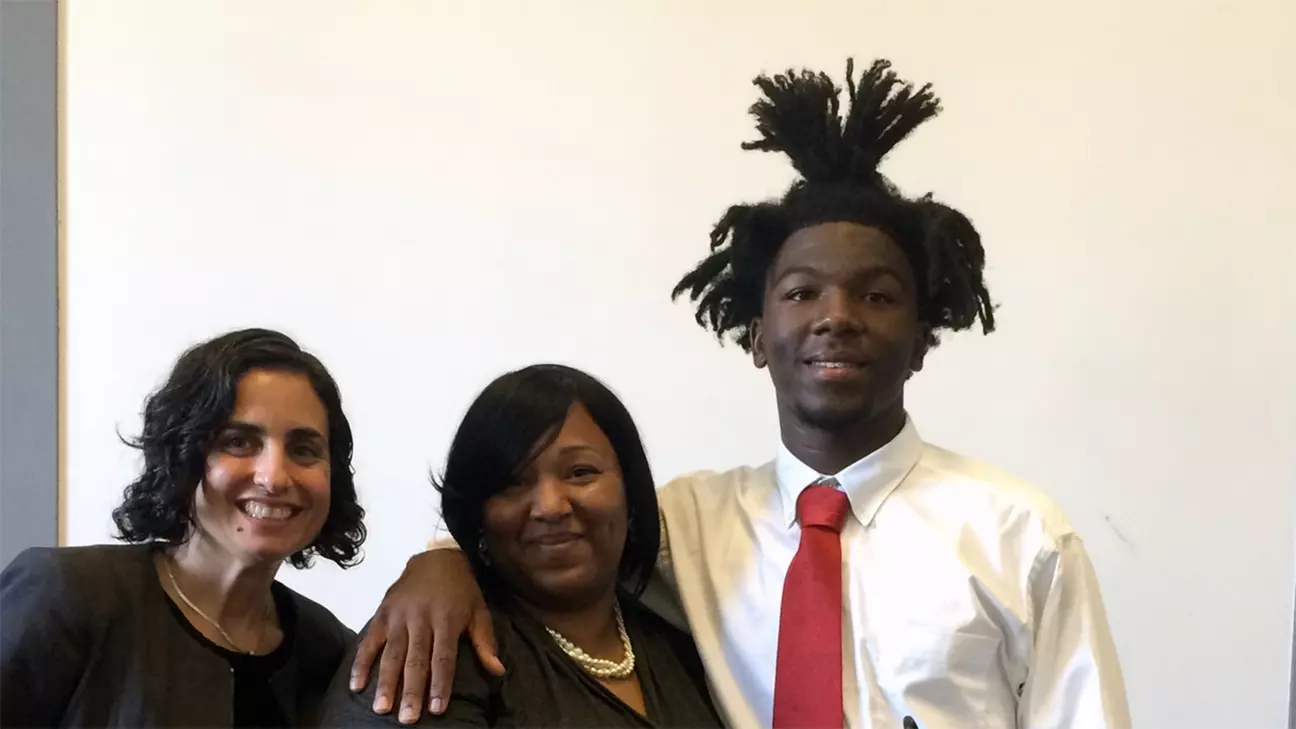
“Confidence yes, but definitely trust. I think he was OK with the me’s of the world, because I’m what he saw at home,” said Bloxom-Johnson, who is also part of the I’m A Star Foundation. “But with men, it might have taken him some time, so there was some resistance. Ninth grade, we can say no; he was figuring it out. He was a little different; he wanted to be judged by who he was on the inside. He was not going to change his exterior for anybody, even though some significant people asked him to, which is the beauty of who he is. Around 10th grade, it was more than athletics and those guys are where they’re supposed to be and he started to figure those things out. He started to trust men more, and it definitely changed him tremendously.
“Confidence yes, but trust most importantly.”
I don’t think we’re done with the magnificent ways of Dequan Jackson. He’ll do more, just so others can think they can do it too.Rosalyn Bloxom-Johnson
Through 5,000 Role Models of Excellence, Jackson went to a country club, a place he never could envision himself. He met with prominent business men and community leaders, all of whom opened up a world of possibilities.
What he liked most was it showed him people who on the outside appeared to be so different were very much the same. They shared some of the same emotions and fears. The mentors were there to help direct the drive to achieve successes in fields Jackson said many of his classmates never pictured.
“We didn’t see them all the time, but we had successful men put in front of us. We often had to dress up and put ourselves in their environment where we weren’t used to being and be uncomfortable,” Jackson said. “It was broadening our horizons and showing us the other side of the spectrum. That was important to me and the people around me. We all needed to see something different and see there was more to the city and the school we were living in.
“We met a few police officers, some ball players. We were involved with the Players Club, a golf course. We did community service and we met people who owned businesses. I would say that program, what it was for me was, I liked to see everybody in that environment get along, and just being positive and having something else to do.”
EVAC, which is cave spelled backwards and taken from Plato’s Allegory of the Cave to represent darkness finding light, was the place where he most told his story, where he held discussions with police officers about community policing.
Where he was from, he didn’t trust the police. He thought they were all jerks, having been stopped and searched in his own neighborhood on numerous occasions. His friends felt the same way, and seeing a police officer brought about feelings of aggression.
But he met with a panel of law enforcement officers from around the country, the product of him and another EVAC classmate winning an essay contest. It was in these settings he started to see the other side and he started to build his voice.
“Once I got around them, I found there was a disconnect on their end, too. They wanted to know why a kid sees them and wants to run, or why they’re scared of them,” Jackson said. “Why do we act the way we act when we encounter them? They just wanted to know our stories, and take it back to their departments and basically try to change the training mechanisms. They wanted to actually make a difference. That was the first time I realized the police are sacred when they walk up to a car. They’re worried about making it home at night.
“I don’t think they were making excuses, because a lot of them owned it. They took accountability for when they wore a badge, they knew that came with the job, so they knew they shouldn’t behave inappropriately. I could hear them tell their truths, and it opened it up for me. I still have some bad encounters – it doesn’t cover the whole group – but overall, when I see an officer, I don’t think anything negative. At least not initially. I like to communicate with them, because there are some people who still don’t feel that comfortable or have had that experience.”
Like Jackson still is at times when it comes to using his voice. When he speaks now, it carries power. That’s in a classroom setting or in the Colorado State locker room. Bloxom-Johnson watched it develop over time, and to her, it was glorious.
It was also a process. He started looking into topics deeper, which gave him confidence in what he knew and would come to believe. Where he once saw steps to take, he felt the surge to carry a plan forward. The words didn’t come often, only at the most timely and impactful of moments.
“He was always somebody that wanted to go against the grain, so where he is does not shock me,” Bloxom-Johnson said. “He did not want to do what everybody else was doing; he’s not normal. It didn’t shock me. He started saying it more, then he started believing it for himself and then he started applying it. He educated himself on whatever he had to do, then he started to execute to get what he wanted to do. He surrounded himself with all the right people. He didn’t mind saying goodbye to some friends – and again, a word he would definitely use loosely. He doesn’t speak much; he’s very observant, he will listen and then he’ll comment if it is warranted. If it’s not going to benefit all, then he’s not going to do it. Where he is, is not just for Dequan, it’s for so many people.”
Which is what it felt like for him at the Capital. His story was all-too-common in neighborhoods where the people were financially challenged, and trying to dig out of a hole only seemed to make it deeper.
So by the time he met with a Senate committee, he was well versed his personal story and how to tell it, how to explain it wasn’t just him, but an entire group of people.
“I would say it matured me and gave me confidence as an individual,” he said. “For the guys around me, I think they came away with the same. I don’t feel like they felt their voices ever would have been heard if they weren’t in that space.”
In turn, that made him even more powerful when speaking to the younger generation. Bloxom-Johnson thinks the most energized she has ever seen Jackson is when they went back to his elementary school to speak to students. She never saw as much fire on a football field, or as much pride when he received an ‘A’ on a paper.
She watched him thrive in that role. His earliest role model growing up was his brother, Jarvis Simmons, who passed away from a form of cancer at the age of 19 when Jackson was just 10. It devastated him to the point he hasn’t been to a funeral since.
“And I’ve lost a lot of guys,” Jackson said.
So, in those moments, when they went to speak to classes at elementary or middle schools, or even mentor those a few grades behind him, Jackson became the person they needed, in part because he had personally come to know the monumental affect it can have on a young man.
When he goes back home, he’s still there for them.
“The challenge has always been do they come back and reciprocate the very blessing they received, and he does it every time he’s home,” Bloxom-Johnson said. “You just put a microphone in his hand, and he’ll tell them about going to school so others can see they can do it to.
“I don’t think we’re done with the magnificent ways of Dequan Jackson. He’ll do more, just so others can think they can do it too."
So the future is clear for Jackson. He’s going to pay it forward. It’s also rather complicated.
Just how does he accomplish such a goal?
In an ideal world, his program would have pieces of all of those which impacted his life. He realizes that’s a broad canvas for which to paint his picture, but there’s time. There is no deadline looming.
So at moments, thoughts come to him. Eventually, he’ll piece it all together.
“Overall, I don’t want to just target one group, but I don’t want to bite off too much,” Jackson said. “I just want to find a way where I can create a program, or I can use my platform, to be a part of a whole bunch of different programs so I am always around the youth and created opportunities. Maybe hosting camps in certain neighborhoods where they can’t afford a camp. Doing stuff like that, whether its sports or real life, it’s putting kids in front of positive people, people they can look up to or call and rely on. That’s what I want to do.
“It will be hard to put the whole concept into one mission statement, but the concept is there. I know what I want to do, I just don’t know exactly how I’m going to do it yet.”
But it will happen. Jackson is as sure of that as stuffing a gap. So is Bloxom-Johnson, who has taken delight in seeing a stubborn young man grow up. Deep down, she knows he’s still the same, but she delivers it as a compliment.
There were a bunch of people who provided him with the guidance he needed. Jackson feels it is his duty to return the favor.