
NIL Opens Exciting Doors for Student-Athletes
Comprehending what it all means -- and how to benefit -- is the next step
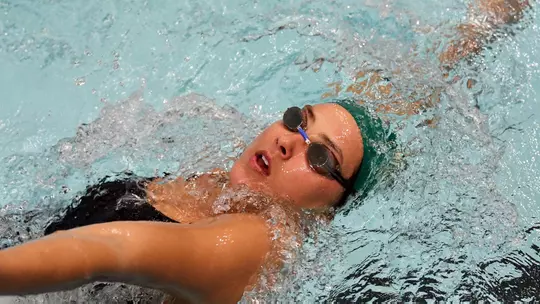
The pandemic had sent her back home to Florida earlier than she expected, and Hannah Sykes was looking for a positive activity to help fill her free time.
As a nutrition major, she had given some thought to creating a YouTube channel where she passed along what she had learned and how she applied it to her life as a Colorado State swimmer. Just about to head into her sophomore year, she did so with one real goal in mind, which was to start branding herself for the job market long before she ever finished her degree.
“That’s what it was for me. Because I’m in the field of nutrition, that was a big portion of my videos,” Sykes said. “I have other types of content, but that’s a big chunk of it – food, what I eat, how I cook and shop. That’s what I’m majoring in, dietetics, so I want to be a dietician. There are a lot of routes I’d like to go with that. I’d love to be a dietician for a sports team, but I’d also love the opportunity to build a brand for myself and be able to make my own meal plans.
“There are many routes I’d like to be able to take with my degree. I figured I should build myself a name in the field of nutrition before I graduate, and a really relevant way to do that nowadays is through social media. It’s one of the easiest and most profound ways to do that.”
Her videos, which range from how she shops and eats to her workouts and daily life, started to pick up viewers to the point it was monetized, meaning ads started showing up on her videos. Over the summer, companies started to reach out to her with promotional ideas.
She also knew she couldn’t profit from them, and after contacting the CSU compliance department to see if there were partnerships she could form without profit (none were possible), she had to turn them down. Now, flash forward a year, and the window is suddenly wide open.
As of July 1, 2021, The NCAA is now allowing for student-athletes to profit off their name, image and likeness, nearly 20 years after Jeremy Bloom took the NCAA to court for the right for him to do so as a freestyle skier. The organization, which has long had the topic on the table, has not constructed any guidelines for their membership, but are allowing student-athletes to profit from NIL through university or state regulations. There are 22 states – Colorado included – which have signed NIL laws into effect, and none of them are exactly the same.
This is new age for college athletes, and they, along with universities, are learning along with each other what it all really means. The truth is for both sides, nobody is really sure they can see the entire picture.
“For the last several years, we were evaluating legislative models, the likely changes, talking to third-party vendors who are emerging in this space to help with education and compliance, and even to some extent, how a student can build their brand,” CSU Director of Athletics Joe Parker said. “Change has occurred, legislation dropped in and state law came into effect, and it’s something we are navigating with our student athletes. We put a piece together to give them the baseline education on the things they need to be thinking about, but every scenario brings about another three of four variables to contemplate and consider.”
I think it will be interesting to see how everybody uses this in their own unique way. There’s no one direction you can go with it. There are unlimited possibilities.Hannah Sykes
Ask a student-athlete and they’ll tell you this is a change which has long been needed. For years, if you were a student on a music scholarship who excelled at the French horn, you were free to give private lessons the public. As an All-American student-athlete, it was impermissible to give a youngster a private lesson on the keys to a quality forehand on the tennis court or how to properly dribble a basketball.
CSU men’s basketball coach Niko Medved is all for the change, but he’s also curious to see where it all leads.
“I think it’s a great change, it’s long overdue, and I think essentially what we’re doing is lifting some of these silly restrictions student-athletes have had on them,” he said. “It’s having those conversations in this adjustment period, and as we work through that, we’ll find the right space. There’s a ton of attention paid to this rule change. We’re all learning, and hopefully there are some opportunities for some guys, but what that looks like for everybody, we’re all curious to see.”
Parker has not been surprised by anything he’s seen announced so far, nor is he expected to be surprised about what comes down the road. He understands the possibilities are limitless, as are the ways student-athletes may gain the attention of those in the business world.
The first big deal announced on July 1 was for the Cavinder sisters – Haley and Hanna of Fresno State women’s basketball– who have paired with Boost Mobile based on their heavy social-media following. The deal was presented with a billboard at Times Square in New York City, and while no financial terms were released, the Fresno Bee reported it may earn them more money annually than their head coach.
According to CSU’s Shalini Shanker, the Senior Associate Athletic Director for Compliance/SWA, 15 Colorado State student-athletes have signed some sort of agreement, with more expected to follow in the coming days.
At some point, Sykes will join the list. The company which originally contacted her remained in touch, understanding NIL legislation would be passed, and two other companies have contacted her. But she’s taking her time.
“I haven’t signed with anybody yet. I’m still trying to figure everything out,” Sykes said. “I’m a little worried some people are going to rush into things. I think it’s one of the reasons people were worried about this with college athletes, so I’m trying to weigh everything and take my time in this process. I don’t want to jump the gun and get into something I don’t really support or is not in my best interest.”
If there was one student-athlete on campus who was prepared for the change, it was All-American punter Ryan Stonehouse. He’s been following the process for a couple of years, waiting for it to finally happen. He has already released a logo for a brand, and he took the time to read and understand legislation as it was being discussed, knowing there would still be more adaptations.
For him, the ability to capitalize is not only to provide himself with more income, but to help others. Two years ago, he and teammate Ross Reiter wanted to host a specialists camp to help raise money for The Good Dog Rescue, a venture Stonehouse’s girlfriend was heavily involved with supporting.
“I mean, I think every college athlete has an obligation to give back. The point of having a platform, to be honest with you is, yeah, if you have a business or a talent – you sing or you rap – that should be in the bigger picture, that should always have been a thing for the NCAA,” he said. “I think that should have been in place in the first place. Guys like me, what I want to benefit from this is coaching. There is money to be made in the personal stuff and doing private lessons, but at the end of the day, I want to help give back to some of these kids and expand a brand to coach. At the same time, it’s important to give back, have a charity or two to support. For me, that would be the dog rescue.”
Stonehouse is already trying to secure sponsors to set up camps which can aid the rescue, as well as fund future camps. He knows there are pitfalls out there, and he’s certain some student-athletes will fall into them. It was why he spent so much time educating himself on what it all could really mean.
What he’d share with his peers to have an understanding of negotiating, as well as knowing what their worth really is in a certain marketplace. Whether there is a check involved or just receiving product, Stonehouse believes those are keys for everyone to understand.
“A huge deal for getting through the waters is to have a plan. You have to have a plan,” he said, adding the ability to build relationships will be key. “What do you want to do with this? You can’t do everything, and I think that’s where people are going to learn. You have to have a focus, and that will help with what companies you want to go with.
“I think kids are going to fall into some traps and what companies they go with. Does the company have the same values they have, or are they going to get into a situation with why they partnered with them?”

A huge deal for getting through the waters is to have a plan. You have to have a plan. What do you want to do with this? You can’t do everything, and I think that’s where people are going to learn. You have to have a focus, and that will help with what companies you want to go with.Ryan Stonehouse
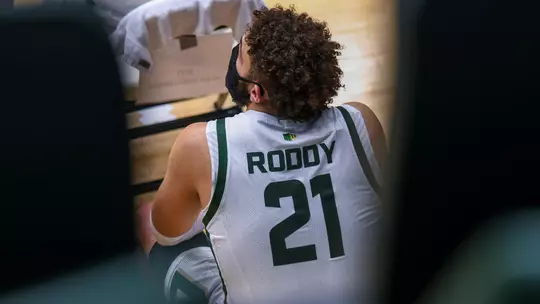
Basketball player David Roddy, arguably the most visible student-athlete currently on campus, used social media to let people know he was open to conversations, but he didn’t stop there. He has contacted people whom he admires and follows in the entertainment and business world to see what possibilities are out there.
He feels the educational part of this will be key for all of them, not just for the here and now, but for their futures, as most are likely to have some business dealings in the future. He also feels he has to keep perspective in doing so, and that’s making sure the most important part of his life remains the top priority.
His goals in athletics which he shares with his team. It is what has made him visible in the first place.
“Right now, it’s breaking ground and emailing people I’m a fan of and seeing what their ideas are, seeing if they’re interested in working together,” Roddy said. “It’s an exciting time for us as athletes, and it’s life lessons as well, to further your brain and have Zoom calls with CEOs. This is a growth period we as athletes need to experience in the business realm when we’re done playing or even if we keep playing after college.
“But it’s always keep the main thing the main thing. I’m here to play basketball and achieve my goals here. It’s another added fruit to our labor, and I won’t take that for granted. I will do as much as I can, but in moderation to the main goal of bringing a championship to CSU.”
Like Stonehouse, Roddy’s first inclination led him to sharing the knowledge of what he does best, which he has discussed with the coaching staff and teammates. Collegiate athletes running camps for the next generation feels like a natural fit for many of them, but again, while having an idea is a start, figuring out how to make it happen is where Roddy and others are still learning the ropes.
“There are new things coming, either in my hometown or at college,” he said. “We love to teach. There’s a world of knowledge we’d love to share with young high school talent. That’s something we never got to do coming up. Passing that knowledge to the next generation is awesome, and I love teaching as well and having fun while doing it.”
For most people, there are more questions than answers. NIL contracts will not affect any athletic or academic scholarships, but Shanker said they will have an impact on any need-based aid student-athletes are receiving. Just less than half of Colorado State’s student-athletes are on full-ride athletic scholarships, which means some of them will have to worry about how any added income could alter their aid.
Some out-of-state student-athletes have asked what NIL legislation they should follow – that of their home state or of Colorado; Shanker is directing them to follow Colorado directives. They have questions about who they can hire to help and how it works. To help in the process, the athletic department sent every student-athlete a fact sheet with frequently asked questions to help guide them.
Parker added more discussions are taking place across the university to further help student-athletes understand what is available to them and how to best approach opportunities. Among the ideas is creating educational spaces, information sessions with each team and hiring a vendor to help both the student-athletes and athletic department.
“With anything, you want to do your best to educate. We plan to do sessions where we sit down with each team and have a discussion,” Parker said. “We will align ourselves with a vendor to help manage and navigate the space, with an education model for the students. The vendor we’re looking at will also provide a back-end tracking mechanism that will allow the student to put in their sponsorship deals that they’ve created and made, a way to archive and have a reference if ever needed. We’ll look at partnerships on campus, with academic units that might be able to put together some programing for our students to help them understand what good choices and decisions look like as it relates to how they might represent themselves and build a brand.”
Which, in the end, the student-athletes say is ultimately most important to them. What may pay them in the present might not serve them well in their professional lives, a very important consideration in their decision making.
Colorado State, unlike some other universities, has put no limitations on what offers student-athletes may connect with at this point. Other schools have put limitations in place in line with school and NCAA athletic codes, particularly gambling organizations and tobacco companies.
Despite the conversation being in the marketplace for some time, the introduction of student-athletes being able to capitalize on their name, image and likeness is a new horizon. The prospect of doors opening is exciting, partially because no one is quite sure what direction – or directions – it may take.
“There are so many possibilities because of this now. I think it’s cool,” Sykes said. “I think it will be interesting to see how everybody uses this in their own unique way. There’s no one direction you can go with it. There are unlimited possibilities.”