
By The Book, the Air Raid's Simplicity Makes it Explosive
All that Mumme knows is exactly what Norvell was seeking
The Air Raid offense is not that different from other systems which predated the concept.
In fact, some of them are part of it, be it in philosophy, delivery or influence. Each place the offense, created initially by Hal Mumme and run at the high school level, has been employed, it has been subject to the teachings and conditions of those who put it in practice.
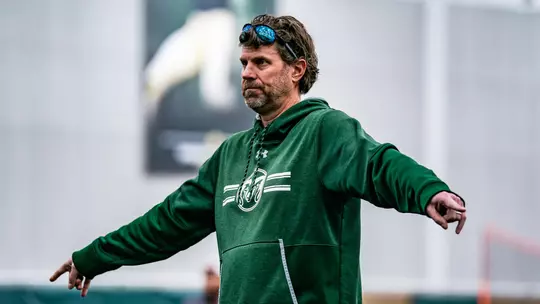
What Mike Leach runs at Mississippi State will, at the base, look exactly like what Jay Norvell and Matt Mumme have brought to Colorado State this season. In Fort Collins, it will be called subjectively with what Matt learned from his father, as well as what insight Norvell has had with his stops across the country collegiately and at the NFL level.
All of what they have encountered can be found somewhere in the offense. While the heart remains unaltered, the beat will vary. Just imagine what secrets the playbook holds.
Actually, don’t.
“It’s funny. Kids come in and they’re like, ‘coach, when do we get playbooks?’” Matt said from his office. “We’re like, well, we don’t have playbooks. Now, you can come in and we draw stuff up on the board and we’ll show you the concepts and you write it down in your notebook, but most guys can write it down in five sheets of paper.”
| | | | | | | | | | | | | | | | | | | |
The offense is all Matt knows. It is embedded in his soul and he believes in what his father created with every fiber of his being. He was a backup quarterback at Kentucky when is father was the head coach. They coached together at New Mexico State and then McMurray. But his belief in the offense came long before it was introduced at the collegiate level.
Hal is the man who taught Matt football, but more so, gave him his love for the game. His father remains his greatest inspiration to his day. Part of it is the way his father approached his career. Matt will tell you Hal never cared where he coached or what level. Nor did it matter how much money he made. If he was doing it for anything other than to impact the lives of young men and make the game fun for them, then he was in the business for the wrong reasons.
While coaching in high school, Hal looked to create an offense which was not only fun, but easy to learn. Some of the best offensive ideas have come from the high school ranks. Where do you think the concept of the option attacks which fueled the great Oklahoma and Texas teams of the 1970s came from?
The prep ranks. And the foundation of the Air Raid came from, of all places, the concepts of the option attack. No matter what offensive system is run anywhere, it is predicated on one notion – to get the ball to playmakers in space. Hal’s idea was to just that, but use the passing game LaVell Edwards developed at BYU.
It was when Hal was fired from UTEP he went to the blackboard. His goal was to develop an offense which could be played fast and throw it like the Cougars.
“That’s when his mad scientist went to work and how he was going to schematically and conceptually put everything together,” Matt said.
He was always chasing his father, who was coaching at a level just above where Matt was playing. But the local middle school often mimics the local high school offense to be a feeder system, so in some regards, Matt is the ‘OG’ Air Raid quarterback.
With some success. And one black spot.
“Funny story. My junior high coach got sick,” Matt recalled. “It was a Thursday night game and we had to play Temple, which was really good, and my dad said, ‘I’m going to fill in for Matt’s coach so I can coach my son.’ Me and a friend split all the reps in game, and we probably threw it 30-35 times. The funny story in the game was we're running a naked bootleg out to the right and we needed to pick up a first down. Dad was like, ‘what do you think? Do you think you can get it? I said, ‘yeah, I can get it.’ Roll out, and the seventh grader from the other team blows me up and knocks me out. I’m laying on the field, my mom is standing up in the stands, I’m lying on the field, I don’t know where I am -- I’m basically Batmanned. My dad comes over and looks down at me and says, ‘get your little butt off the field, you’re embarrassing me.’
“They drag me off the field, but we scored a bunch of points against a team we probably shouldn’t have. The love of the game, that’s where I really loved it. The only way I really loved it was the way my dad presented it. From that moment on, I was always chasing him.”
What can be better for a college quarterback than to learn a system from the guy who ran it first?
“It’s super cool honestly to know his dad and Mike Leach were the main people who created it, and he’s been around it so much,” quarterback Clay Millen said. “He has a super-high understanding of it because his dad made it and he played in it. He has a huge understanding of it. It’s all he’s known, decades running that system and coaching it. As a quarterback it makes you really confident knowing your OC knows so much about the offense.”
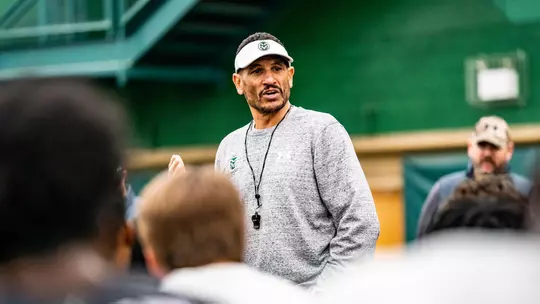
To me, there’s nothing more beautiful than an accurately thrown deep pass to a receiver. There are those seconds of indecision where everybody in the stadium wonders if it’s going to be a positive thing or a negative thing, but it’s a beautiful thing when it’s orchestrated properly.Jay Norvell
| | | | | | | | | | | | | | | | | | | |
Norvell’s path through the football ranks presented him with a myriad of philosophies and systems. As a former standout cornerback, he had a strong feel for defense, but as he progressed along his coaching path, he was steered more and more to the offensive side.
There were West Coast influences all over the place. His first stop in the NFL put him in contact with Tom Moore. At Oakland, he was introduced to Al Davis, whose teachings continue to stick with him to this very day.
Soon after, he was back in the college ranks, first at Nebraska, then with UCLA and Oklahoma, Texas and Arizona State. It was during that time he was introduced to the concept of the Air Raid offense. Never the full palate, but a sprinkling of basics. It enticed him.
So much so that when he finally earned his first head coaching job at Nevada in 2017, it was the offense he wanted to run. He just had to find the person to really teach it to him. Jay had met Hal, but he’d never met Matt, so a mutual friend – Chip Lindsey – put them together. Norvell and Lindsay worked together at Arizona State, and Lindsay had come to LaGrange College when he was a high school coach to learn the Air Raid from Matt.
So the call was made in December of 2016, and Norvell and Matt sat and talked offense all day.
“We just saw the game the same way, had a lot of the same concepts and it kind of grew from another curiosity when I was with the Indianapolis Colts with Peyton Manning and we had a different style of play, but a similar mindset to where we would give our quarterback three-pronged options on almost every play where he could call a run inside, a run outside or throw it,” Norvell said. “We basically took the Air Raid principles and did the same thing and built our run game around it. That’s the biggest thing between Air Raid teams is what they decide to do in the run game. We’ve settled on some different things we really like in that.”
The Air Raid is an offense which is constantly on the attack. The idea is to make the defense defend every blade of turf on the field, especially the ones which can’t be seen clearly from the line of scrimmage.
In Norvell’s house, there is a picture he painted as a young man growing up in Madison, Wisc. The play on display comes from Super Bowl X, which seems like a lifetime ago considering how the game has evolved from the power run-centric approach to the fireworks of today. That’s what made it so impactful when a young boy watched it on television.
The painting depicts Lynn Swan of the Pittsburgh Steelers running deep down the middle of the field, blanketed in coverage by Mark Washington of the Dallas Cowboys. Swan rises up, the ball is tipped, and he sticks with the play and hauls in a 53-yard catch.
“And to me, that’s what football is. I love those moments in the game,” Norvell said. “It’s interesting, back in the 70s when that was played, teams only threw the ball 20 times a game. We throw the ball 50 times a game, so we have those moments in practice all the time. Some of the most incredible plays I’ve ever seen were things we’ve done in practice, and our kids do it routinely because that’s the way we work, so it’s not a surprise when it happens in a game.”
Norvell was with Oakland Raiders for two seasons as the tight ends coach, from 2002-03. It’s a blip on his coaching line, but the time he spent with Davis, the team owner and one of the most impactful people in the game, was priceless, and the knowledge he gleaned from the man sticks with him.
Davis was a living, breathing analytics department before they were ever created. He wanted to know all about the experiences of those in his coaching offices, how it made them think and approach the game.
“He really forced me as a young coach to really make sure I had data to back up my thought process and my conclusions,” Norvell said. “That’s the thing he did most. He’d sit in a room of coaches and he was like Perry Mason, and he’d ask questions. He’d never ask a question he didn’t know the answer to. What he did was really force you to be convicted in about what you believed in, and that was the most fascinating thing for me. It forced me to study and research and really have reasons why I believe what I believed.”
He also gave him an approach to the game, one which left a lasting impression on him as a youngster.
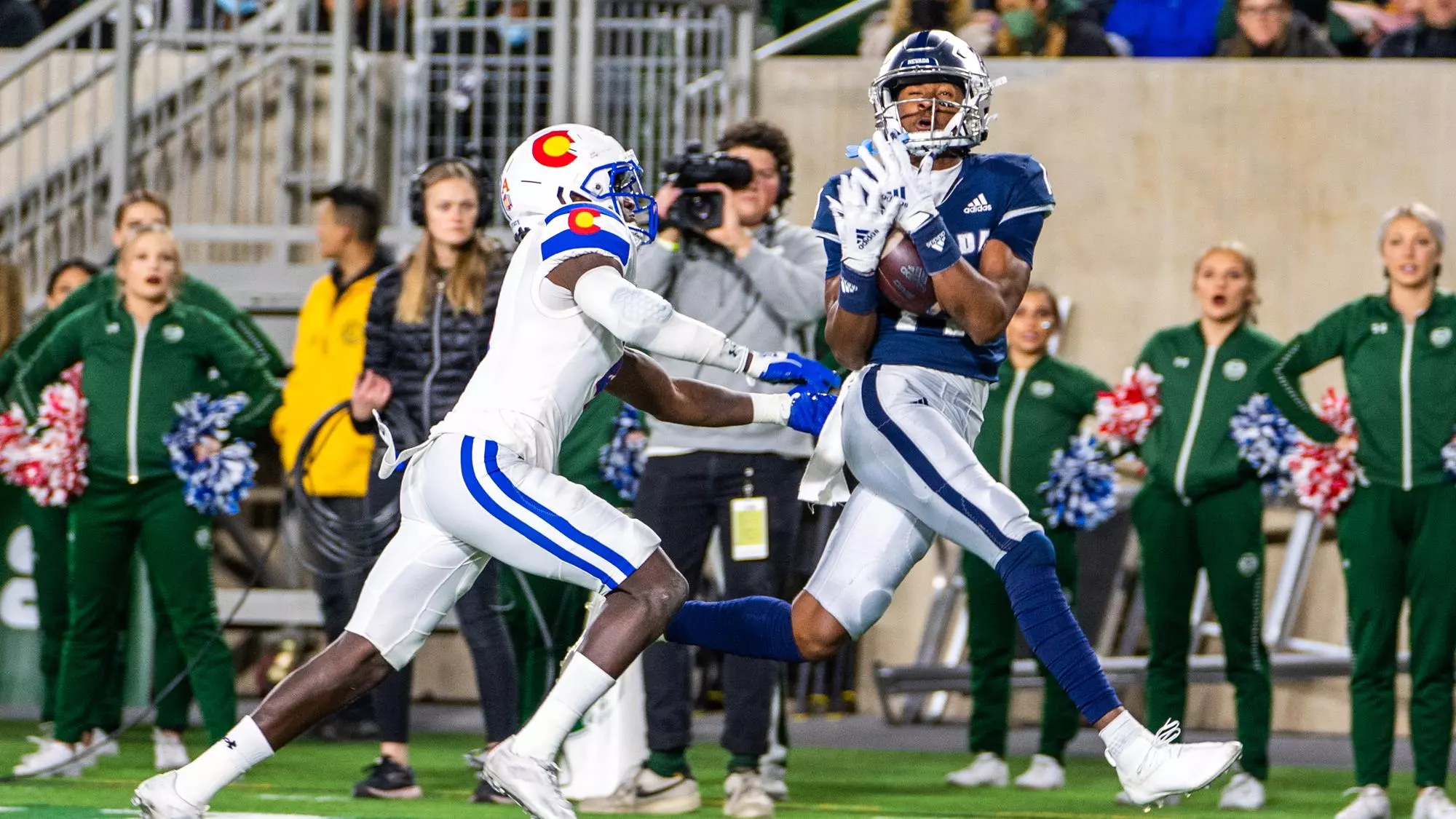
Throw the ball deep.
“That’s the first thing we always teach in this system is the vertical game and how to throw the ball down the field,” Matt said of the Air Raid doctrine. “Everything else builds off of it. We throw it down the field, throw it down the field, then we hit you with intermediate stuff. To everybody else sitting in the stands, it looks like we’re an intermediate-throwing team and then we throw it deep on occasions. We build it backwards. Our vertical game is called six-call for a reason. My dad said, ‘hey, what’s the easiest way to teach kids to go score, we’re going to call it vertical game, call it six. Go get me six. Or quick six, which is what our receiver’s mantra always is.”
Ask most football fans how long a field is and the likely answer is 100 yards. It is, in fact, 120 yards, and Norvell and Matt never forget that. Moving the chains is important. So is controlling the ball. The deciding factor in every game, however, is crossing the goal line and the Air Raid is designed to do that from anywhere on the field.
The down doesn’t matter, nor does distance. Field position is not a factor. Get the ball down field. It is great in principle, and many coaches say they like to throw the ball deep. But on game day, will they have the courage to do so.
Only, Norvell said, if they are willing to do it every day of the week.
“That’s why we love to throw deep. If we can make the defense defend those areas, it opens up everything else for us,” he said. “Having that threat is really important; if the defense is never threatened vertically, then they sit on everything else. That’s where that mentality came from Al Davis. It’s really a mindset. A lot of people aren’t willing to throw deep. They won’t throw deep on short yardage, they won’t throw deep on fourth down, they won’t throw deep in certain situations. They’ll only throw deep when it’s advantageous to them, and if the defense know that, they won’t ever defend those areas of the field in those situations. If you have a mentality you will throw deep on short yardage and you will throw deep on third and fourth down and you will throw deep on first and second. Now you open up a lot of possibilities for yourself offensively.”
So in practice every day, the Rams will throw deep. They will start the day throwing deep. They will do it all five days of spring camp. When camp is over and the players work on their own, they will throw deep.
When they come back for fall camp, it will start all over again. Each day, they will throw deep early, they will throw deep often. And because they do it all day every day, Norvell will not be afraid to call a shot at any point of the game, and his quarterback will not have any hesitation to look to the far reaches of the field.
“It’s really cool. They want to throw the ball deep,” Millen said. “We want to take shots, we want to throw the ball a ton. We’re not going to change our mindset. That’s our identity. We’re going to throw the ball deep, we’re going to get big completions, we’re going to make the right reads and be careful with the ball as a quarterback. Every day in practice we want to throw the ball really well.
“No matter what the play is, we want to score points. Every single play, if we can, we want to score a touchdown. It doesn’t matter if it’s a deep ball. We want to get yards, we want to be an explosive offense in everything we do. We don’t want to settle for a 4- or 5-yard completion. We want to break tackles and be explosive with the ball.”
| | | | | | | | | | | | | | | | | | | |
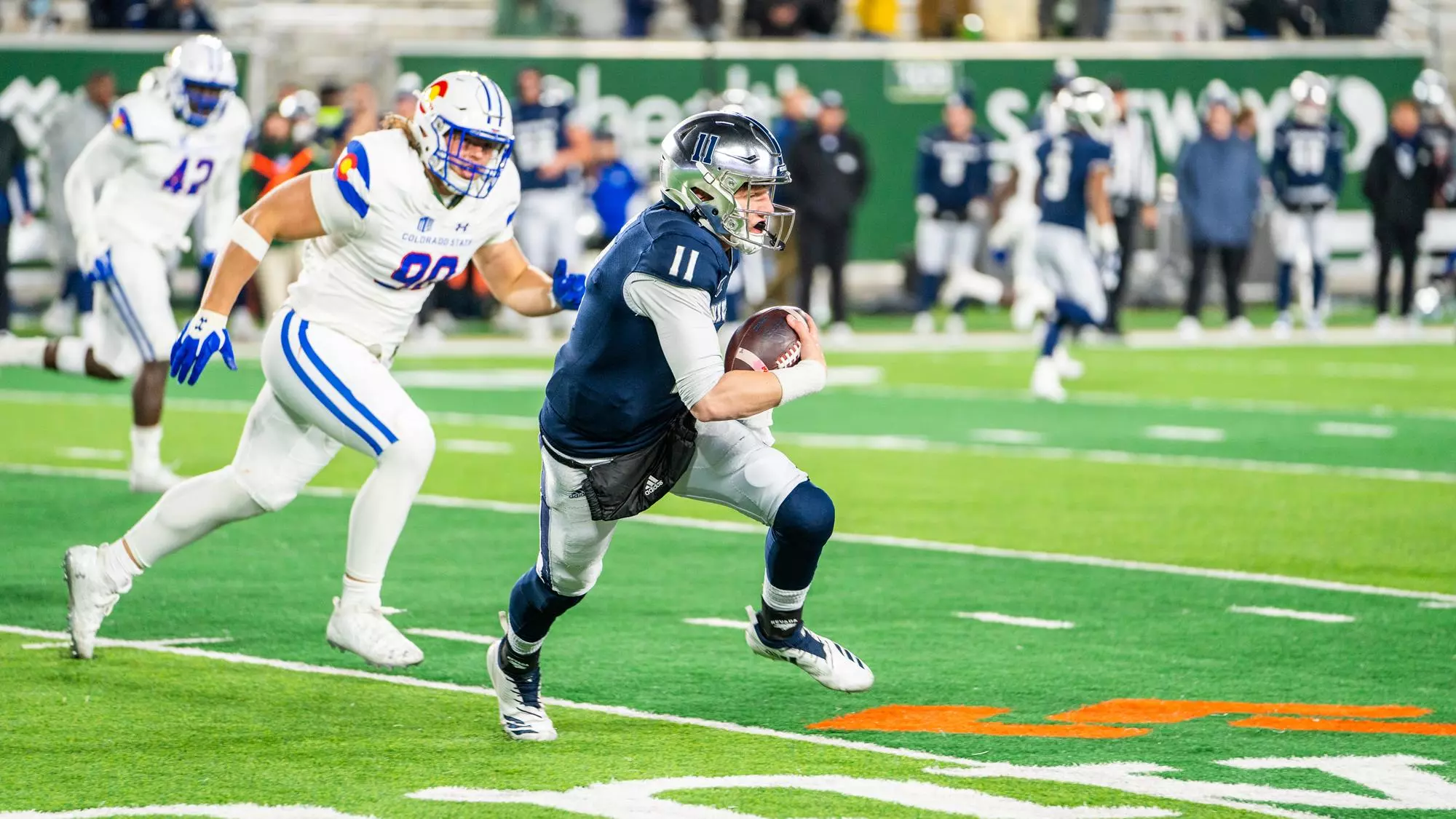
If you’re really good with a small amount of plays, its’ a lot better than being mediocre with a huge playbook.Matt Mumme
When you talk to Norvell and Matt and even Millen, one of the first things they talk about is the run game. Seems odd for an offense which has built its reputation throwing the ball all over the field, employing five wideouts and setting them free.
The run game becomes the main difference in how any coach runs the offense.
“Most people that ask me, the biggest deal is what do Air Raid teams do in their run game, and what do they want that run game to look like,” Matt said. “If you ask Mike Leech on a daily basis, he probably doesn’t care all that much. He’s not going to sit down and say these are our four concepts in the run game. He’s probably going to say I have one run play. The big joke in our offense is we have two run plays, we run on the field and we off the field, but historically it’s been how to you fit run schematics to fit into only your passing game but to fit your players. That’s what we have to decide here.
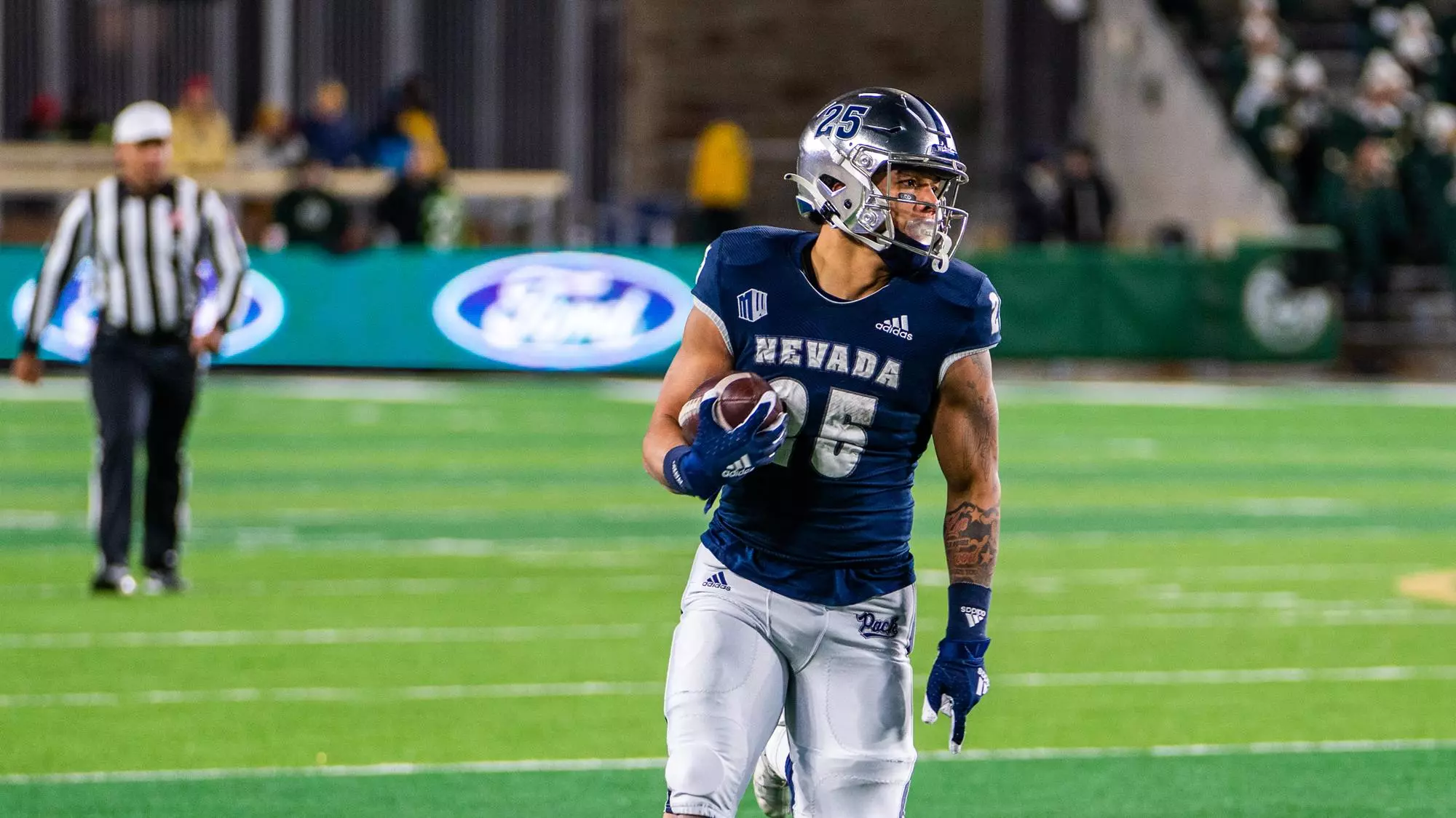
“At Nevada, we catered to what Toa Taua and Devonte Lee could do, some inside stuff with a lot of outside schemes. Here, we’re probably going to be more mixed, and the fact Carson Strong was immobile. Carson was not going to run the ball. Here with the guys we’ve got, we’re a bit more mobile. We can use those guys in the run game to at least show the threat. Not that we want our quarterbacks rushing for a ton of yards, but they can hurt people with their legs.”
Think the early days of Nevada under Norvell, when Ty Gangi was the quarterback. Matt likes the stable of backs he has here, and he’s ready to see just how they can use the likes of David Bailey and A’Jon Vivens, two different styles of backs, to full effect.
Not that the Rams will likely be run-heavy in their approach. The goal for Matt is to have the passing game rank very high nationally, and the run game not lag so far down the line, figuring 100-110 yards a game keeps them out of the bottom 10. The closer they are together, the more likely they are to reach the yardage goal of ranking in the top 25 nationally in total offense.
| | | | | | | | | | | | | | | | | | | |
Next week, the teaching begins, and Matt said the staff is already ahead of the game. When they first arrived at Nevada, there was skepticism and some push back, but eventually, they won the players over. The numbers were exciting and bred enthusiasm for the Air Raid.
Part of the offense is complex. On any given play Norvell calls, the quarterback has three options, two of them runs. And within the passing attack, depending on what the defense is showing, receivers can have about three options on which route they should run.
The key, is repetition. The answer is the playbook. Or the lack thereof.
Even a year into the system, it still strikes Millen as odd, but now he understands.
“When I met with them and Zoomed with them, that was one of my first questions – ‘hey, can I get a playbook for this?’, and he said we don’t really have a playbook for this,” Millen said. “Really, they just teach you and it’s up to you to take your notes. It’s so simple in the amount of plays that we have that you don’t need a playbook, really.
“I think that helps, that we’re making our own playbook. The notes we put in that notebook will benefit us in the long run.”
True to what Matt told him, a year into the system, half of the pages in Millen’s notebook remain untouched.
There are five categories: runs, screens, quick game, mesh and the route of the day. On day one, they’ll learn the play in each category. The second day, a few additional plays in each. The third day, a few more plays in each. Then they’ll go back to the first day and do it over again.
In the course of spring camp, the offense will be installed five times.
Easy enough. That’s the intent.
“It’s simple, it makes it easy on quarterbacks and receivers,” Millen said. “It’s so simple you get a ton of reps at it, and since it’s a read play for a lot of receivers on different plays, you get that repetition and get on the same page with them. That’s the biggest thing. If you have a smaller playbook and you get a ton of repetitions at it, that’s beneficial to having a huge playbook and you only get a couple of repetitions with. If you’re really good with a small amount of plays, its’ a lot better than being mediocre with a huge playbook.”
Matt isn’t against a huge playbook. He knows there are great offensive minds out there with 500 plays and they make it work. Those playbooks grow with the years and new plays are inserted for certain circumstances.
The Air Raid is all he knows, but it is just as adaptable. When he was at LaGrange College, he started to use the Pistol offense of Chris Ault – not that he knew much about it at the time. He used it to help the run game, and when he arrived at Nevada and had full access to Ault to listen and discuss it with him, he tweaked it some more and used it better.
Adding to the offense is fine, and sometimes, his dad loves what he sees. Others, not so much. It just comes with one important caveat.
“Sometimes, it’s, ‘you need to take that out; that’s not good. Stop doing that. Or sometimes he’s like, ‘that really good, I wish I thought about that,’” Matt said. “When I coached for him for nine years, it was fun. We schematically came up with some stuff we still do. A lot of his offense is whenever somebody gets an idea and wants to insert something, you always have to take something out. The whole offense, it’s in a three-day rotation. If you can’t rep it in three days, then it’s not worth having. That’s mind boggling to a lot of coaches. Wait, you can do everything in three days? We’re like, ‘yeah, that’s the simplicity of it and the repetition of it is what makes it successful.”
It's a rule which became really clear to Matt while he was still at LaGrange, a Division III school. A friend of his running a Power 5 offense asked him to come talk to his offensive staff. On the white board was a mess of plays, and Matt was asked to dissect what was stalling their offense.
He picked a play and asked them how much they repped it. A couple of times. How often did they call it? A few times. Any success? None at all.
So he erased it from the board and went to the next.
| | | | | | | | | | | | | | | | | | | |
Norvell and Matt have been perfectly aligned from the start in one key area – be committed to what you do and who you are. The Air Raid is what they believe in, so they don’t stray from the primary intent. From there, the rest falls into place.
“I think it’s something you grow with as you develop a team, and you develop certain strengths and weakness in that time,” Norvell said. “You develop a mindset in that team, and that’s something that’s practiced. It’s not something you just call, it’s something you work on and you develop and you practice and it becomes a way of doing things. That’s something that was developed over time. It’s something I always believed in, but it wasn’t something I always had the green light to pursue, and you have to have that flexibility to have trial and error and really find yourself.
“I heard a great musician say it took me a long time to play music like myself. That’s the same way for a coach. You have to work through, you emulate other people, but then you start to find your own rhythm and style. That fits my style. That’s the way I like to play the game, that’s the way I like to see the game played. To me, there’s nothing more beautiful than an accurately thrown deep pass to a receiver. There are those seconds of indecision where everybody in the stadium wonders if it’s going to be a positive thing or a negative thing, but it’s a beautiful thing when it’s orchestrated properly.”
When it’s done by the book. In this case, the one which doesn’t exist.