
Bad Days Lead to Better Performances for Cauble
Sprinter finds right path to success after trying start
Mike Brohard
Throwing up as a college student isn’t normally a good thing. Generally, it can be a reminder of doing something you shouldn’t have. Worse, something one doesn’t even remember.
On one particular occasion for Jack Cauble, he was ready to puke up his guts. Expected to wholeheartedly.
And losing his lunch never felt better.
“One hundred percent. That was probably the best I’ve felt since I’ve been here,” Cauble said. “That was awesome. It was a good puke.”
It was a result of finishing the King of the Hill training session. It comes every year, a torturous exercise of endurance, speed and pain. For Colorado State track and field sprints coach J.J. Riese, the series of 100-yard sprints up a hill is a measure of all the aforementioned and a dead giveaway about who has put in the work to be ready for the season ahead.
The pain was mental, as much as physical. As wonderful as it felt, it stemmed from a pain Cauble experienced the preceding spring, during a meeting, not in competition. The words he heard stung. He denied them at first, later coming to terms with the fact they were true.
Rather necessary, too.
Cauble came to Colorado State as a walk-on, and a rusty one at that. In Bend, Ore., he missed his junior season of track thanks to a broken ankle in soccer, a fracture which wasn’t diagnosed right away. Then his senior season, covid hit and the track season was wiped out.
All Riese had was a bit of tape of the kid from a few years back, so he gave him a chance.
Being a walk-on in the program doesn’t come without expectations. Head coach Brian Bedard will tell you in no uncertain terms the walk-ons have as much to do with the success of his program as those who arrive on scholarship.
“They’re critical for our success. They really help fill in the gaps for us,” Bedard said. “We have limited scholarships, so the only way we win championships is with quality walk-ons who buy in to what we’re doing, buy into the process and get better. Our coaches are tasked with making our athletes better and we take a lot of pride in athletes improving while they’re here, and we celebrate that.”
That wasn’t what Cauble was doing as a freshman. He competed in a few meets, but he wasn’t standing out. What Riese was seeing, the youngster wasn’t even making progress. So, at the end of the outdoor season, he suggested to Cauble to try something different or even try somewhere else.
Cauble responded with a hard no, one which didn’t leave a dent for Riese.
“It’s not fun. It’s one of the crappier parts of the job to tell somebody we don’t have the space for you,” Riese said. “I mean, our resources are limited, and my time and energy is limited, and if we’re going to serve the team the best, we have to be smart with those resources.
“He told me he was coming back in the meeting. He didn’t consider it. I thought, that’s cool you want to come back, but I wasn’t terribly optimistic. He should be confident in himself, but that’s a baseline expectation. You should be confident.”
At first, Cauble was mad, and automatically Riese was not one of his favorite people. Cauble stewed over those words, angry at the suggestion. Then a bit down the road, he understood what he didn’t immediately want to believe.
Riese was spot-on with his assessment.
“Hearing it from him was the hardest. Then it was thinking about it, it was definitely an ego thing,” Cauble said. “I really had to think about myself and admit he was right and change some things.
“When he told me maybe I should think about something else, I didn’t know how to take it. I took it as a challenge from him. I mean, he’s a great coach and I look up to him a lot. I’m thankful to him to give me the opportunity to be here.”
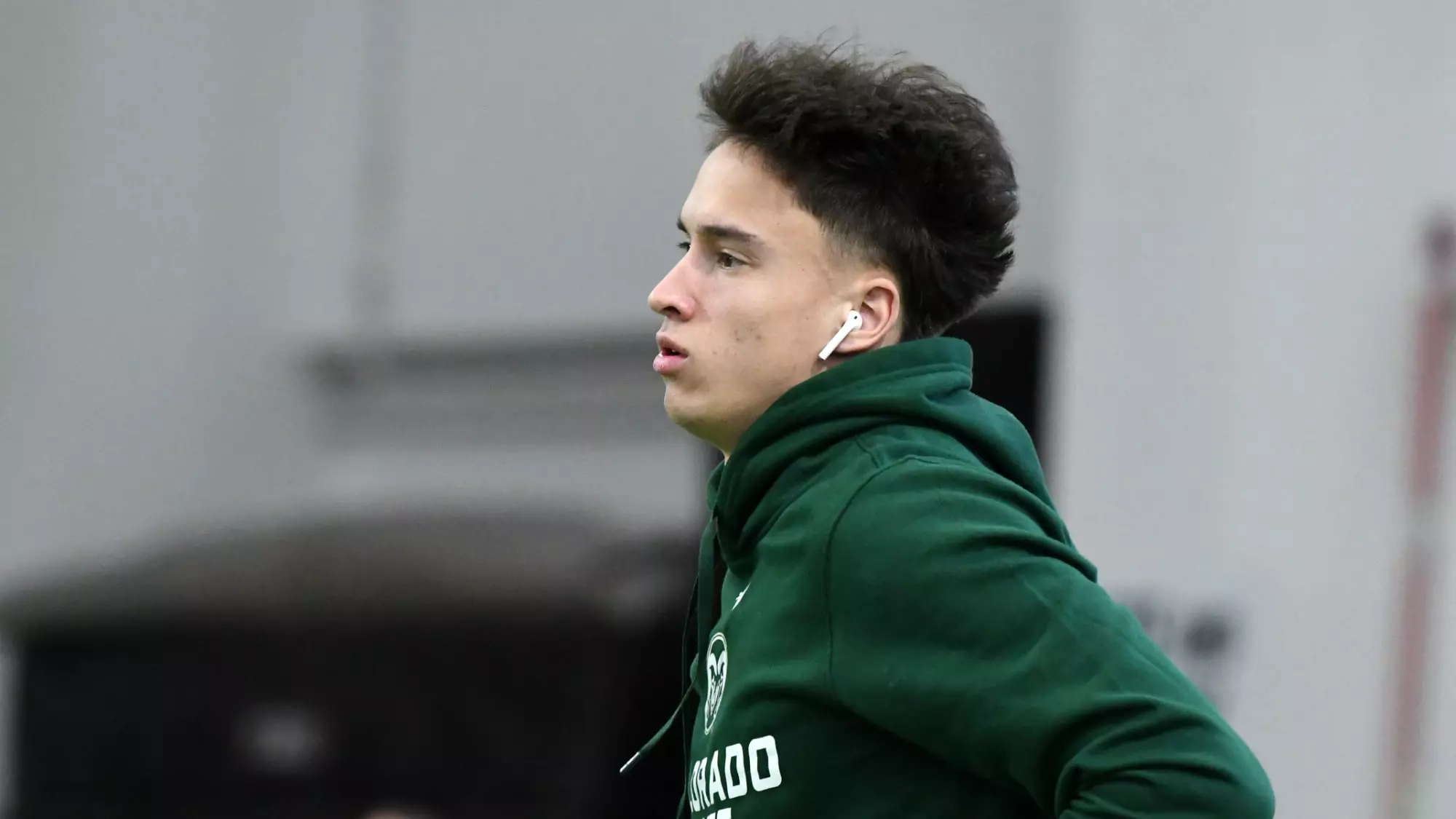
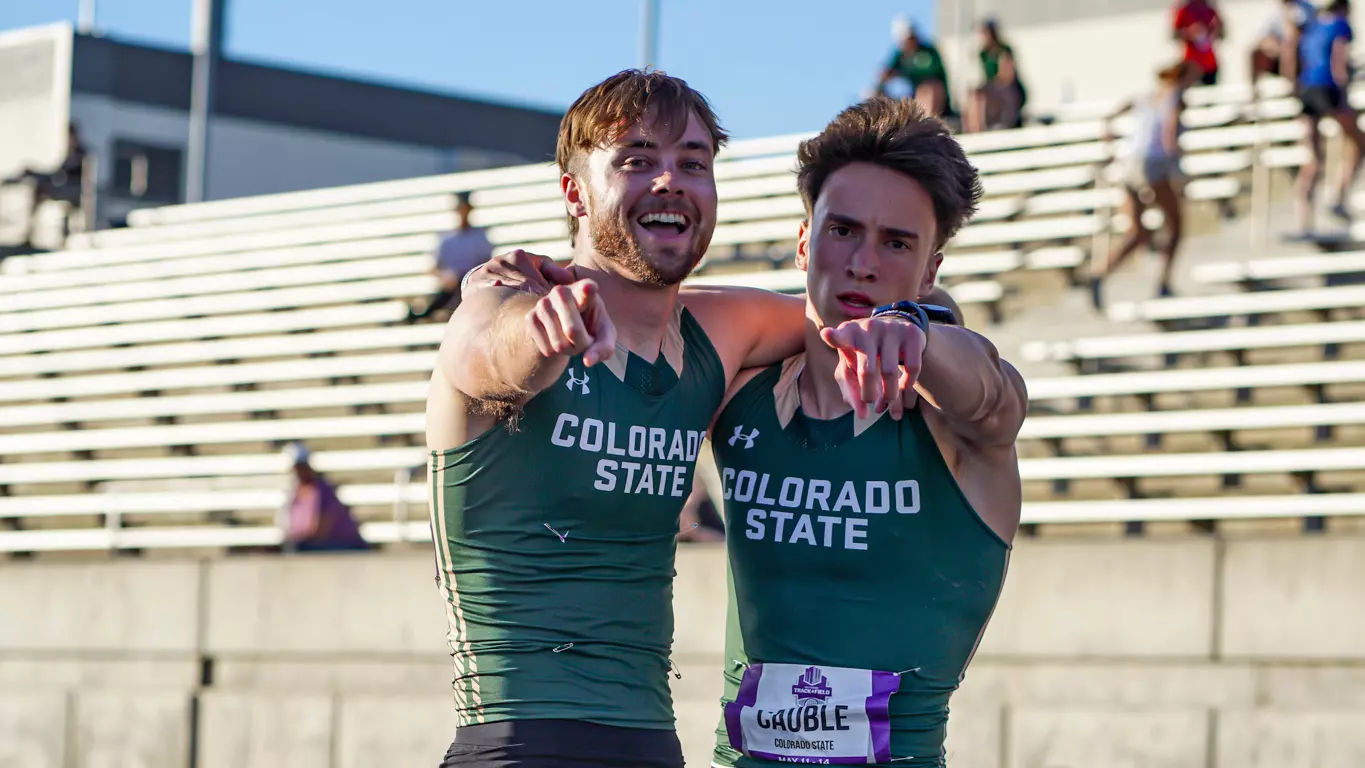
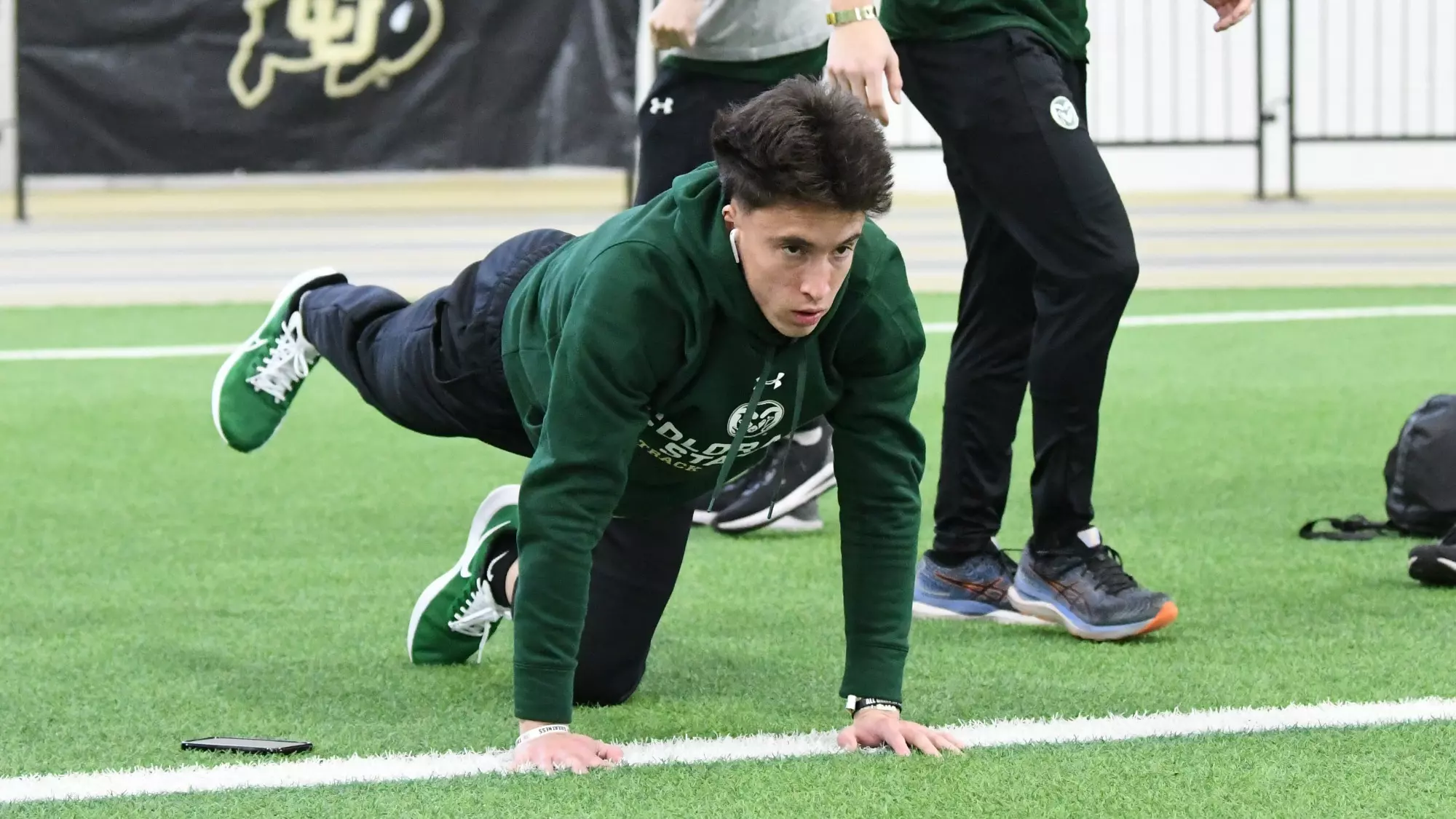
It's a lot different. There are definitely certain expectations that I have for myself, and my teammates have, but I try not to put pressure on myself. I try to still think of myself that I’m a walk-on, to prove myself and get better to keep working hard.Jack Cauble
In the course of the next three months, something had to change, and it became easier to do so when Cauble realized it was him and the way he was going about things. How he was working out. How he was preparing and recovering. How he took care of his body.
It started back home with workouts under the guidance of Proforce Athletics club coach Deshawn Fontleroy. There was sled-pull work, and a lot of block starts. It was also getting in shape to be ready to run a lot of reps. As a high school athlete, he felt he was a grinder. College exposed a hard truth. He was working out on the track at least three days a week and in the weight room every day.
The result he felt was being able to put more power into the ground, his strength making him faster.
When the team arrived back on campus, Riese had a new athlete on his hands.
“There wasn’t anything from a technical standpoint he changed, he was just covering ground faster than he had before,” Riese said. “Why that is, he had told me at the end of the season before, he had changed his lifestyle. That’s going to make a huge difference if you’re doing the right things socially, and on the weekends and in your free time, getting to bed at the right time and eating the right things and managing your social opportunities appropriately. You’re going to recover better and be better.
“His progression is still pretty remarkable to have somebody drop that much time in one year, but it’s a lifestyle sport. Your body is your implement. If you treat your body better, you’re going to run faster.”
Back on campus, Cauble wasn’t going out with his friends as much. He also replaced trips to Raising Cane’s and Chick-fil-A with chicken and rice he made on his own. He was eating more fruits and vegetables and downing water.
The result: Instead of being second-to-last in King of the Hill, as he was as a freshman, Cauble finished third, the first sign of a new outlook for his second campaign.
He also made a switch from focusing on the 400 meters to the sprints. It’s not a normal jump Riese sees, and Cauble wasn’t sure why he wanted to start there anyway, other than he struggled with his confidence. He’d always been a sprinter, but he wasn’t sure it would translate to college, so he switched to the 400.
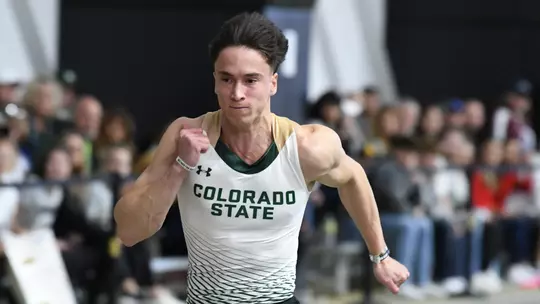
When the indoor season began, the results started to show. He set three personal records during the season and started to travel with the team. At the Mountain West Championships, he placed in the 200 with a time of 21.43, which ranks eighth in program history. He also helped the 4x400 relay establish a school record at 3:09.59.
Additionally, he developed a bond with teammate Kelley Stephens, now at UCLA for his graduate season. It wasn’t just Riese who noticed the change and what it could mean for the team. Working out together more, Stephens saw the transformation and gained a valuable practice partner.
As their conversations delved deeper, Stephens saw a bit of himself.
“When I did start to become closer with him last year, I knew he was serious about it and he was striving for greatness the same way that I was,” Stephens said. “We kind of had the same struggles early on in college. That being we thought we could get away living like a normal student, party on the weekends and eat whatever you want in the dining hall and still run fast. That certainly was not the case. My freshman and sophomore year kinda went like that, then I started to figure it out. I think he saw me as somebody who potentially he could look up to, and I definitely gave him a lot of advice. I think he took it, and it benefitted him greatly.”
The success he found indoor continued through the outdoor season, where he posted the sixth-best time in program history in the 100 (10.46) and 12th in the 200 (21.32) while again helping the 4x4 relay set a school record (3:08.27).
The biggest boost came with his conference finish in the 100, placing third as Stephens won the event, earning All-Mountain West honors on his own and qualifying for the NCAA West Prelims.
Heading into his junior season, everything has changed.
He no longer has Stephens around to push him, the guy who reminded him every day he wasn’t going to beat him in the 100. And he never did, not head-to-head. Got his time once, so that’s a start. Now, Cauble has confidence in what he can do, as does Stephens, who sees Cauble nailing down a 10.2 in the 100 in the outdoor season, a time Stephens said can win the title.
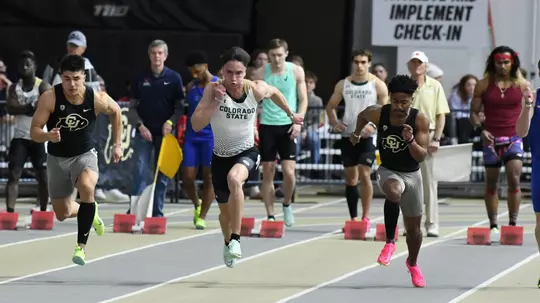
“It's a lot different. There are definitely certain expectations that I have for myself, and my teammates have, but I try not to put pressure on myself,” Cauble said. “I try to still think of myself that I’m a walk-on, to prove myself and get better to keep working hard.”
He’s a walking exhibit for Bedard to point out, and his story isn’t unfamiliar to any of them. The jump to college is real, and not all of them expect it. Walk-on or not, there are expectations to be met and some student-athletes need extra time to learn the lessons.
Cauble did, and now he’s a scholarship athlete.
“I love it. We want our walk-on athletes to push the scholarship athletes,” Bedard said. “If you’re on scholarship and you have a walk-on beating you, something’s going to change. At the end of the season, we reevaluate scholarship levels and who’s on. We have a strong history of upgrading kids.”
Colorado State began it’s push toward the Mountain West Indoor Championships this past weekend at the Potts Invite at Colorado. Cauble was pleased with the meet, qualifying for the 60 final but was held out because Riese saw what he needed to coming out of the holiday break.
He’s definitely seen enough to know he views Cauble in a completely different light.
“Totally. I think his ceiling is … who knows what he’ll do this yea?” he said. “He came in this fall and is training really well again, and his testing went well and time-trialed really well. I think he’s just going to keep progressing really nice. He’s not going to have that same jump again. If he did, he’d probably just go pro, but I expect him to continue to get better.
“He’s a really good example for the younger guys. He’s a junior now. He’s very serious, takes care of himself and trains hard, has a good attitude and communicates really well with me too, because we have to keep him healthy, and that was a bit of a challenge last year at times. The younger guys can hopefully use his example and pick his brain and not make some of the mistakes he made as a freshman, and he’s been open to that role.”
All because Cauble took two of his worst days and assessed them accordingly.
The day he was told he wasn’t good enough, which he turned into a grueling day of proving he most certainly was capable.
“King of the Hill is probably one of the worst days, if not the worst day, of the year,” Cauble said. “You wake up and you know you’re going to throw up because everybody does. You just show up and you get the butterflies, and you know it’s going down. It’s pretty tense too. Everyone is locked in; there’s not a lot of talking going on. Everybody is pretty nervous. It’s definitely interesting.”
Given a second chance, he let it all out going up the hill. And when those series of sprints were done, it all came out.
A great feeling, in an odd way. Now all he’s throwing up are solid marks which put him among the conference’s best, which leaves a much better taste in his mouth.