
No Assumptions Behind the Blocks
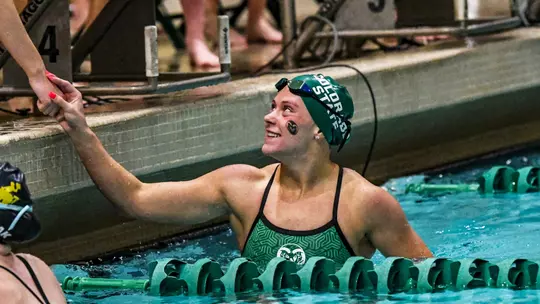
Trietley learns and grows through successful freshman campaign
Mike Brohard
Facts always outweigh assumptions.
Entering college as a freshman, one is going to make assumptions. People you meet are going to make assumptions about you. Over time, be it in a dorm or a locker room, as introductions turn into conversations, those discussions increase and even deepen, and some of the initial layers of what one thought will be pealed away, even discarded entirely.
Christopher Woodard understands all the athletes he recruits to his Colorado State women’s swim and dive team will still have some assumptions in place: About him, his program and even the teammates they are joining. He likes to eliminate as many as he might have by asking about family in detail and day-to-day habits and rituals. He won’t know everything – no coach ever does – but when it came to Lexie Trietley, a lot of what he knew was based in fact.
Trietley wasn’t actively seeking out schools in the recruiting process, which actually does work in the world of swimming. It wasn’t until late in her process she had contact with Woodard, but what he said made an impact.
“He texted me really late and was like, ‘hey, I kinda know where you’re from and when I see a girl coming out of Olean with those times I look twice,’” Trietley said. “I was like, ‘Oh, he knows where I live.’
“That was one of the biggest things. Woody knew where I was from, and he knew my training and I think he knew I would be a good fit for this team.”
Because not everyone knows where Olean, N.Y. (pronounced, Oh-Lee-Ann) falls on a map. A native New Yorker like Woodard, who married his wife, Holly, “right around the corner from there,” did.
A swim coach likes fast times. But seeing them from Trietley, in the Southern Tier of Upstate New York, told him so much more. It fascinated him.
“Understanding the background on Olean gave me insight on who Lexie is. One, in upstate New York, there are some really hard-working, middle-class people, but I also know the economy has been somewhat depressed,” he said. “In those areas, kids have to seek out opportunities. They have to be intrinsically motivated; they can’t be about the bells and whistles because there’s not a lot of bells and whistles to be had. Secondly, as popular as high school swimming is in upstate New York, club certainly isn’t. There is not a lot of framework for a kid who wants to be a year-round athlete and succeed.
“Knowing there are those obstacles and yet she’s still swimming really, really fast, that gives you some insight to who the person is mentally.”
He knew right away she wasn’t the classically trained club swimmer. In Olean, there isn’t really a club. And what it has doesn’t swim twice a day, either. Her shoulders grew bothersome at one point, so she ran cross country. When she went back to swimming, she had to drive 30 minutes into Pennsylvania to join a YMCA club team.
She was fast, but she never was on the circuit to go to Junior Nationals or sectionals or any of the meets which draw the top talent regionally, though she did compete at YMCA national meets.
When the pandemic hit and pools were closed, she started lifting weights more. It was the one place she could continue to train, so she did. But the yardage in the pool had not added up through the years. That, to Woodard, was a positive.
Going to college, that, for Trietley, was a consideration.
“One of the reason why I chose CSU is it’s one of the lower yardage programs. I like that I wouldn’t have to swim doubles twice a day, every day,” she said. “I knew it was going to be a challenge for me, because I have had shoulder problems from over usage. I came in with the mindset of giving it time. I chose CSU for a reason. I love Woody and (assistant coach) Lisa (Ginder) and I know they know what they’re talking about.”
I don’t let people get to me; I don’t let people intimidate me. I might not be the biggest one out there, but I know I’m strong and fast. I just don’t want to lose.Lexie Trietley
Woodard said she’s adapted quite well. She’s swimming and lifting more than she ever has on a consistent basis, even though she showed up a lot more muscular than the young lady who came out on a visit. After her senior high school season she took off eight weeks and weight trained exclusively. Upoon arrival at CSU, her frame packed more power, but Woodard wondered if she had given up speed and flexibility in the process.
That was worked through the first few months. Even though her background differed, she was still held to the same metrics to pass as the others in order to travel with the team. It was a challenge for her, but one she hit.
Some of the assumptions were gone. Others were still being navigated. About whom she was as a person and the swimmer. Put 30 young women in a locker room together, their experiences aren’t all shared, so they will all think differently.
What Trietley has learned through time is when she says she’s from New York, people automatically link her to New York City, typecasting her.
“I think it was kind of hard. Coming from New York and not the city, it’s a lot different than here,” Trietley said. “Just things I had never thought about before are huge here and come up a lot. I think for me, I’ve never been one to care about what other people think, but since I’m so far from home, I really want this team to be my family and I want to get along with everyone. I haven’t changed the way I act, but I am careful, and I want people to like me., I want to be there for the team, be supportive and be supported. It was hard at first, but I think this team has a ton of personalities that come together.”
One of the assumptions she made was she probably wouldn’t get close to the seniors, them being so much older and on their way out as she walks through the door. Now, with her first season nearing the end, she knows she’s going to miss them all dearly.
Team captain Hannah Sykes remembers her freshman days, the feelings of being lost. As a person who was home schooled, there was much she didn’t know, and she knew there were incoming freshmen who would thrive with the information at hand.
Over time, she and Trietley would talk, they would come to know each other. More importantly, understand each other and how to weave it into the fabric of a team.
“Coming in, it can seem like you’re being hard on the freshmen, that you’re assuming things of them. Everybody comes from so many different places and backgrounds,” Sykes said. “Being home schooled, I felt a little sheltered to some things. It was a learning curve to be surrounded by so many girls and learn to adapt and grow.
“I’m so proud of her. I think she’s probably grown more personally than anything. She came in to so many different backgrounds, and there’s a lot of growth that has to happen. One thing she showed was the desire to grow, she wasn’t complacent where she was. She wanted to learn and grow from everybody, and it’s been very apparent to me. She’s made it a priority to grow.”
Assumptions work both ways, which Woodard understands. He knows all of his freshman are going to be exposed to something new in the first few months, most likely, all year. They will adapt.
Just as importantly, the returning team has to as well. As people. As swimmers.
“I think it’s interesting not only in her growth, but the growth of the team because of her presence. In terms of her personal growth, and we’re only a couple months in, it’s dropping some of our armor and our initial reaction to something said,” Woodard said. “It’s to have more patience, listen, take in someone else’s perspective. I’ve seen her become a little more patient and understanding. She’s had to adjust to our coaching style. There are times she’s requested things to be changed, and sometimes I will, but most of the time no and here’s the reason why we’re doing it. She’s had to sit back, where in other situations because she was the fastest, she maybe got what she wanted. It’s to understand I’m doing this for the greater good, there’s a purpose behind it and I trust these people.
“As for the team, its understanding we don’t all come from the same backgrounds. It’s pretty rare we have somebody of Lexie’s ability, but also from her background. Most of these athletes come from 8-12 years of club swimming and a pretty regimented schedule. Lexie doesn’t have that, so her perspective on the sport, and maybe life in general, may be a little different. I think seeing them start to open doors and say, ‘OK, I may not agree with everything, I but I need to understand your perspective.’ I think it’s been a welcome change.”
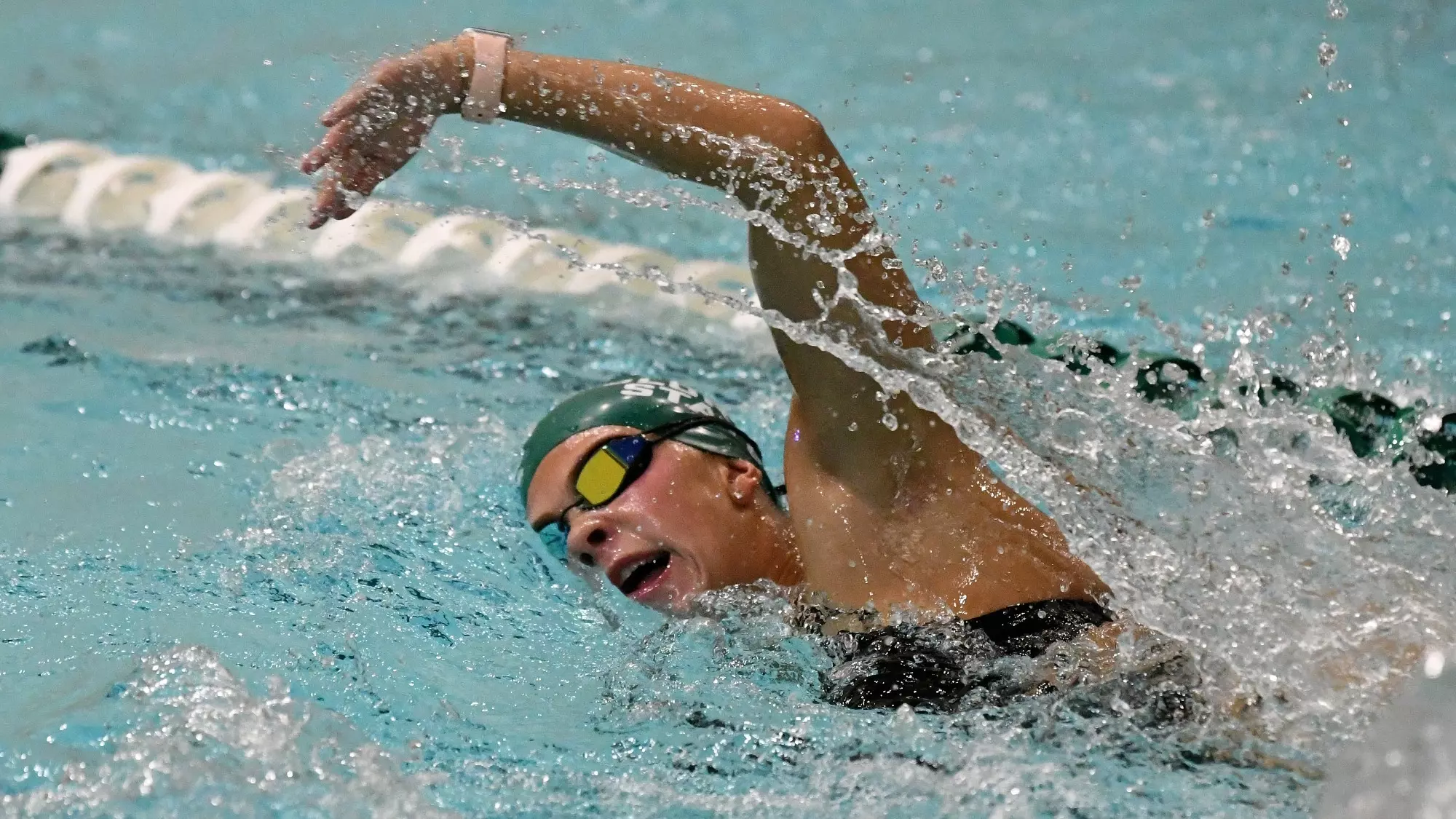
What has always been a priority for Trietley is touching the wall first. Which she’s done in all but one of her individual races this year. She placed third in the 50-yard freestyle at the season-opening Chick-fil-A Invitational, a meet attended by Pac-12 thoroughbreds UCLA and Cal. She hasn’t lost the race since.
At the same meet, she paced the field in the 100 free, a race she’s never lost in college. Her times – a 23.11 in the 50, 50.17 in the 100 -- from the opening weekend put her immediately in the program’s top 10 in both events.
Those results didn’t give her a bit of swagger -- which isn’t a bad thing in the blocks – she had it packed in her luggage, thanks to her father, Gerald.
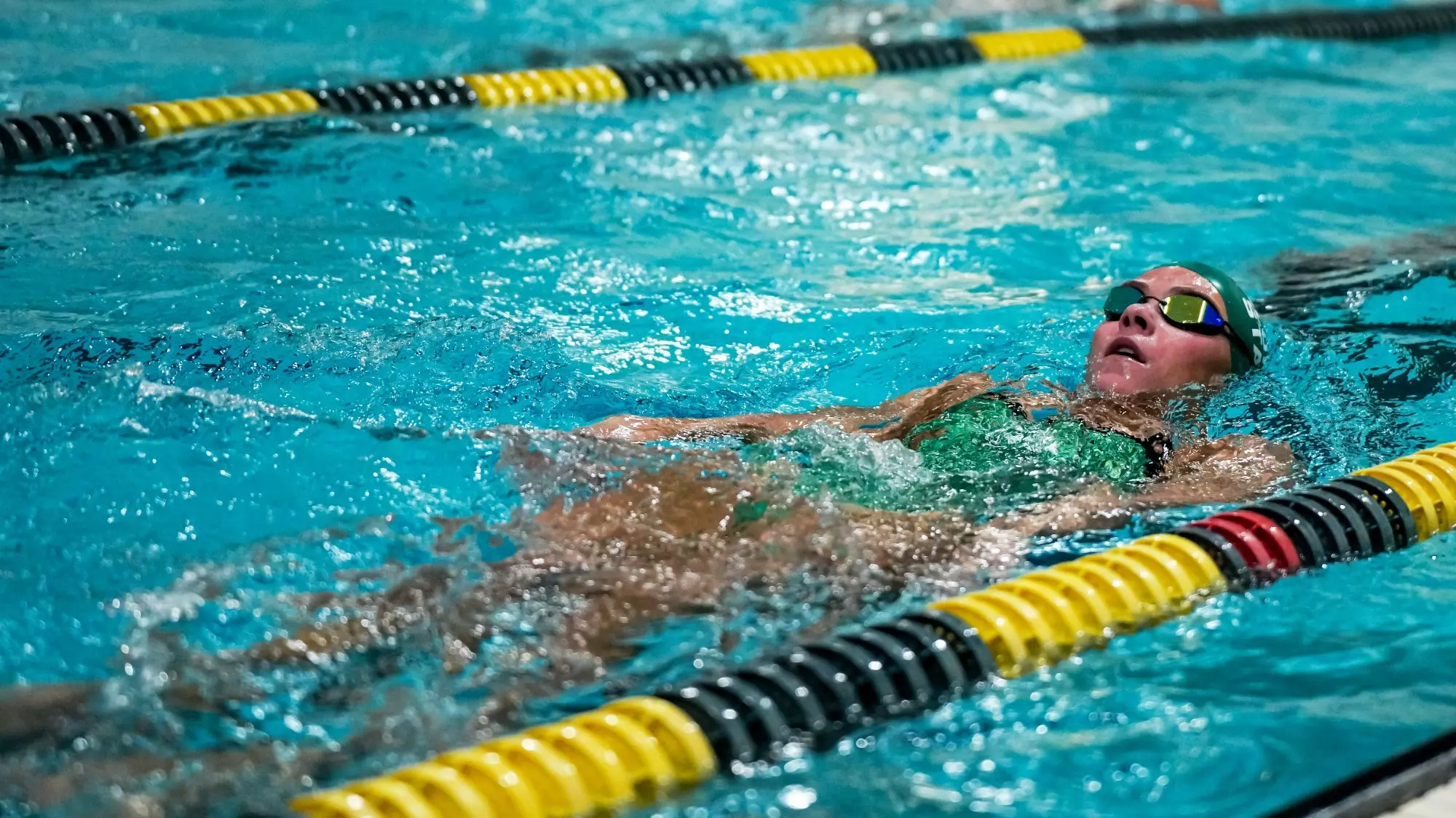
“I don’t like to lose. My dad was a Division I football player, and he taught me since I was probably 8 years old mental toughness,” she said. “I always take that with me, wherever I go. I don’t let people get to me; I don’t let people intimidate me. I might not be the biggest one out there, but I know I’m strong and fast. I just don’t want to lose.”
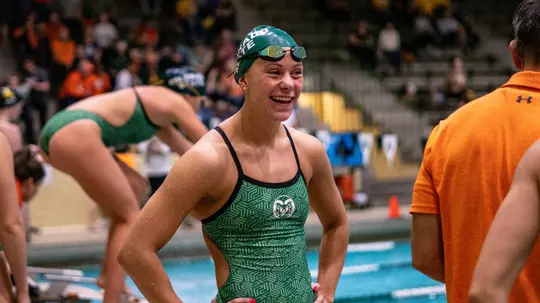
Her teammates have come to expect wins. Knowing as much bolsters her approach and Woodard finds it fits nicely as the team’s culture continues to develop. He knows it’s not for everyone, but he encourages it in those where the personality fits. Sykes’ freshman year was one where the team hoped to win. As a senior, she knows they expect to – the Rams are undefeated in 23 consecutive duals – and Trietley is a big part.
She anchors the team’s 400 free relay, generally the last race of a dual. More than once, she’s come from behind to get the Rams to the wall first, most recently the final dual of the season at Northern Colorado.
“She fits in, because most of the team has made the expectation of, I’m not going to be OK with finishing, I’m not going to be OK with doing alright. She’s always going to do her best,” Sykes said. “I think in seeing her succeed and excel just beyond what you’d think of a freshman, it’s made a lot of other girls step up to the plate and be I can do that too. I think it’s been really cool.
“Even outside the pool. It’s also in the weight room. I know she’s made me do things I didn’t think I could do. I think it’s pushed Megan Hager to do things – a bunch of the other girls. It’s created a really healthy competition atmosphere, and that’s made us all better.”
In her races, she does it in the simplest way possible – without a thought – something Sykes believes they should all try to inherit from their young teammate.
Swimmers, Sykes said, have a habit of psyching themselves out before a race. Trietley goes in blank.
“I don’t like to overthink my races. I like to plan out the time I want to go, and I have goals, but I’m not going to stay up all night worrying about it,” Trietley said. “This being my first year, this is just like icing on the cake. I’m excited to see what I can do and race new competition and be there with the team. I want to see how Lucy (Matheson) does, how Erin (Dawson) does. I’m just excited.
“Mentally, for me, I just need to stay relaxed and go in with the idea I’m going to swim fast, do what I know how to do and just see what happens.”
There’s a lot of that in front of her. Academically she is a sophomore, entering college with 47 credits on her transcript. Even still, she plans to stay at Colorado State for four full seasons. Because of her background, there are technical aspects of her swimming which can improve, leading to some in-depth conversations with Woodard.
Some of them have already been addressed. Other have been left alone for the time being, because what she is doing works and they don’t want to mess with the flow in season. The offseason, they can be addressed. What he likes is for as little exposure as Trietley may have, she asks the right questions. She wants to know the why, the how and what is exactly the bottom line.
One change Woodard does know is Trietley doesn’t have to carry the load, which she was counted on to do back home. She wins a lot, but it doesn’t mean she is the Alpha Dog. By the numbers, Matheson has won more individual races this year due to her amazing versatility as a swimmer in both the backstroke and breaststroke, and she can score points in the 200 individual medley if asked. He feels it has helped Trietley understand the team concept of the sport even better.
Trietley is a sprinter, one who is being built up to add the 200 free to her arsenal. She’s raced it a few times this year, proving she’s still learning how to approach a race where an attack mentality doesn’t always play out.
“For my 50, it’s just fun. This is so short you go out and swim as fast as you can and it’s over,” Trietley said. “The 100, three’s a little more competition at times, or it can be really close and that’s stressful coming back on the last 25 and you wonder who has the most left. Those are my two favorite events and my best events, so it’s just go out and do your thing and have fun.
“I’m just a sprinter. I take it out and I die on the 200. At Air Force, I went out two seconds faster than everyone else, and I think I tied for third. When I try to pace myself in the 200, I still don’t go the time I want to go, so I figure go out as fast as I can -- hard, crazy, whatever -- and try to hold on. I’m a competitor, a racer. If somebody is right next to me at the end, I’m going to try to beat them.”
As for what happens at the Mountain West Championships, all of them are still in a bit of wait-and-see mode. For starters, she wants to continue her win streak. She also comprehends she hasn’t seen all the top competition the conference has to offer.
Taper is not an exact science, and Woodard has never seen Trietley fully prepped for a big meet. He’s seen her track record though, and he has every confidence when she dives in for her first race suited up, fully shaved and rested and at sea level, she will perform.
“I feel a little bit of pressure, but just from myself, honestly. I obviously want to win the 50 and the 100, and I know if I have the right taper, I have a really good shot at doing that,” said Trietley, who has top eight times in both events. “And being at sea level. I’m excited. I know mentally it’s way more powerful than how you feel, so even if I don’t have the best taper I’ve ever had, it’s my first year here, my first time with these coaches. If I’m set mentally, I’ll swim fast.”
Part of his confidence stems from her inner belief. He’s also been around long enough to accept, at some point, she’ll lose a race. Again, her conviction gives him faith it will not be a setback.
The one time this year he didn’t have her anchor a relay, she immediately asked why, wondered if she’d done something wrong. The insight he gleaned from the exchange was she wants to be in control and wants to be relied on to win. He’s had some talented sprinters in his career, but he knows she’s built different.
“We always talk about mad versus sad. The disappointment that can and will result – she’s going to lose at some point in her career – is that I don’t think she gets into the sad,” he said. “I think she gets into the mad. There’s an initial moment of disappointment where I think she’s the type of person who will rebound quickly and be, what do I have to do now to beat that person? I don’t have the much trepidation of putting her on the anchor. I don’t have any fear, win or lose, she won’t be able to rebound and come back in her next race.”
In Houston, there will be no assumptions for Trietley. She’s confident in her work. She’s steadfast about her own abilities. She’s buoyed by her results and those of her teammates.
Behind the blocks, there’s no conjecture. Just the facts she knows as a competitor.