
Finding Willing Workers to Build the Palace
Buzkova, Richterova help set foundation Tran sought
Mike Brohard
What she inherited was the classic fixer-upper.
Mai-Ly Tran was named the head coach of Colorado State women’s tennis quite late in the game, in July before her first season. She was asked to change the direction of a program which had just one winning season in the past 16. Her schedule was set for 2021-22, and so was her roster. She didn’t get to find players who suited her vision, she just had to hope those who were on hand would see the benefits of her design.
Tran, who came from Drake, is quite competitive. She expected her team to be the same. She also wanted them to be supportive and encouraging, be positive, lead by example and be self-driven enough to be disciplined in their own work.
Competitive was the foundation, the rest of it the framework to help build the palace she envisioned. She had no idea what the players on the roster had in mind, five of them first-year transfers brought in by the prior coach.
“I don’t necessarily think it was a quick buy in. I saw a lot of positive qualities in them, and they brought their qualities into our culture,” Tran said. “It was hard to start with so many new players and learn about each other. They did a great job of accepting me and being open minded and seeing my vision for the program. We definitely had our bumps, but I have a lot of respect for how they accepted me and navigating through an entirely new team.
“Honestly, their qualities as teammates and leaders is what has helped us sustain this success the past two years.”
Enter Radka Buzkova and Sarka Richterova. Of the five transfers, they were the only two who had multiple years of eligibility. They were recruited to immediately inject wins into the program, but also set a tone Jared Camerota had asked them to deliver.
Then he was gone. He was who they came to play for, so naturally, they had questions, which didn’t come immediately.
“It took a semester. The spring semester in the first year changed a lot,” Richterova said. “It was a big building process in the fall semester. There were a lot of things we had to work through, get to know each other and get to understand what we expected. I think Jared was very different than Mai-Ly, so our expectations were different than what came. It took us a semester to realize, and in spring we were like, this is what I want to do.”
What transpired was Colorado State is no longer an afterthought in the Mountain West in tennis. In two seasons under Tran, the Rams have won 31 dual matches -- or four more than the prior four seasons combined. The 15-8 mark in 2022 stood as the record for wins in a season until 2023, when the Rams won 16 and strung together a record seven-consecutive home dual wins. Tran’s idea for a culture has been a big part of the immediate turnaround, because her Rams are competitive, the players are supportive while holding each other accountable and they genuinely have each other’s best interests at heart. It remains in place as the team opens the 2024 dual season at home Saturday against North Dakota.
Tran will tell you part of the reason the culture is so strong is because Buzkova and Richterova help to lay out the expectations for each new player who enters the program, young or old. The best part, they both came back for a graduate season when initially they had planned on stepping away.
“They’ve set the tone for what’s expected from all the players, but they’ve also helped us recruit good student athletes. That’s helped continue the success too,” Tran said. “I think outsiders are impressed with the culture and the level of tennis. Now that the younger players know what’s built, now it’s their job to carry on what’s been built.
“I think they still make decisions that will affect years forward. I always say I think we got really lucky to have them coming into a new program. They’ve built this program; they care about this program. I’m extremely grateful and thankful we’ve been able to go on this journey together. They are the reason we’ve done so well. Every team member has contributed, but for them to take their last year was a nice surprise. I don’t think they were playing their last year of tennis. I expect to bring them back as much as possible, but I’m excited for their next chapter.”
They are not two peas in a pod, despite the fact they both come from the Czech Republic and often played at the same club. Richterova is from the city, Buzkova the mountains. Richterova is vocal and wears her emotions like a badge of honor, while Buzkova’s fire burns internally.
On the court, they both want to win. Period. Post the individual and doubles victories, chalk up team successes, any way possible. If they have their best game on a day, they’ll go for the jugular. If they don’t, they’ll will their way to gritty performance.
They win a lot. Buzkova has won 25 singles matches in each of her first two years, tied for the third most in a single season. Her 53 career singles wins leaves her three shy of cracking the program’s top 10. She also has 53 career doubles wins, tied for seventh at CSU, and the 26 matches she won in her first season are tied for the most with her partner, Matea Mihaljevic. That season, they became the first Rams to win an ITA Mountain Region Championship – beating Richterova and her partner, Somer Dalla-Bona, in the final.
Richterova won 22 doubles matches that year, which ranks fourth. Her 44 career doubles victories leave her five shy of the top 10.
Most of all, they want the Rams to win.
But two years ago, they had a lot to figure out. Two years later, they both say their third season at Colorado State is all due to Tran.
“I think building trust is crucial in a relationship. It was the same thing with Coach,” Buzkova said. “You go to a new place and coming from not the best experience at my last school, I had trust issues. It was challenging in the beginning, but she provided us with reasons why we should trust her. From the beginning, it was her job that we started to have this amazing relationship.”

Whatever a team is, this is a team.Sarka Richterova
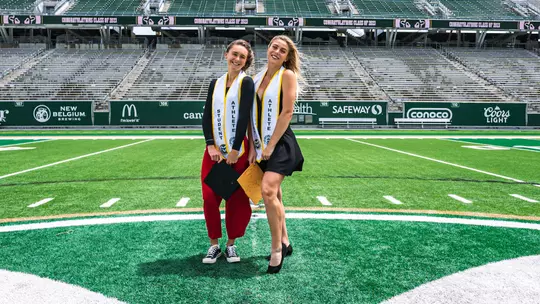
When they both found out their wants and needs were completely aligned with Tran’s, they essentially became the unofficial team captains and the players every arrival has looked to for guidance, be it vocally or visually.
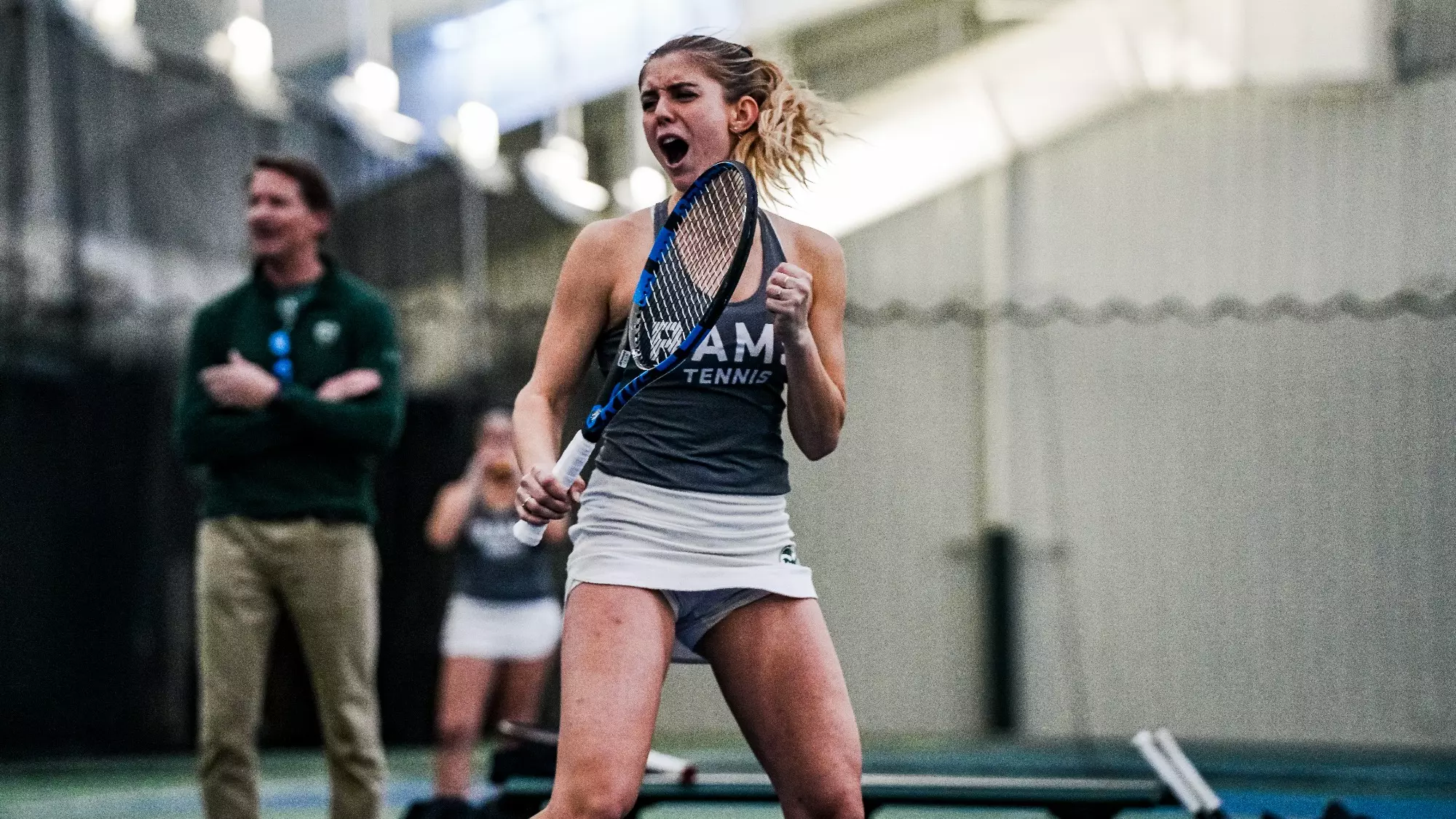
Vocally, that’s Richterova, who Buzkova calls the “team mom.” She starts the chants on the court, and you can hear her from across any complex. Her matches are a fist-pump waiting to happen, a scream to fire herself and her fellow Rams up.
Buzkova admires her teammate’s passion for the sport and the team. She bakes for the team and is amazed how Richterova can read her teammate’s emotions through their eyes, her understanding it’s not all about tennis and that each and every one of them will have a rough patch to navigate. Richterova serves as the rudder.
“Her passion for tennis, she’s always going to do everything to help the team and everything to win on the court,” Buzkova said. “She’s super passionate and fun to be around. Those small things help. We’re tired sometimes, and working through that and being loud, it just helps everyone. Sarka maybe does it because she needs it, but it translates into the team chemistry, and it influences everyone. Sarka’s influence is the best it can be all the time.”
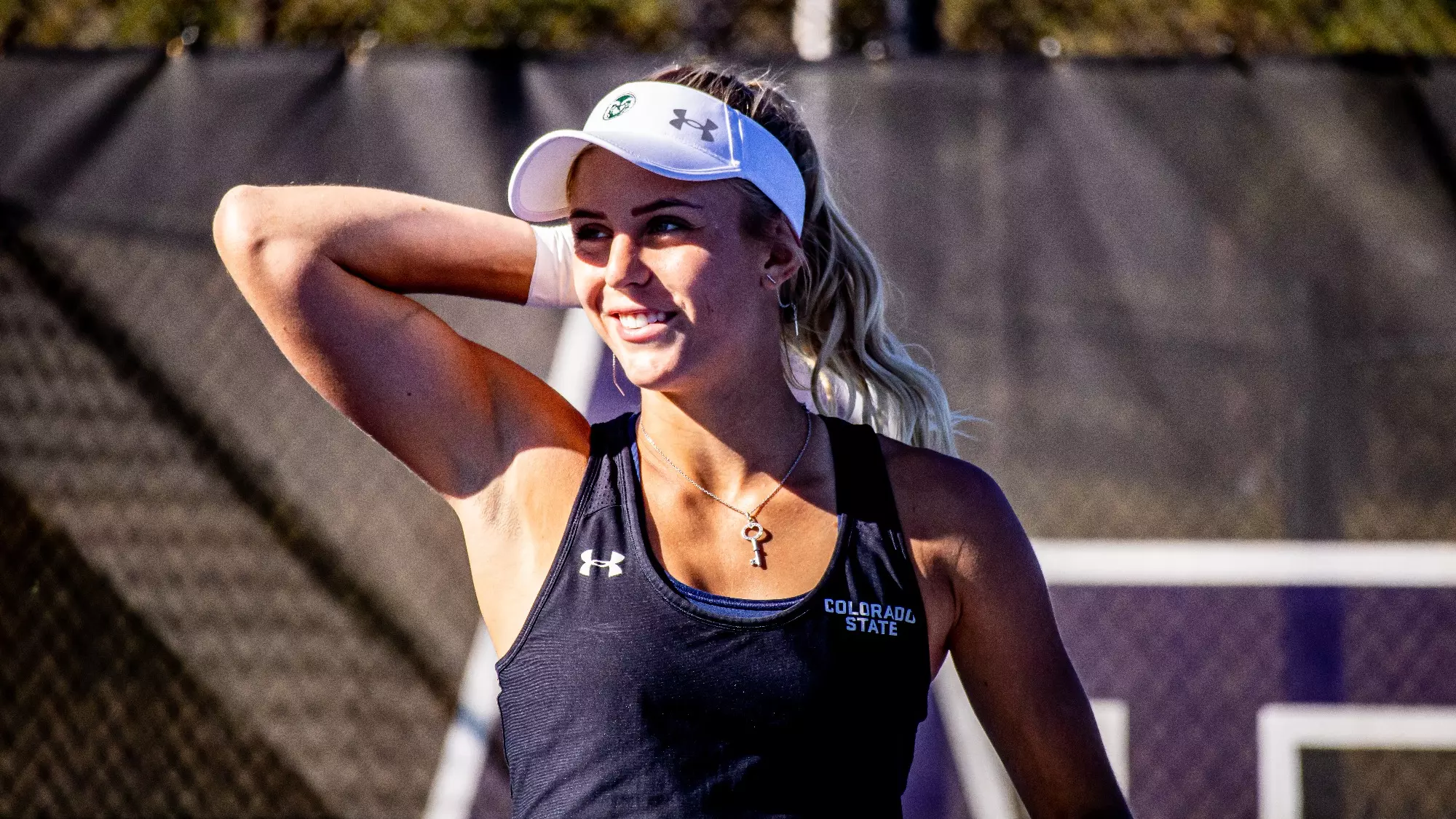
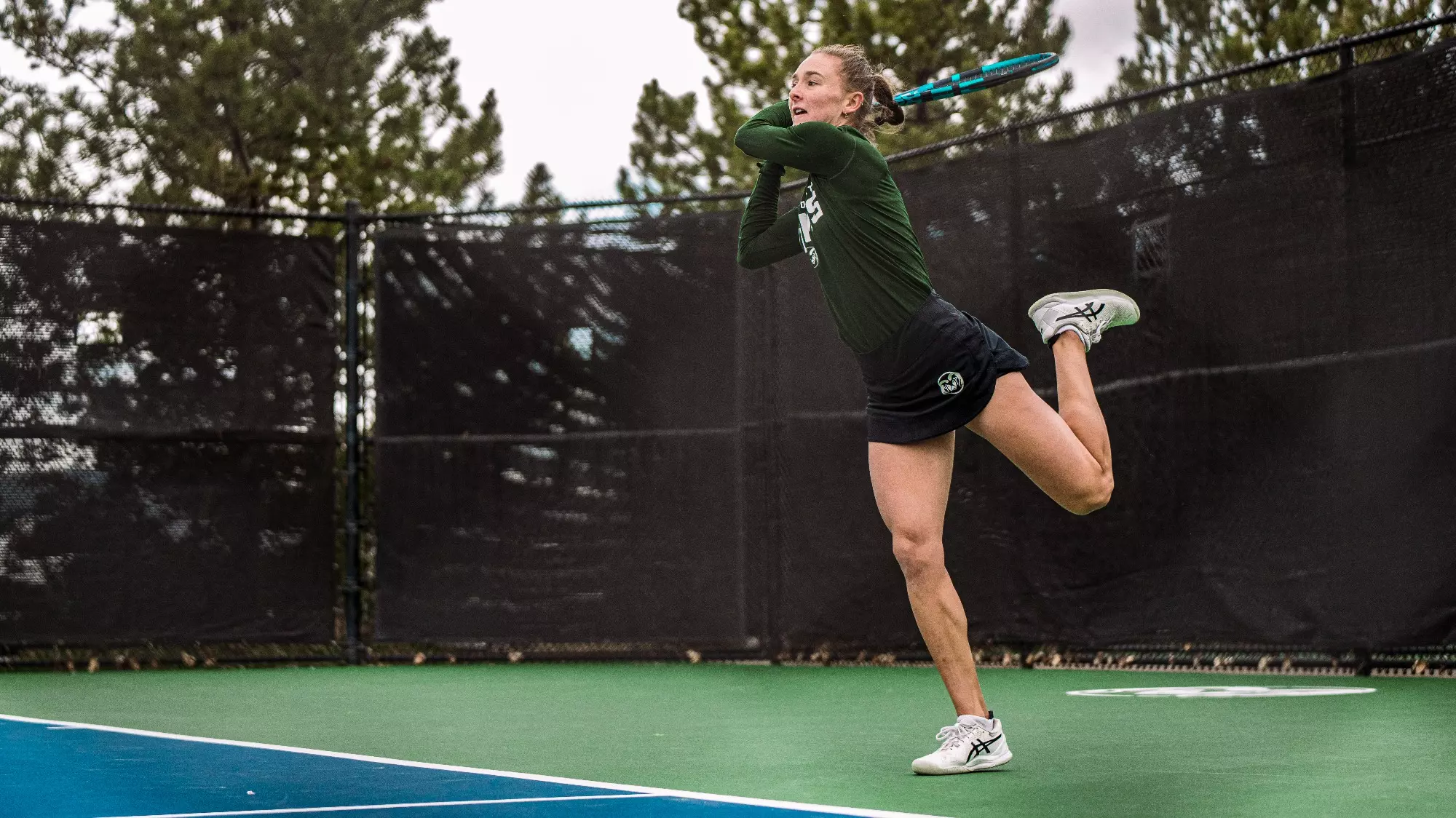
Buzkova is the epitome of old school. She is supportive, but rather introverted. She leads by example. No one will outwork her during conditioning, and opponents cannot wear her down. She never yields, not in a match or in practice, and her teammates feed off her example.
To the point, she is the “team beast,” as Richterova claims. What makes it maddening to them all is it doesn’t always look like Buzkova is putting in full effort, she makes it all look so easy to her. They never doubt she is busting it, however.
“The biggest thing about Radka is when she comes to the court, you know she’s going to do her job. Like, always, 100 percent,” Richterova said. “If she feels bad or feels good, she always does her job. That’s such a good example for new people – we just do the job.”
The values Tran wanted from the start, those are the ones the duo holds so dear. They protect them at all costs as if they were their own. In truth, they are.
“That first year was interesting, with losing five team members and to have three return and have them as the foundation of the team. It really helped,” Tran said. “They really communicated to the rest of the team and explained to the team. They knew me well enough after a year what my expectations were. I think they held their teammates accountable; they expressed what the standards and expectations were. That wouldn’t have happened without them there. We would have had to go through an entire year of really building it once again, but they were the best to continue it on.”
A coach is always the figurehead for the team, but if the players take charge, the job takes care of itself.
Be it in the locker room, at practice or when they gather together away from the court, those two are taking care of the team dynamic. Before the fall season starts, they let the team know – returners and newcomers alike – what the team stands for on and off the court, at home and on the road.
The first year they were finding their place. By the end, they’d found a home, and they were definitely going to keep it tidy.
“It's also holding everyone accountable, and I include Zara Lennon a lot in this. She came last year, but she’s so experienced and she’s pretty much like us; she leads a lot too,” Richterova said. “It helps in the beginning of the season for all the new people, and the old, we say those rules are not rules, but values you want to follow. Everyone has those values, we all know about them, and when something comes up during the year, we can go back to that and say we didn’t meet this value so I think we should work on this because this is what we are. I think it helps to have that base, and then if we don’t like something or somebody did something that didn’t meet the values, we can work on that.”
Tran never asked them to assume these roles on the team, it just happened organically. It was the way Buzkova and Richterova were built. They worked in tandem without a plan, just doing what came natural to them, each in their own way. Different paths and approaches, the identical goal all the same.
A place they felt supported, A program where they and their teammates could thrive, year by year.
And without knowing it, a framework which will exist when they finally both have to depart physically.
Emotionally, they will never leave.
“We don’t think about those things, that we came in and changed this program. We have to realize it sometimes,” Buzkova said. “We don’t think about the program not being good, then we got ranked and made it to nationals. We have to take pride in that, even though it might be selfish, but we have our part here for sure. It’s always going to be in our heart. We’ll follow and stay in touch.”
Neither of them really wants to take credit for what they’ve helped create. It’s not in their nature, because it wasn’t a task they set out to fulfill. However, intentionally or not, they both have accepted the realization.
Their names are both in the record book, no surprise, because they both came with the intent to be successful players. What they will take away most of all is what they both hate to leave.
“For me, I don’t see it like I’m building team culture. For me, the biggest thing I see in my team is pride,” Richterova said. “When we have tough times, or we’re sitting in the circle, and you see some person is going through something hard and the whole team is there for them. Then people cheer – they genuinely cheer for each other – and I think that’s something special about this team. We are literally a family. People say that, but we are what it takes to be a family. We care, we love each other, we have so much fun with each other. I think we’ve built relationships we will have forever. I think the one thing I value so much about what we were able to build is we are a team.
“Whatever a team is, this is a team.”
Tran came to Fort Collins to change everything about the program. She will tell you she couldn’t have recruited a better pair to oversee the construction of Colorado State women’s tennis than the duo she inherited.