
Always Looking for Something More
With the top throw in the nation, Lesnar isn’t near finished
Braidon Nourse
Brian Bedard is deliberate in what he looks for in a prospective member of his Colorado State track and field team.
He’ll tell them what he expects from them, but also — perhaps more importantly — what they should expect from him, in his dual-role as head coach and throws coach.
“We make a pretty big investment scholarship-wise, so I expect the investment to work out, right?” Bedard said, with the promise of Mountain West titles in mind. “I’m really straightforward in the whole recruiting process and kind of what they’re in for and what I’m like as a coach. I’m extremely sarcastic, extremely demanding, so you're going to have to wade through some of that. And if you can’t handle that, then don’t come here.”
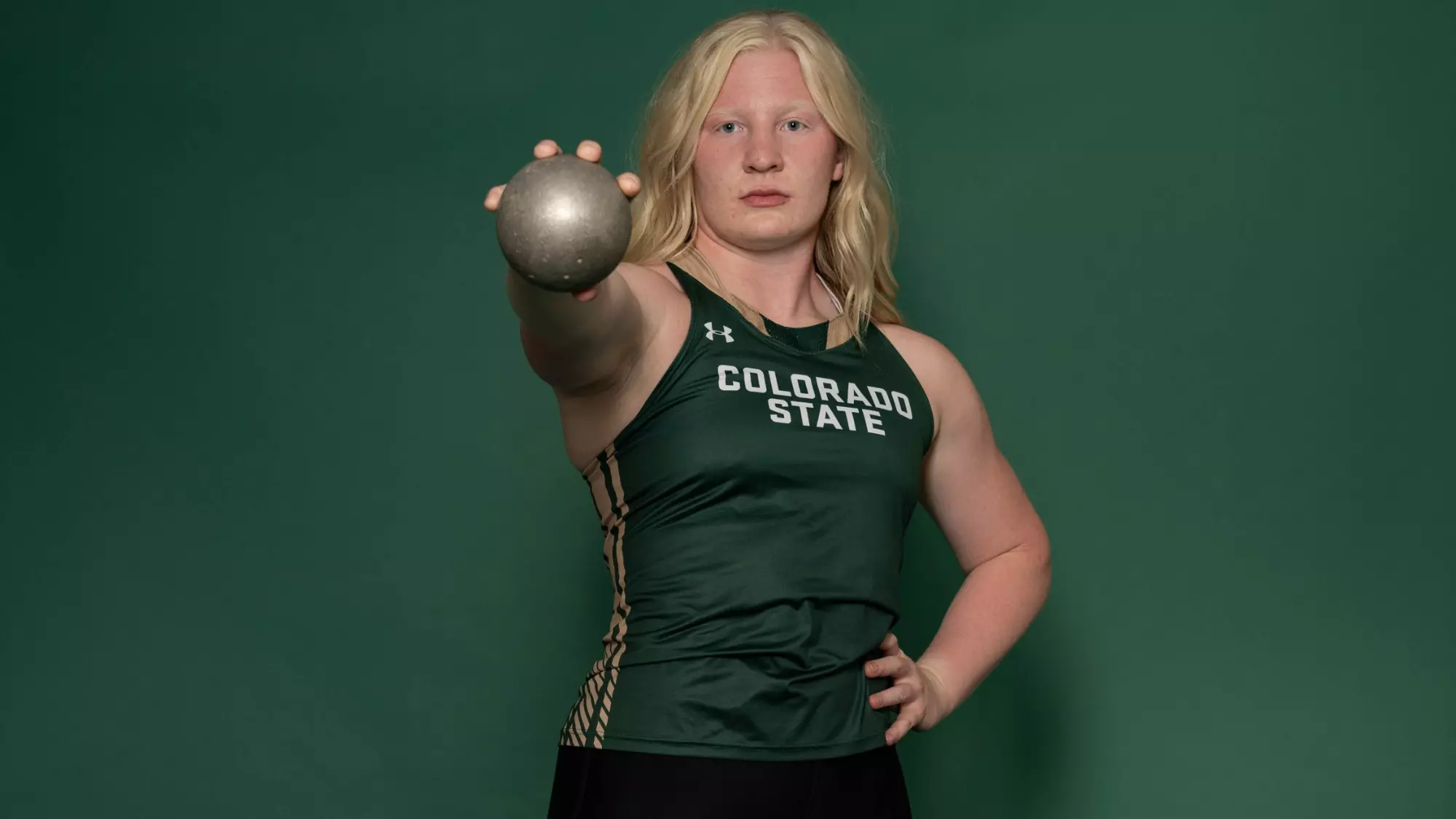
Mya Lesnar, a junior transfer from Arizona State who Bedard said is “very sarcastic and intense herself,” accepted the terms and exceeded expectations. They’ve both benefited greatly from the exchange, with Lesnar now leading the country in the shot put by nearly a foot.
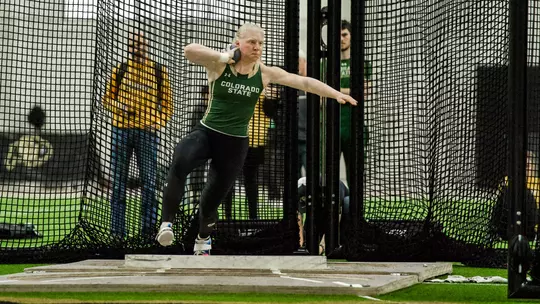
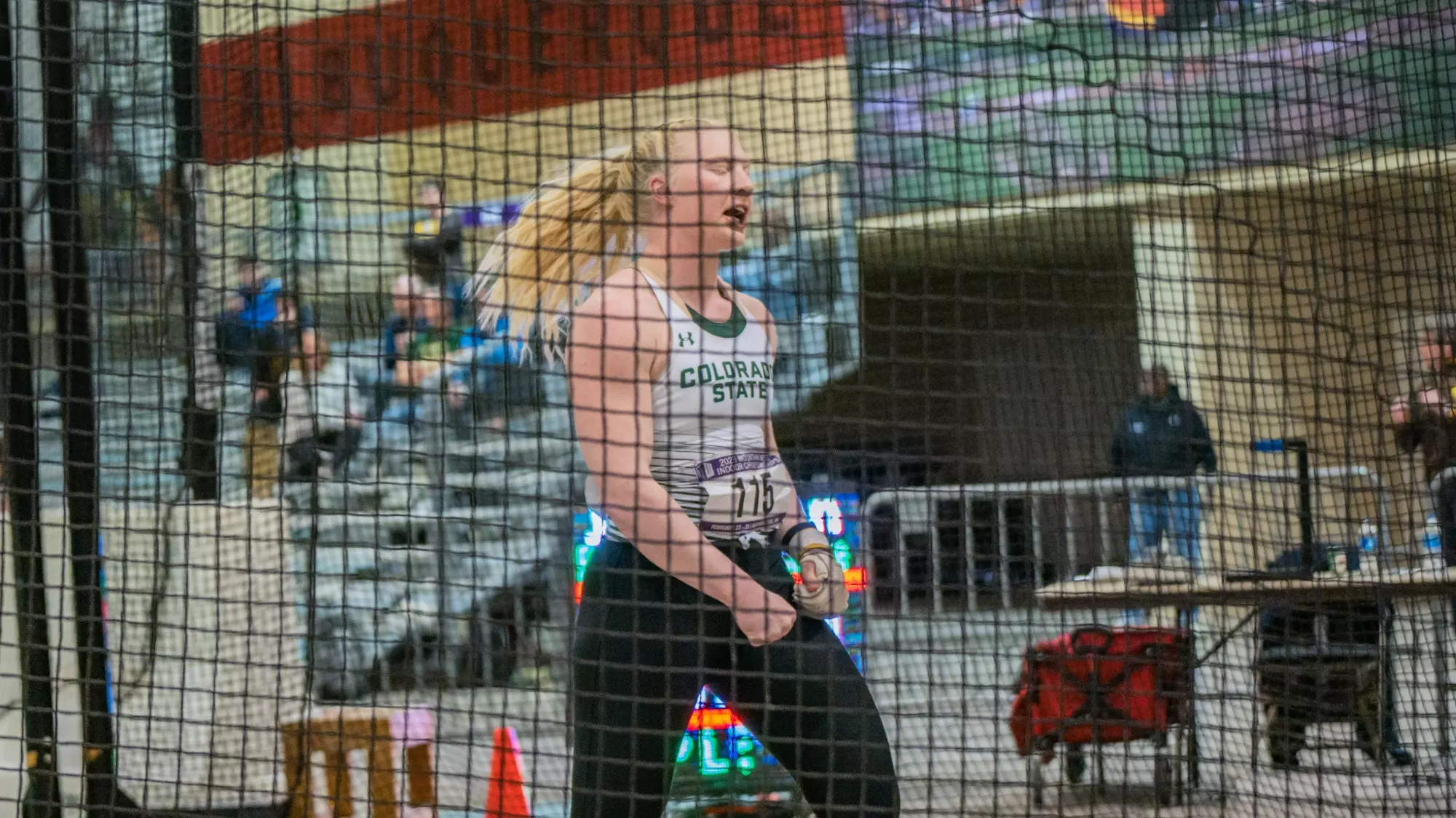
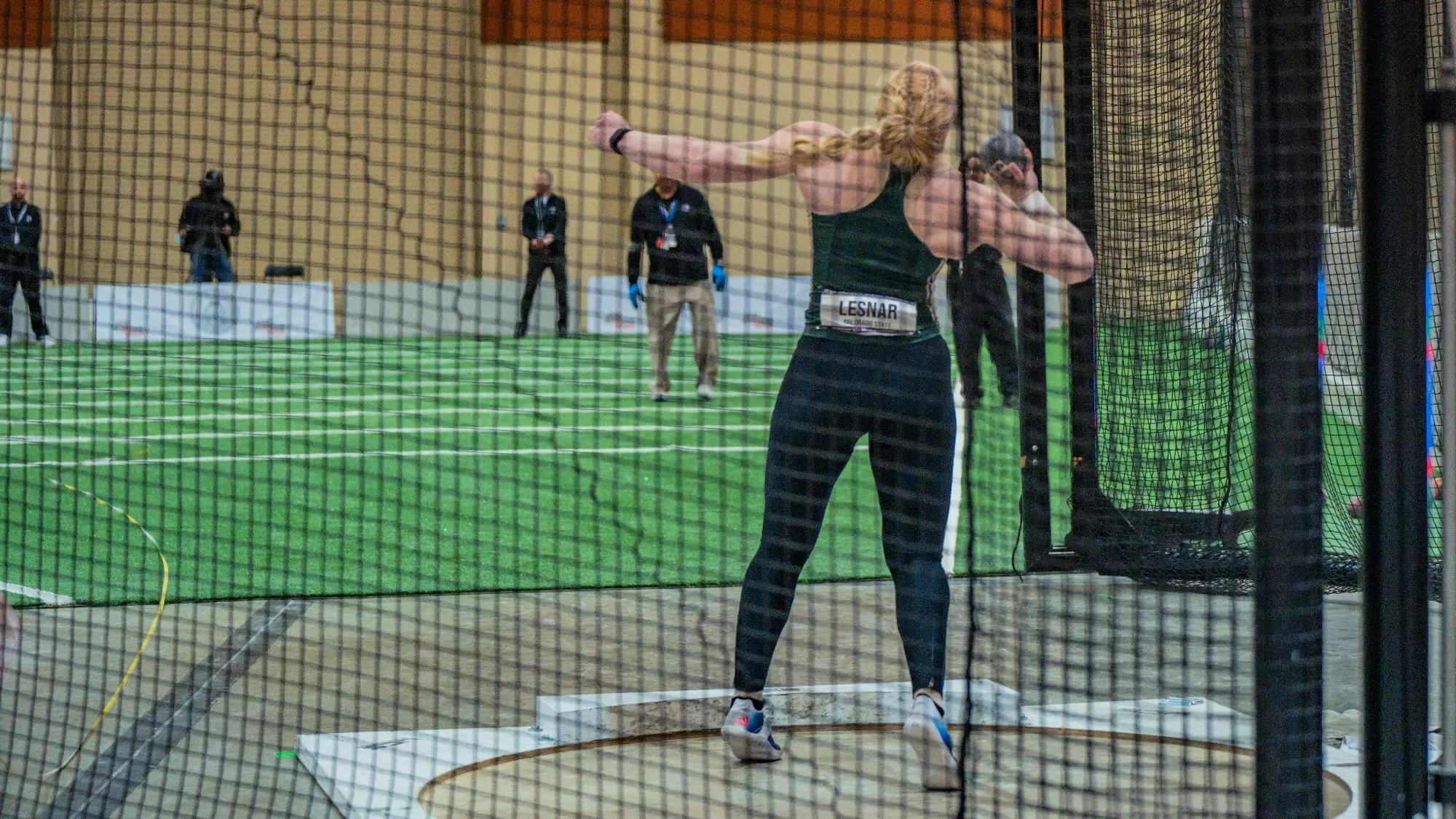
At the Don Kirby Elite Invitational in Albuquerque, N.M., on Feb. 9, Lesnar threw a 19.07-meter shot put, which at the time was good for sixth in the world but has since dropped to seventh.
A huge feat, but Bedard and Lesnar also know there’s room for improvement.
At different meets throughout the season, coaches and athletes will focus on a certain mechanic or approach which needs improvement. That day, the focal point happened to be Lesnar’s spinning entry to the throw, where most momentum is gathered for an explosive attempt.
Funny enough, on her nation-leading throw, with which Lesnar reset her own CSU record, Bedard was less than happy about the throw prior to seeing how far it went.
“If you listen to the video, I thought she blew the entry to the throw, so I yelled ‘oh,’ and I was going to follow it up with ‘(expletive),’” Bedard said. “But it was a definite sound of distaste for how she entered because she didn’t pull off what we were trying to do. But then it didn't matter because she hit the crap out of the finish anyway. But what’s cool is it was not our best work.”
Ask Lesnar, and she’ll tell you the struggle of the day wasn’t just the start of that particular throw — it was the entire beginning of the day.
She fouled with her first attempt, then got on the board with a 15.27-meter throw, which she steadily improved upon until she exploded for 19.07 meters with her fifth of six attempts for the competition.
The biggest obstacle to clear that day was mental. Just like it has been most days since she stepped on campus. The difference between then and now? She’s figuring out how not to trip over the hurdle and fall face-first.
“I know it takes a long time to mature and to, you know, get used to college and since I transferred, get used to a new coach,” Lesnar said. “So, there were a lot of variables, but I think this year, I finally found my groove and just started believing in myself like, ‘hey, you know, I can do this.’ I can be No. 1 in the nation, No. 1 in the conference and I can be a national champion. I just decided I'm going to take initiative and I'm gonna do this thing.”
Making a decision and following through are two very different things. In the process of improving her personal best by nearly two meters between last season and now, Lesnar and Bedard have worked tirelessly at perfecting the little things.
And I think that is also super helpful, to know you have teammates who have your back and who are also your biggest supporters and your biggest competitors.Mya Lesnar
A jump from 17.17 meters to 19.07 in less than a year is monumental, especially in the college ranks. Bedard chalks it up to a 2022-23 season in which Lesnar “underperformed” during her first year as a Ram.
“Her potential was not realized, and in spite of some things we were trying to work on, she and I probably weren’t on the same page, and she wasn't understanding what I was trying to get across,” Bedard said. “So, some of it's been our connection, coach and athlete and figuring out the direction we're going and finally feeling some things. But then, it’s being able to do it in a meet. Sometimes we saw some good things in practice, and it wouldn’t convert in a meet.
“She’s done quite a bit of work on her composure, controlling excitement levels or focus, managing her technical cues during meets. It's still a work in progress, but she's getting better.”
And it probably always will be. Lesnar wants more out of both the physical and mental sides of throwing, so she’s challenged herself to become more disciplined in her training, nutrition, mindset and even sleep. So far, those things have taken her to No. 1 in the nation, but she said she’s “just scratching the surface.”
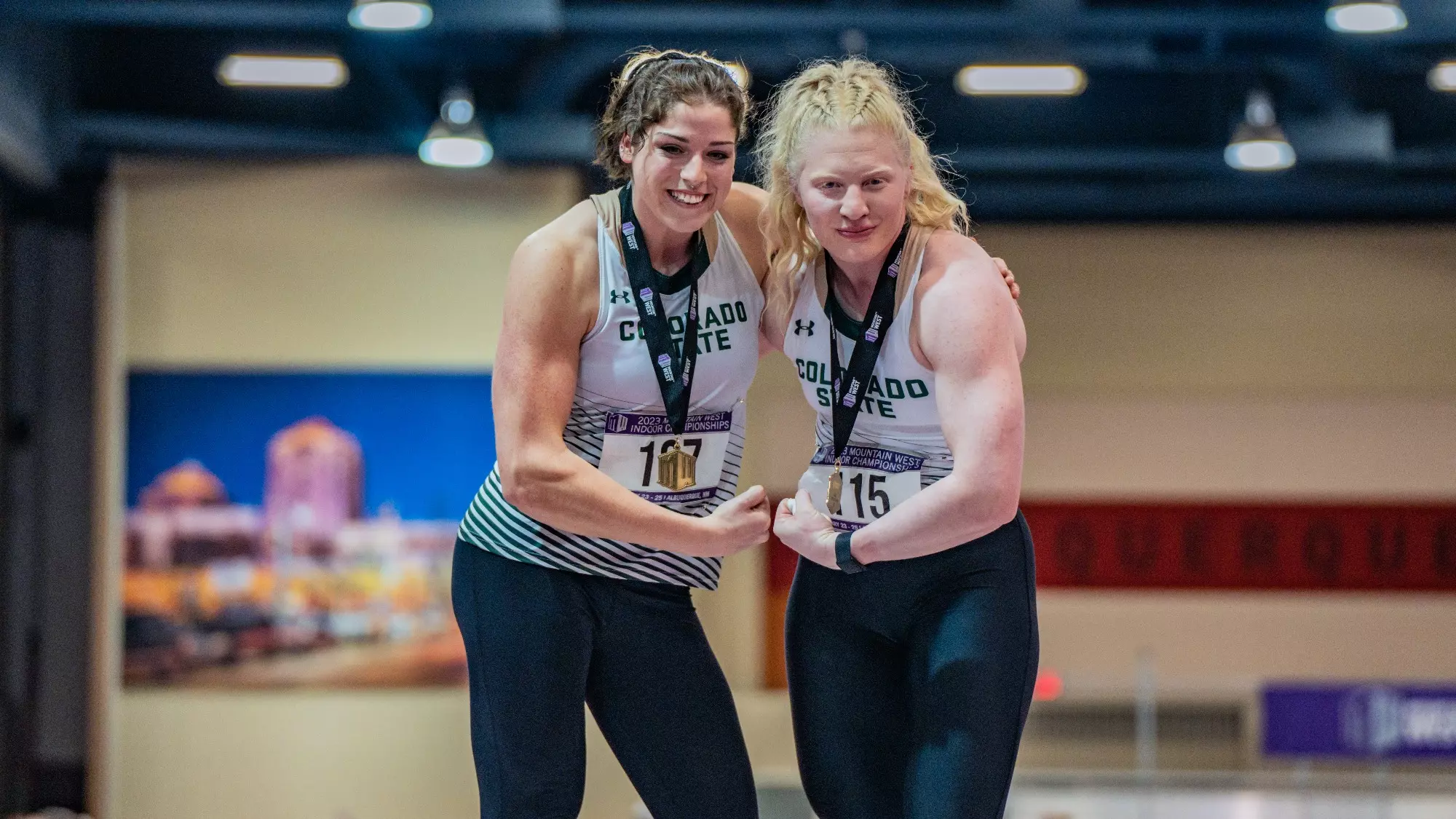
Teammate and throws veteran Michaela Hawkins was speechless when she saw all the work come to fruition at the invitational, even though she knew Lesnar was capable of that sort of performance.
Like Lesnar, Hawkins is from Minnesota, and they threw against each other in high school for a couple of years. A bit of rivalry from afar, sure, but as soon as they became teammates, the two clicked. Both elite throwers from Minnesota in the Mountain West. Both transfer students. Both admirers of the other’s game.
What she likes most about Lesnar is the standard she holds herself to in the ring.
“She will accept nothing except perfection. Seriously, I worry about her,” Hawkins said. “If she has an OK day — like it’d be a good day for the rest of us — she holds herself to such high standards. She’ll say, ‘Oh, that wasn’t my day,’ and the rest of us are like, ‘What are you talking about?’”
In every way, a perfect addition to the team. And for Lesnar, there weren’t many other programs better to transfer to than CSU. Part of the decision was because of Bedard’s openness about his coaching style. Just as important was the throwers’ importance to winning championships.
Historically, the Rams have leaned on throwers, especially on the women’s side, to earn a good chunk of their points on Mountain West Championship weekend. Arriving at a program like that was imperative to Lesnar, not just so she can play a large role in conference championship aspirations, but also because the group holds itself to high standards, just like she does for herself.
“I think it's awesome. I love it. I think it's super cool to have a head coach and a throws coach all in one,” Lesnar said. “I have some super supportive teammates who are super competitive, and we are competitive in practice, competitive in the weight room. And I think that is also super helpful, to know you have teammates who have your back and who are also your biggest supporters and your biggest competitors.”
The Rams will travel back to Albuquerque on Thursday to try to capture their third Mountain West women’s title in a row — their sixth in nine years — something Lesnar and the throws team will play a huge role in.
Currently, the Rams boast the top three conference marks in shot put and the top two marks in the weight throw. Lesnar is the top thrower in both events by large margins.
If those results hold for the Mountain West Championships, that’s 42 team points from Lesnar, Hawkins and Gabby Morris in two events alone. For comparison, the entire women’s team needed 125.5 points to win last year’s indoor championship.
Bedard’s point of emphasis for Lesnar for this year’s conference meet isn’t extravagant. It won’t be to go for all the glory or for the world’s No. 1 throw. While that’d be nice, it doesn’t account for everything he wants her to be. They both knew that from the start.
“Every meet is a process, and she’s able to use the tools she’s learned, and the tools has to go through this process. That’s fun for me to watch, to be honest,” Bedard said. “I don’t mind the struggles. I try to train every athlete to be as self-sufficient as they possibly can. I don’t want to have them be so dependent on me that they’re crippled if I’m not around.
“With every competition, you have some stress and some nerves. I like to reframe it and call it excitement levels because athletes have their best performance when they’re excited. I just want them to manage that and figure out what zone to operate in.”
Start there, and the results are sure to follow.