
No Time to Look Back
Through a myriad of changes, Morris comes out stronger
Mike Brohard
Change is inevitable.
On the scale Gabi Morris experienced – inconceivable.
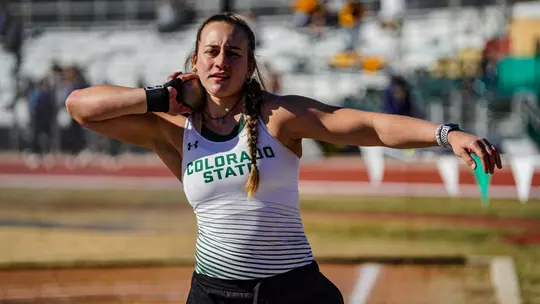
Play two sports; that was expected. Play at an all-conference level in soccer, which was the goal. Leave it behind, wouldn’t have guessed. Become a four-time All-American thrower, which was a bit of a dream. Fix a knee. Get bigger, stronger. Change your name. Hang around campus for six years. Possibly longer.
That’s a lot, and for Morris, it’s hard to box into a simple package of emotions and experiences. At least currently.
“I think a lot of it was unexpected. I came in freshman year skinny and small and not nearly as strong. You can ask (strength) Coach (Adam) Parsons, I got my ass kicked by the weight room a lot. I always thought of myself as a soccer player, and Coach (Brian) Bedard went through that with me eventually when I switched over to just track, because it took a while to get out of that mindset. When I came in, I wanted to do what I could with track, because I loved it as kind of a fun thing, but it wasn’t the thing I would go far in.”
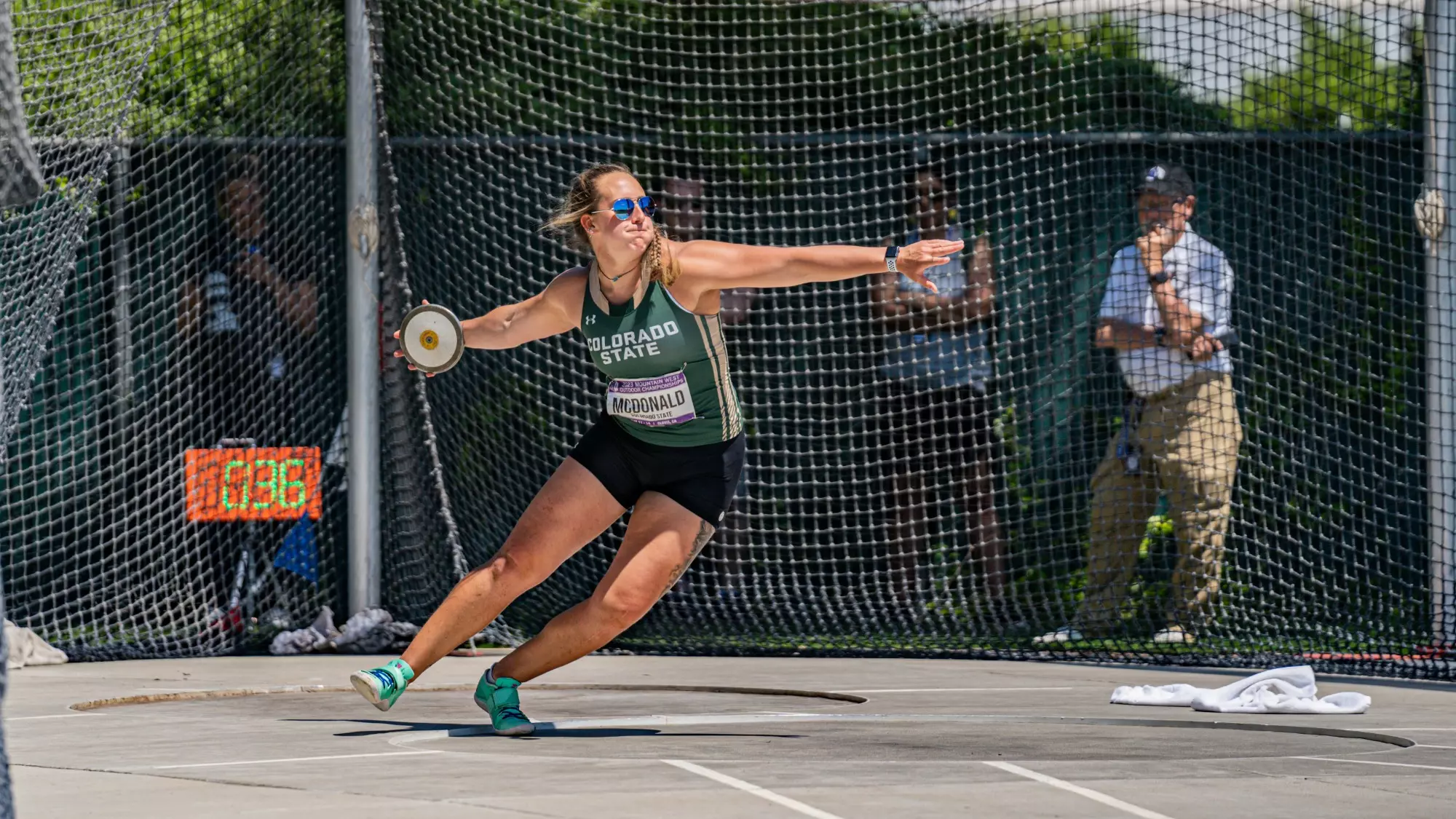
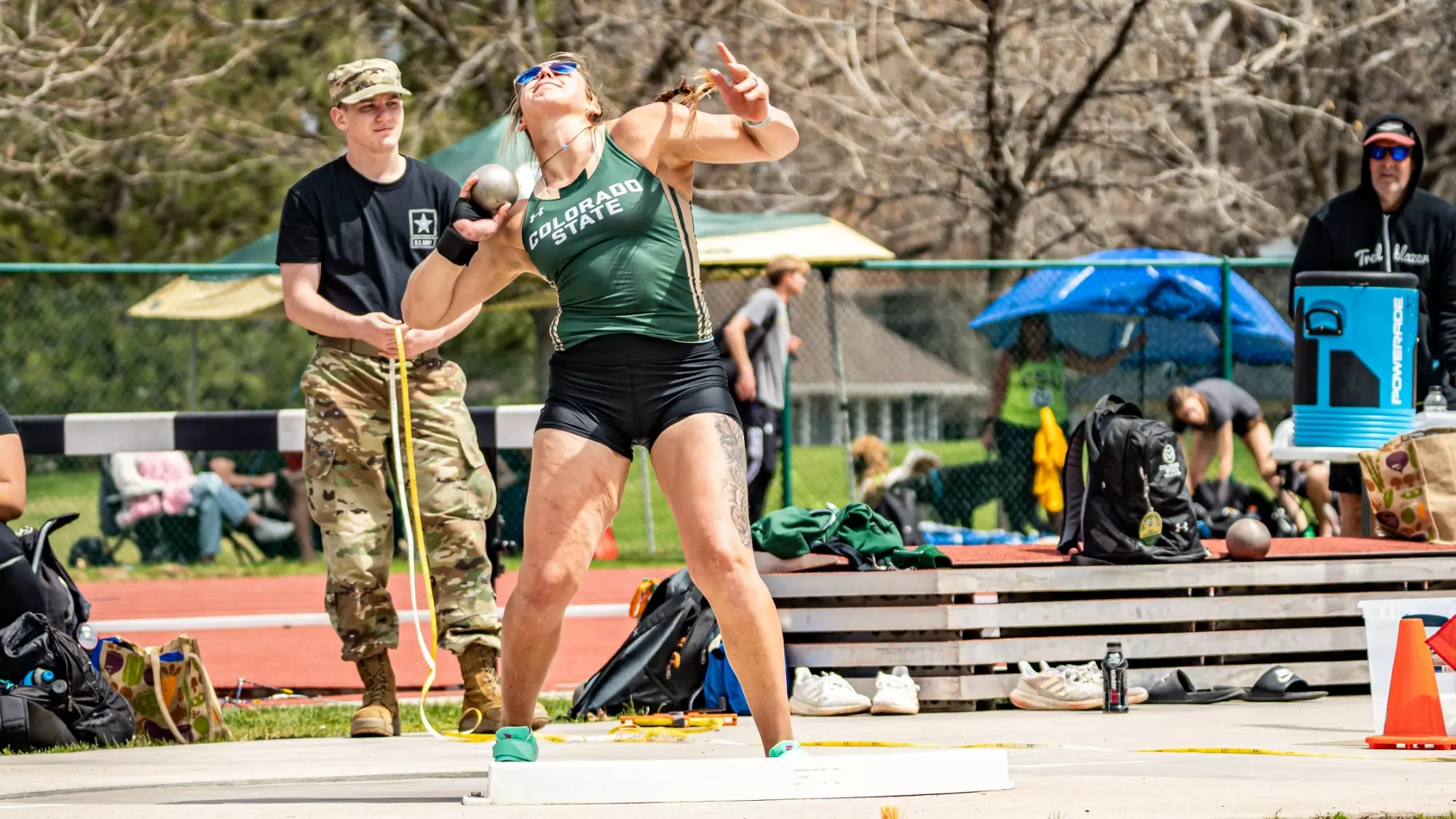
The young lady who arrived as Gabi McDonald in the fall of 2018 is now heading into the 2024 outdoor season fresh off her second All-American honor from the indoor season with the two outdoor All-America accolades she collected a season ago.
In Bedard’s reflection, she was just the chubby local kid from Rocky Mountain High School who had some potential. Now, she’s Missus Morris having married teammate Jackson Morris this past year. Or grandma. Definitely a mentor.
Who knew?
There was a plan in place upon her arrival. Soccer and track shared her scholarship. One sport was played in the fall, track would start in the winter with indoor, spring for outdoor. She’d also have soccer training in the spring. Share and share alike. Soccer would cover her scholarship the first wo years (thus having priority on her time), track the next two, probably three with redshirt options.
She also brought with her some lingering knee problems. There was pain, but as long as she could tolerate it, she could avoid surgery.
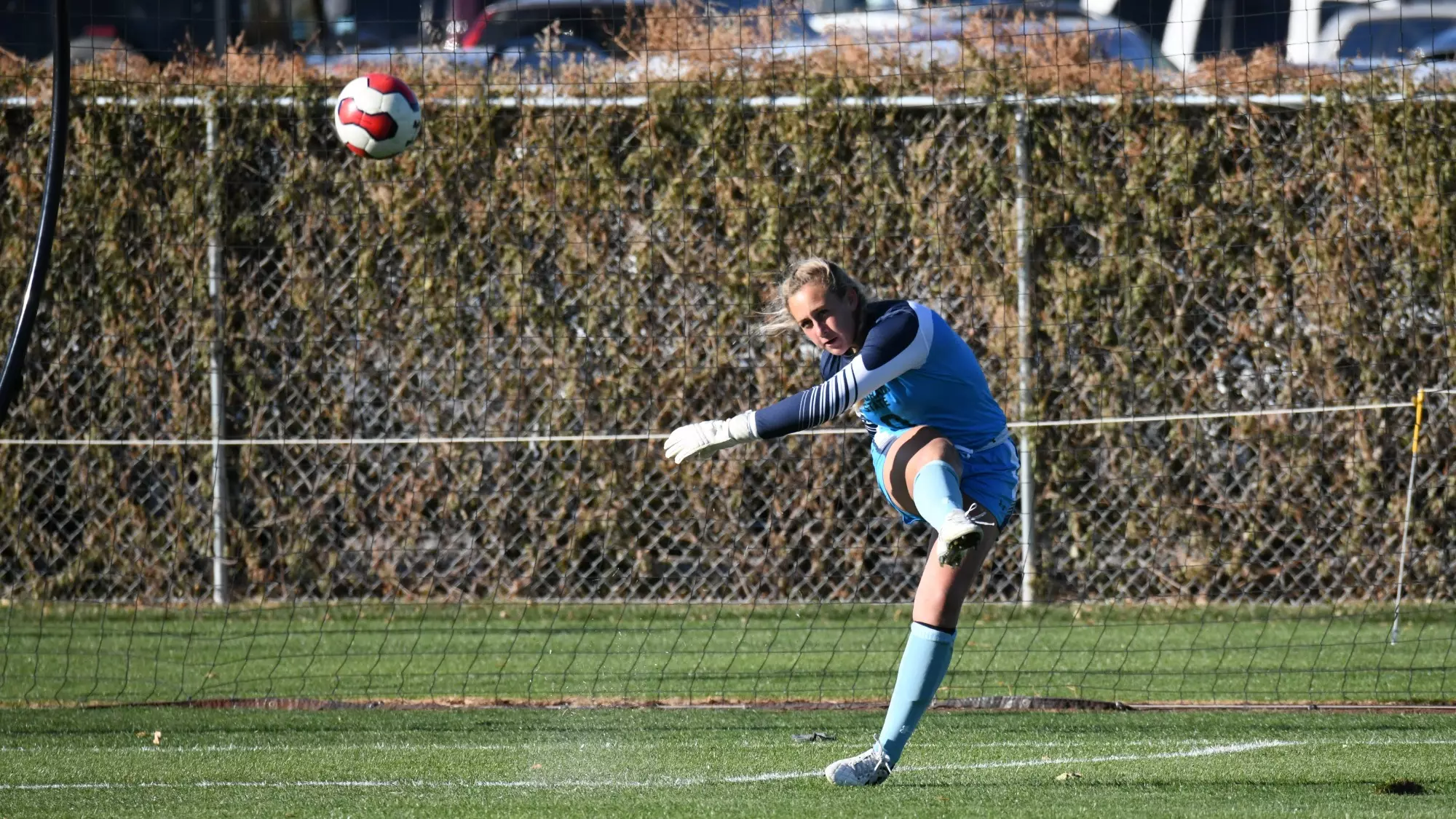
She was a backup goalie her first season. The next, she was the brick in net. Set the records for save percentage (.881), goals against average (0.68) and wins in net (13). The Rams made the Mountain West tournament for the first time, and she was an All-Mountain West selection.
The entire season she played in increasing pain, and at the end, it was just too much. Surgery was on the table – a difficult tibial osteotomy to realign the knee joint, a good year of recovery. It set her back in track as she had to rebuild the strength, a strong base required for the throws she needed to perform.
She was still excited about soccer; it was always her first love, the sport where she felt she had the most potential.
“Then covid hit, a coaching change happened and everything turned,” Gabi said.
Covid moved the soccer season to spring, right in the thick of when she was supposed to be focused on track. She was spending a lot of time in the training room with rehab. As it turns out, so was Jackson.
The knee injury didn’t exactly force a change in her career path, but her conversations with Jackson struck the first change in her thinking.
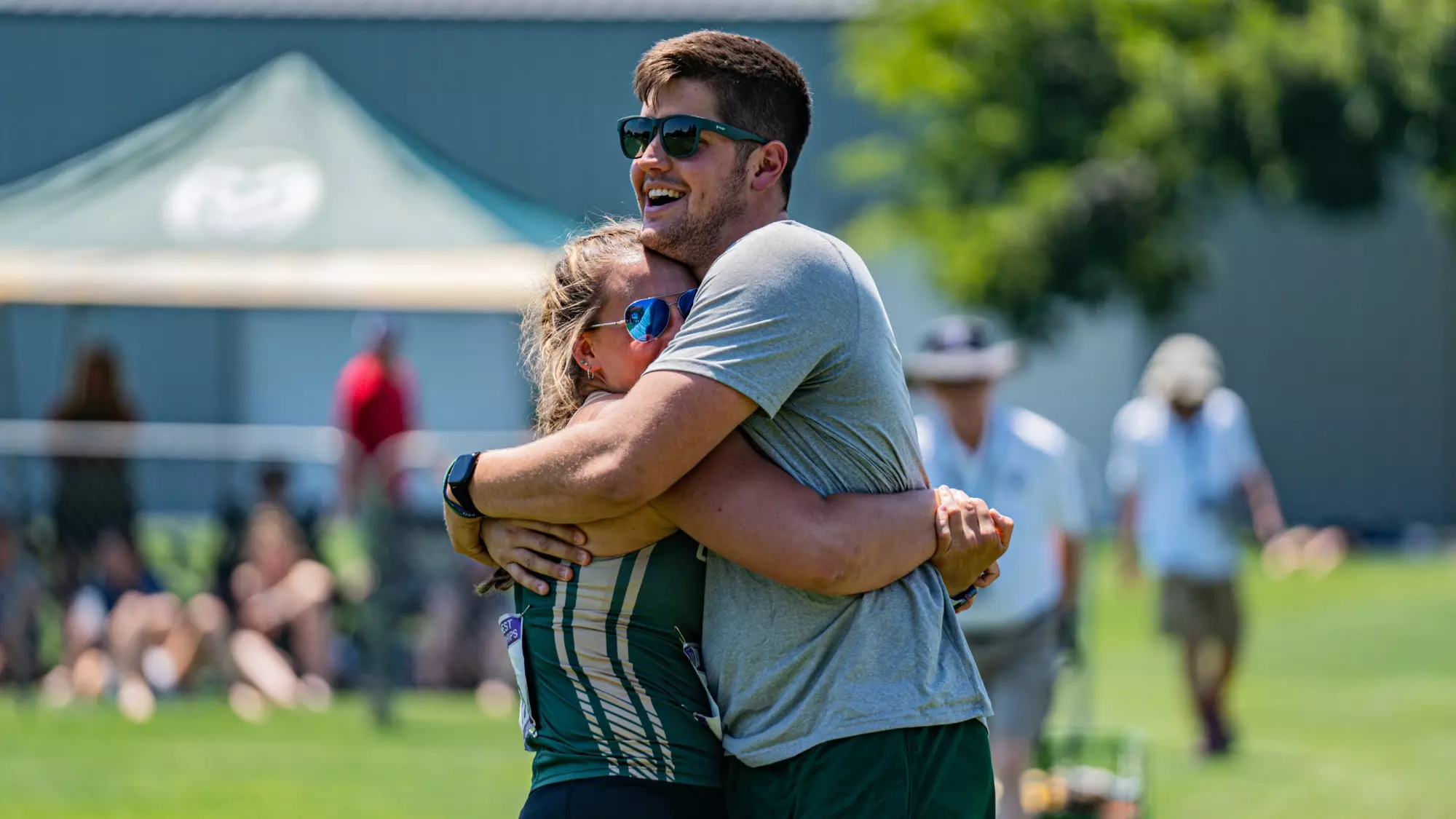
“What really did it was I was injured the same time as Jackson, and we hit it off in the training room. He saw what soccer was for me mentally, that it was a lot less healthy for me,” Gabi said. “He kind of helped me look toward track more, but it was mainly covid because the season moved to the spring. Jackson was the person who led me to look at track more and see some of the potential there. He helped me believe in myself more as a track athlete.”
So did his family. His father and grandfather were All-Americans as javelin throwers. They all told her throwing was her path.
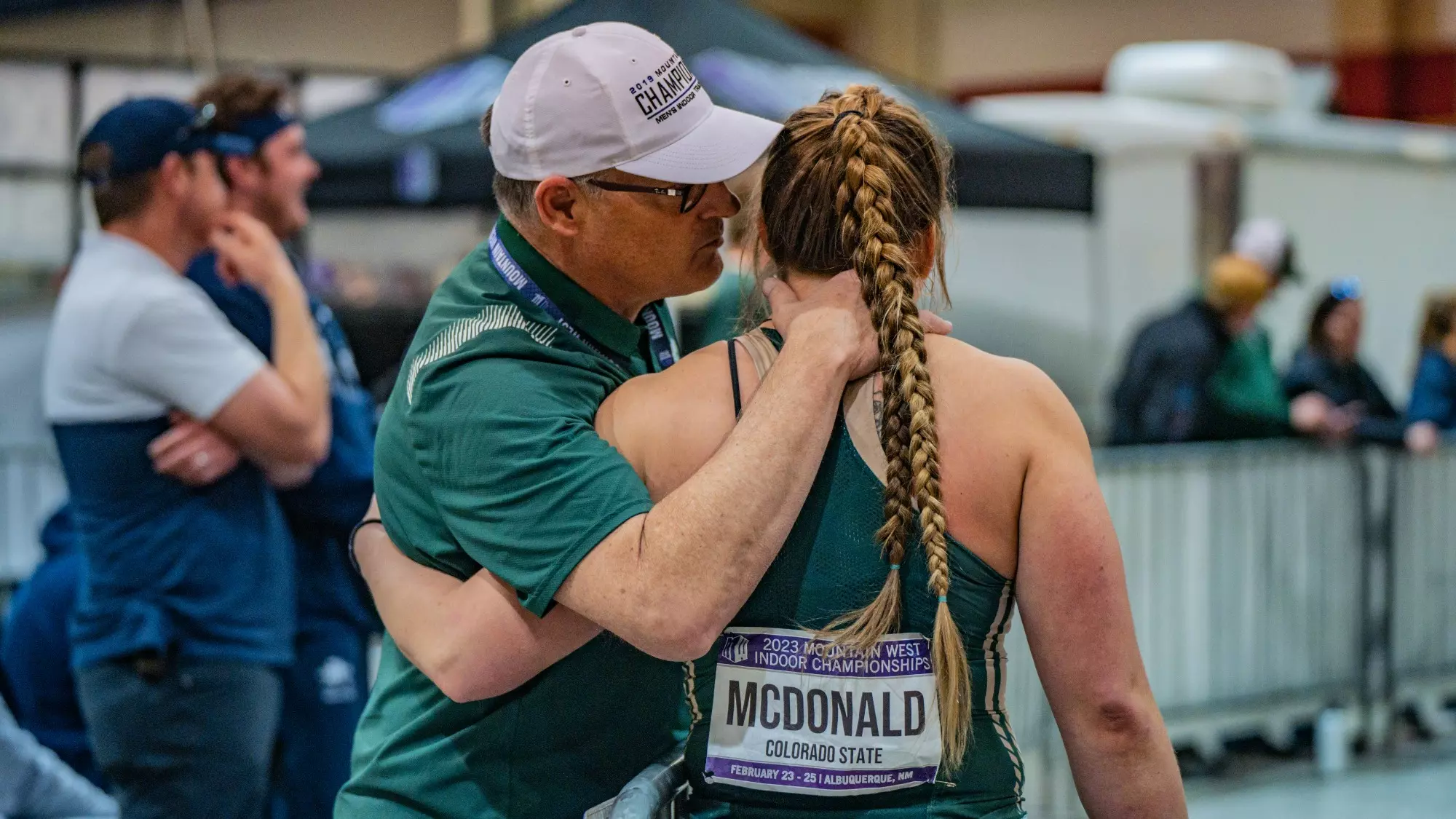
Still holding on to a soccer persona, it took others to see her potential before she could. Bedard, patiently, was waiting for the realization to hit. He was patient to a point, but he also knew when he had to push a bit.
“To be honest, I wasn’t sure what kind of athlete wed have back, if she could go full go. Her first season back with us she wasn’t 100 percent, and there were certain things she couldn’t do technically, physically,” he said. “Like full weight loading on the leg that was reconstructed, and she couldn’t manage that. It led to some bad habits, but she really dug into improving her mobility, flexibility, strength in that leg, and she’s at that point now.
“From being a chubby little Rocky Mountain High School kid, she really took it another level last year. It was more mental maturity and competitive maturity. She tackled the mental game better and was more consistent in training and in meets. Finally, being 100 percent physically, she could do some things technically she couldn’t do before which were stunting her growth.”
I think it’s all crazy, and covid happened, we blinked and it’s 2024. The world is different, my life is different.Gabi Morris
Back in the fall of 2018, Kajsa Borrman was just finishing middle school. The offspring of a pair of Hall of Fame CSU throwers, she was just starting to learn the ropes which would lead her to multiple state championships at Loveland High School.
It’s amazing to her she and Gabi are teammates considering the timeline. Amazing not just in an old-lady way, but someone to push her through the requirements to go from a prep standout to a collegiate performer.
“She gives me lots of her knowledge. It’s helpful, and she’s a great example. I don’t know that I’ll be here as long as she’s been here, but I’ll be here for a while,” Borrman said. “To see what she’s done is amazing. I looked at her results when she was my age, and now look at what she’s doing, it gives me hope. It’s very inspiring.
“This is going to sound bad. She tells me I don’t work hard enough in the weight room. If I’m stuck under a lift, if I’m benching, she’ll tell me to work longer before I give up. That’s what makes you better. Work harder than you think you need to. If you look at her, she’s doing it. It’s not like unsolicited advice. She is using that advice.”
Bedard expects his upperclassmen to be that way, to pass on the knowledge which was once given to them, or aspects they learned on their own. Gabi feels she owes it to Borrman and Klaire Kovatch, because it was the role Tarynn Sieg and Maria Muzzio filled in her younger years.
He leans on Gabi and Jackson to help the younger throwers reach their peak, to consider the cause and effect of the work they do, the approach they take. He wants them to be assistant coaches because they know the technique and they can teach it in a different voice some athletes just need to hear.
They fact they’re always around the other throwers instead of off being the young married couple they are is appreciated. It’s also just pathway to joking with them.
“She’s married. We tell them to go start a family, go have kids, go get a job,” Borrman said. “They’re really happy with what they’re doing here, so good for them. It all just kind of goes over her head. I call her grandma, old woman. I say Missus Morris, cause that’s what you’re supposed to call her. She is old. I mean, I’m 19. She’s 24. It’s OK to call her old.”
They’re going to have to get used to having them around because they aren’t going anywhere. Both are committed to their final outdoor campaigns, looking to add to their All-American resume. The season kicks off in Boulder at the Jerry Quiller Classic, though Gabi will likely pass it up coming off her xx-place showing in the shot put at the NCAA Indoor Championships last week in Boston.
Being around the team is spending time with family.
“We love each other and found the person we’re going to spend the rest of our lives with. That’s the rest of our lives,” Gabi said. “We have a lot longer in college in sports than most, but this is our last outdoor and I have one more indoor. There’s a limited time with these people, this experience, so we want to absorb all we can. Besides, we get to do it together.”
Borrman also knows it’s best to listen because Gabi has seen a lot and experienced more. She had to fight herself to a great degree to reach this point. She needed more than a few voices to eliminate the one which dominated her own thoughts.
Her own.
Even when track became her focus, she was still seeing the soccer player. When she looked at her teammates and the competition, all she could see was 6-foot, strong women who fit the mold of a thrower. Then she’d look in the mirror at her 5-foot-8 frame and see someone who didn’t fit.
She felt like an imposter. She would question why she was in the same ring with athletes she felt were more qualified. Then her brother Max, who played football at Colorado State, had a harsh conversation with her to turn her thoughts 180 degrees.
In a nutshell, he told her to stop looking at all the reasons why she didn’t belong and start realizing, despite all of those excuses, she was there. Placing at conference. At regionals. At nationals.
“My strength when I compete is competing with no fear. No fear of failing, just the freedom to go after it,” Gabi said. “If I think of it as the grand finale, that’s a lot of unnecessary pressure. Mostly I think of it as I’ve done a lot to be proud of, and if it ended now, I wouldn’t be upset, but I got lucky enough and I still have time. I’m more concerned with making sure I go to everything with teammates, enjoy, remember and be in the moment for all of these last moments of outdoor.
“My favorite mindset is everybody has more of a reason to be here on paper. If I don’t win, that’s expected. If I don’t do well, that’s expected. So, no longer is there a fear of losing. I don’t look at how far I’ve come, it’s more of a shade lifting to look how far I can go. Instead of nationals, I’m aiming for Paris and go to the Olympics and be a professional thrower and get into coaching. I don’t think I would have anticipated that.”
She erased some self-doubt, attached herself to Bedard’s technical teaching and then sprinkled in her work ethic in the weight room. It’s felt like a ride in the Wonkavator -- ups and downs and a bunch of sideway excursions.
Which has made it all the more enjoyable and extremely difficult to look back with wonder. From a soccer pitch to standing on a track podium. The transformation to the weight room. Ranking second at the school in the shot put both indoors and outdoors and fourth in the discus. None of it was in the picture as an incoming freshman.
Even as a sixth-year senior who will see it all end at some point. The four-time Mountain West champion is just not there yet.
“I think reflecting on a whole career and how far I’ve come and how far I’ll go is hard, because I think I still have a lot ahead of me,” Gabi said. “I’m still the undersized kid from Fort Collins who played soccer and felt out of place in track. I think it’s all crazy, and covid happened, we blinked and it’s 2024. The world is different, my life is different.
“It feels like a blink, and I’m married with dogs and have a couple of All-American awards.”
Besides, when you say it all aloud, it sounds so outlandish. Really, who would believe that story?
And if she actually did, her teammates would just tell her it all sounds like the ramblings of some crazy old lady.