

The Mind Definitely Matters
Barr out to help student-athletes find balance
Mike Brohard
Call it a rut, a funk, whatever. She was in one, and the game was no longer fun.
She was starting to dread going to practice. What’s the point of putting in the work if the results won’t come? How do you continue to love a game that doesn’t love you back?
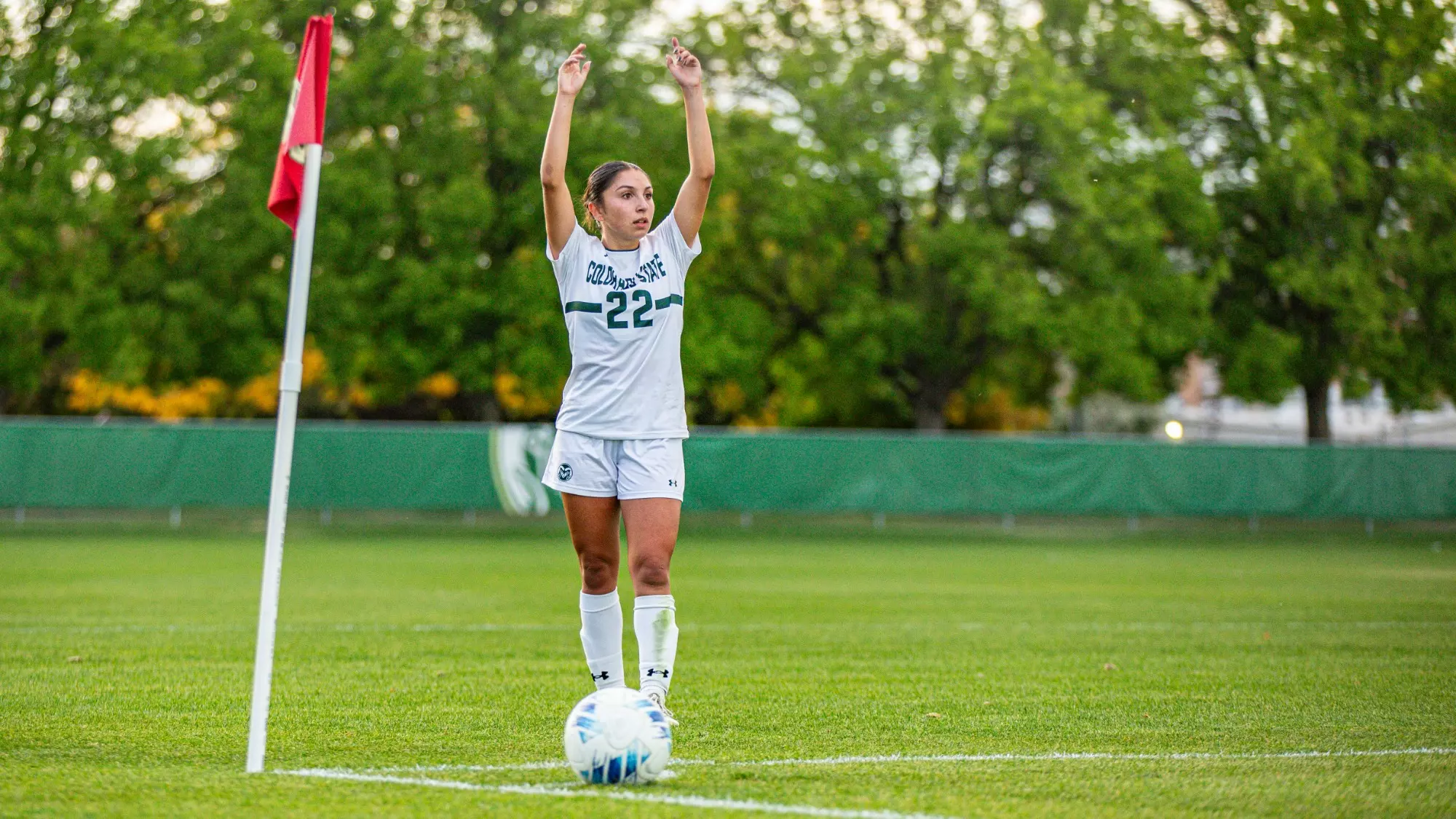
In eight non-conference games, Mia Casey hadn’t found the back of the net. She hadn’t helped a teammate produce a goal, either. It was a session with Ross Barr, Colorado State’s director of student-athlete mental health and performance, which set her free.
In conference play, she produced seven goals, seven assists and 21 points – one of the best individual seasons in program history -- earning first-team All-Mountain West honors.
“You start having doubts, and once you start having those doubts, they start to bleed into other doubts. It can be a hard thing in college athletics when you’re here to do a job,” Casey said. “Your performance does matter on a daily basis. He helped me balance that performance, like having to have an output and outcomes, he balanced that and turned it more into a privilege mindset rather than a pressure mindset. Just him making the distinction between the two, it’s a lucky thing to be here and be counted on versus oh gosh, I have to do this.”
The mind does matter when it comes to performance. It can matter as much as the physical skills an athlete possesses, and sometimes, it can be the key to unleashing them.
Coaches have been telling their players to get their heads in the game for as long as competition has taken place. Now, it’s just being viewed in a more serious light.
“I think we talk about it more. I think our data and research is there to say yes, 100 percent it is,” Barr said. “This is true of mental health at large as well as the sport performance end of it, it’s being embraced more. There’s been a conversation going on for 20 years about how important it is, but very little movement toward actually integrating it. Some of that is systematic or systemic. The time that coaches have carved out day to day is set. Then trying to find more time to integrate sports performance person is hard, and some people have been burned in the past by folks.”
Barr has been in his role for about two years on campus, and in that time, he’s worked with every team in the athletic department. He also knew he had to build a trust, so as soon as he went to the Lory Student Center to get his employee identification card, he started walking in doors, introducing himself to coaches. Then he’d follow up with them, explaining what he could offer.
He would attend practices, standing on the side and simply watch. He was learning the coaches as much as anything, their philosophies and ideologies. If he was going to work with teams, he wanted it to fit into the culture.
Multiple coaches have invited him to speak to their rosters as a group, if simply just to introduce the idea their mental outlook is as vital as what they do in the weight room or during conditioning. Track and field coach Brian Bedard, who has built a dedicated team culture over the years, thought it was a vital part of getting his teams ready for the indoor and outdoor seasons.
“We did kind of a combination. He and I both led it, and we were both really interested in the mental side of sports performance,” Bedard said. “We’ve been sharing stuff back and forth for a couple of years now, different books he’s read and different strategies on having the team and athletes at their best when they compete. How do you deal with anxiety or stress levels or excitement levels to reach the best state you can compete in with consistency? We’ve been going around and around about that, the kind of language you use in practice, being in that excited level, but still able to focus, still able to produce your best results with consistency.”
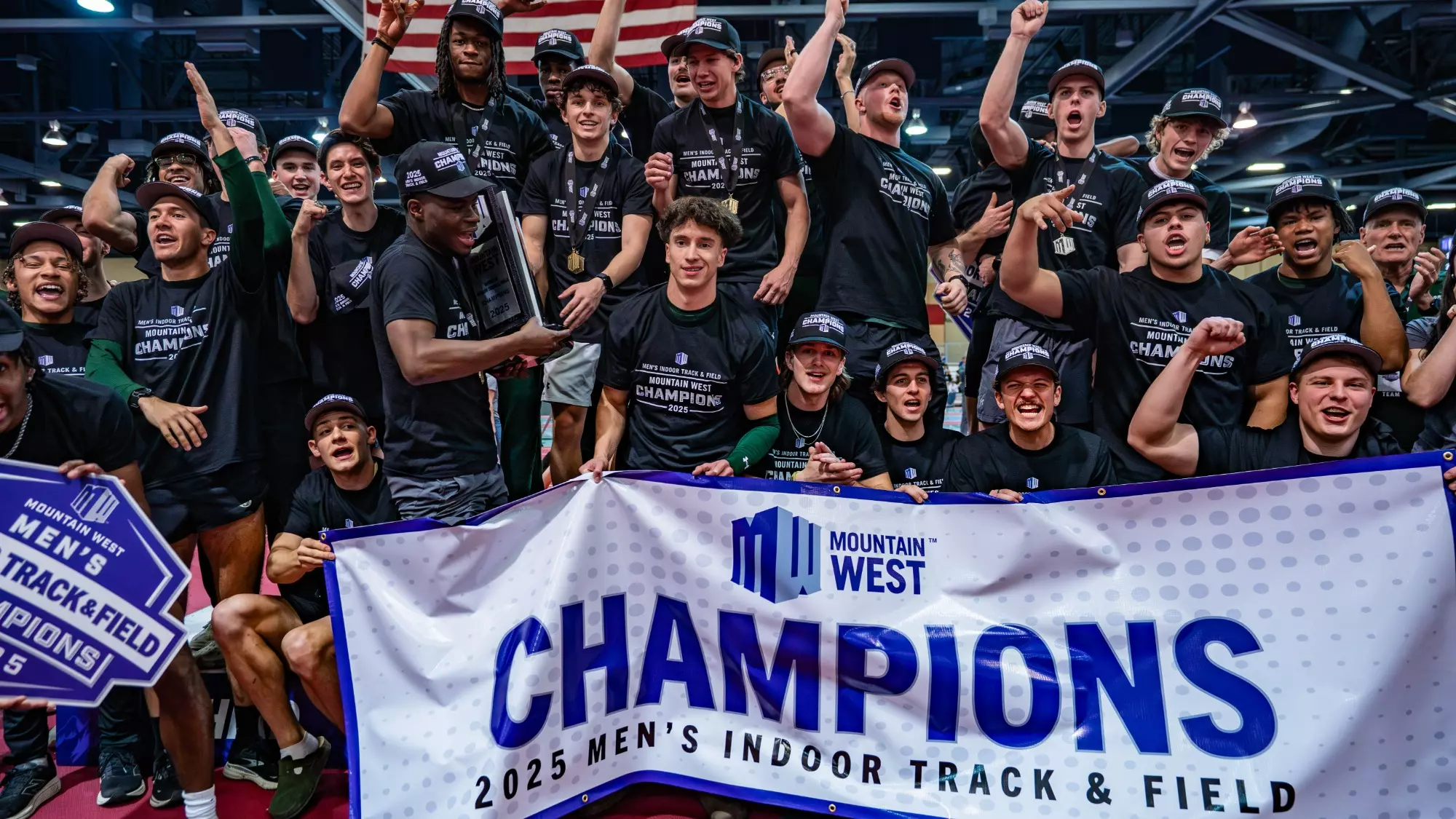
Which the men’s team was able to do at the Mountain West Indoor Championships this year, defending their conference title as four different men found their way to the top of the podium.
Multi Eli Scott felt the visit by Barr altered the thinking of the masses, leading some of them to dive in deeper with individual sessions. The talk proved to him the mind can take the body to some incredible places.
“Physically, you can have every bit of ability to do what you need to do on the field, on the court, on the track, but if you’re not in a place with yourself where you know you can do it, that you believe you can do it, then essentially it’s all worthless,” Scott said. “If you don’t have that support, that inner sense of self-esteem, it’s hard to do what you need to do.
“His visit helped. I think he’s a very crucial foundation/cornerstone that we are out there, that as much as it is an individual sport that we still are a team. I think he’s helped us realize we can lean on each other. When we don’t do our job, we have other teammates who are more than willing to carry an extra load or some weight to make up for it. That’s not to say we shouldn’t try our best, but we’re not alone. The more he’s talked to us, the more information we’ve had, the idea we’re here for you has had a significant impact.”
Barr agrees for decades there was a stigma about mental health, which pursuing it was admitting a problem, a weakness. While it is loosening, he said it still exits, and it’s not just the male population as it still resides to come degree for females.
The prevailing attitude was to “suck it up,” bury whatever it was and move on. Deal with it. It might surprise some, but Barr feels there’s definitely a place for the notion in today’s day and age, but for some, it does require some tools to reach the stage.
‘The generation we’re talking about, the parents of these athletes raised them, and some of them still pass along that idea. Sometimes I think that gets a bad rap,” Barr said. “That’s a great mentality to have, that I can take on anything. Why would we not want that as mentality? However, you still have a coach you defer to, and in a lot of ways we can act very similarly in the mental-health space.
“Yes, you can take on anything – I wholeheartedly believe that about most people – but there might be things that are going on you’re not seeing. That’s what a coach helps you see in a game, and that’s what we can see and help you understand from a mental-health standpoint. These things seem to be a pattern in your life, and they keep ending up at this place that makes you feel a particular way, and do you want to change that? That mentality is still around, it’s fading, but we also need to acknowledge the ways in which it’s helpful, improve it, develop it, and evolve it over time too.”
Yes, you can take on anything – I wholeheartedly believe that about most people – but there might be things that are going on you’re not seeing.Ross Barr
Barr likes talking to teams because it allows him to lay some overriding groundwork. Some individuals can take those broad topics and apply them internally. Others need a more personalized approach, and by being visible to the teams, they start to gain trust.
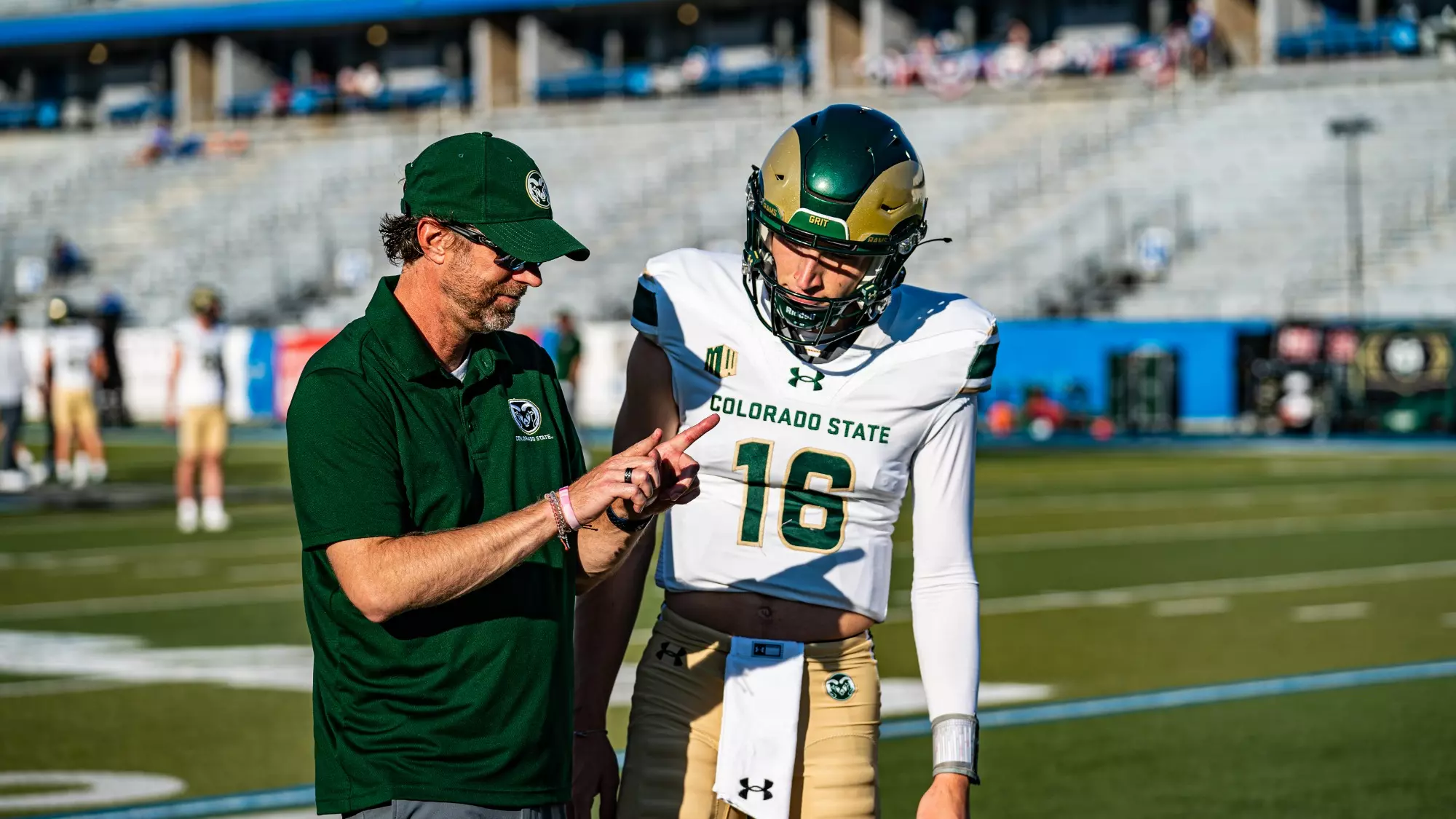
He doesn’t wait by his desk waiting for someone to make an appointment. He works his way around campus and puts himself in the places where organic discussions can begin. For example, he was at the football office when he came across a conversation between Matt Mumme, the associate head coach and passing-game coordinator, and Chase Holbrook, the quarterbacks coach. Barr had a suggestion, and now he leads the position group through meditation on game days.
Trust is earned, and Casey said Barr’s constant appearance at practices made her feel more comfortable about having deeper discussions with him.
“I think him just showing his face when we’re doing fitness, at practices or games, you know he’s in it and he’s involved. It makes reaching out to him more like reaching out to a friend,” Casey said. “It’s not this scary thing. Booking an appointment with just anybody, you don’t know their personality … But he’s done a really good job of connecting with us, and that makes it so much more comfortable to go talk to him.
“It wasn’t something I personally took seriously until I got here, and I had moments when my mindset was affecting my play. That was a big thing. You can talk to your parents about it, teammates, prior coaches, but until you talk to somebody with a medical opinion you trust, it doesn’t click how much of a difference it can make until you’ve hit your low points.”
When Barr – who has CSU health network liaison Jessie Pauley aiding the athletic department – goes out to practice or games, he views the proceedings differently than most in attendance. He’s a Ram fan at heart, but what he’s looking for is the conversations he’s had with the coaches, the student-athletes, to see if their talks are taking root.
He may be a professional, and he may deliver the right message, but sometimes it doesn’t sink in completely. But somebody else will come along – a friend, a parent, a teammate – will deliver the same message in an alternative way and it clicks for the athlete. He’s fine with that, as long as it takes hold.
After nearly a decade spent in private practice, Barr prefers working with student-athletes most of all due to their dedication to finding success.
“I think working with athletes is so different than working with the general population. I spent nine years working on private practice, and I had some athletes on my caseload, but athletes, especially college athletes, tend to be way more driven,” he said. “They have very specific goals in mind. I can give them an intervention, and probably seven out of 10 are going to follow through with that and do it. You start to see success string together. That’s one of the most rewarding things, being able to see somebody capitalize on something you’ve asked them to do, and then they see the benefit of it pretty immediately. Sometimes it delayed in private practice, but here it’s almost immediate.”
Times are changing, which is part of the reason for his existence in the athletic department. Athletes have been dealing with pressure for years. There’s the internal, but the external is there in much greater degree these days with social media.
Criticism has always been there, but now it’s immediate. A mistake is made and a post on social media appears within seconds. There’s no waiting for a story in a local newspaper that may or not be read, there’s a post, then a thread with direct mentions.
What Bedard doesn’t overlook is the outside factors which can affect performance, emotional influences far from the field of play which have just as much of an affect on the individual’s wellbeing. That was another reason he wanted to work with Barr.
“It may be to help us perform better, but it could be stuff outside. Things with family, relationships, a death in the family … It’s all that,” Bedard said. “That definitely affects and athlete’s mental health and performance and how they’re doing in school. We send a lot of athletes his direction to work on that. It is out of carrying for them. You want someone is hopefully doing well in life.”
Which falls perfectly in line with Barr’s intentions. He knows not every athlete will come and see him, those talks aren’t for everyone for one reason or another. Those who pursue him he’s devoted to finding the root issue and providing the tools to use.
He will continue to attend practices and games, saying about one in five student-athletes who come to see him say it is because they’ve seen him around. Besides, he would prefer his first meeting with someone isn’t because they are feeling a bit of crisis.
Casey will always be a proponent, having experienced the effects firsthand. He gave breathing tools, ways to ground herself and a pathway to have a reset. Proving his point, she said she took their conversation to the pitch the next day and felt better.
A match later, she had her first goal and assist of the season. A week later, a five-point outing against Fresno State. In the Mountain West tournament, a two-goal game against Nevada.
“It was like a switch,” she said.
For her play, but also her overall outlook. In the end, Casey will tell you it may be just as much mind as matter.
Support Colorado State Athletics: Tickets | Ram Club | Green And Gold Guard