
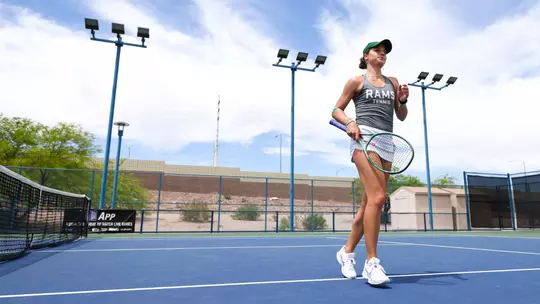
An Immeasurable, but Immense, Value Added
Voeks learns more about herself putting the team first
Mike Brohard
Value can be measured in a myriad of ways, particularly by a college coach.
Wins and losses are a staple. Certain stats, percentage-based aspects of competition, provide numbers which can carry weight. Then there are intangibles. Aspects of personality and persona which one cannot assign true merit.
When it comes to Logan Voeks’ sophomore campaign for the Colorado State tennis team, coach Mai-Ly Tran simply cannot compute.
“No, we can't put a value on what she did, what she added to this team,” Tran said as her squad is set to start dual play when the Rams host Seattle and Montana State over the weekend. “We were still competitive because of her. Although our backs were against the wall, she helped put us in a position to have a chance to win.”
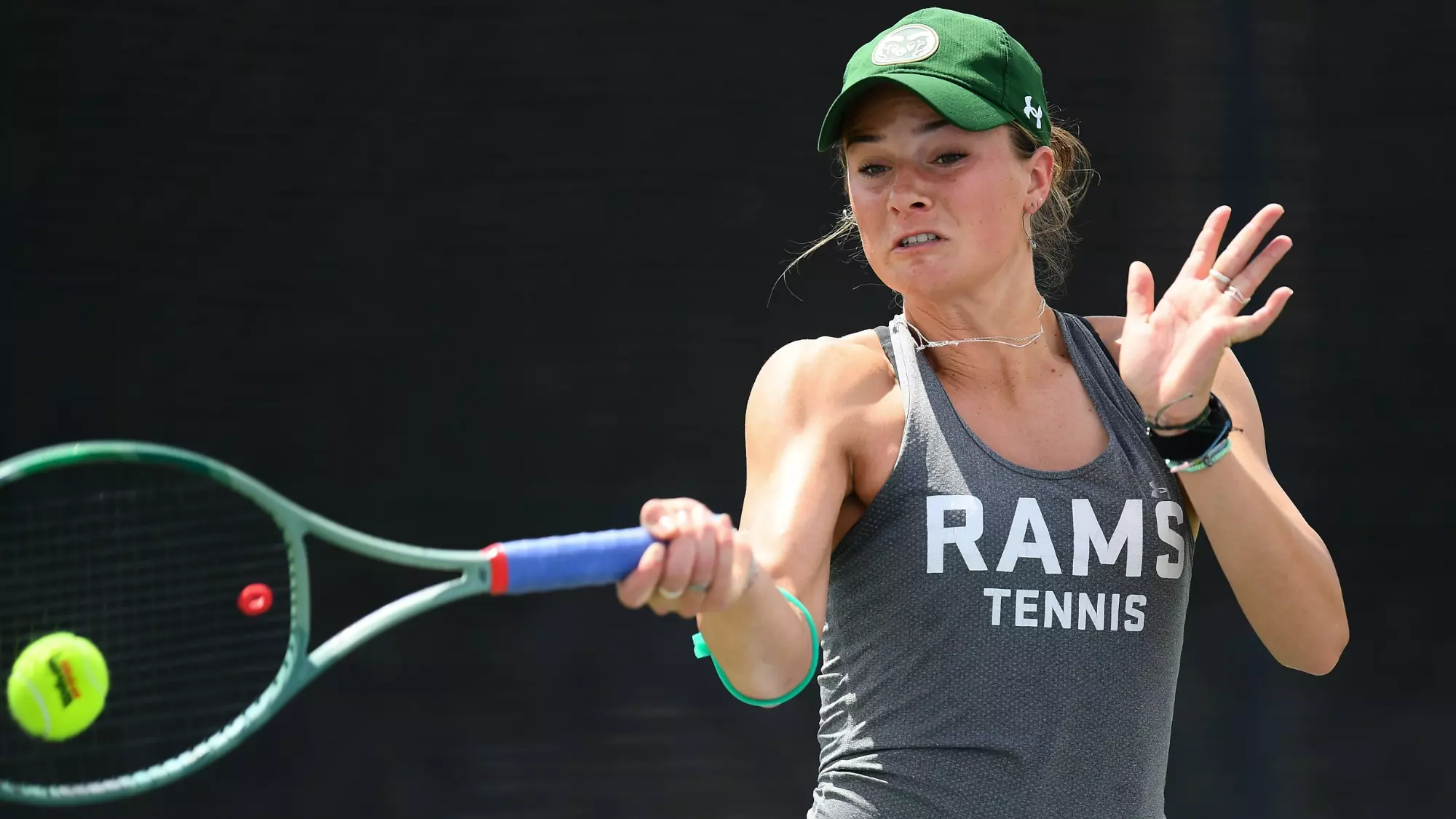
Tran makes no reference to the fact Voeks led the team in singles victories last season with 13. That wasn’t the primary way the Charlston, S.C., product impacted her team.
The Rams spent the dual schedule stringing a lineup together through a series of injuries to a roster of eight. One returning player was out for the season with a lingering ailment. Two more went down for long stretches of time. In 22 duals played last season, the Rams started 17 with a forfeit at a singles slot. In eight of those matches, they were additionally down a doubles team.
The result, Colorado State started play down 1-0 automatically. When a match of seven points is played to clinch – the first team to four, as is always the case in Mountain West play – the pressure is amplified.
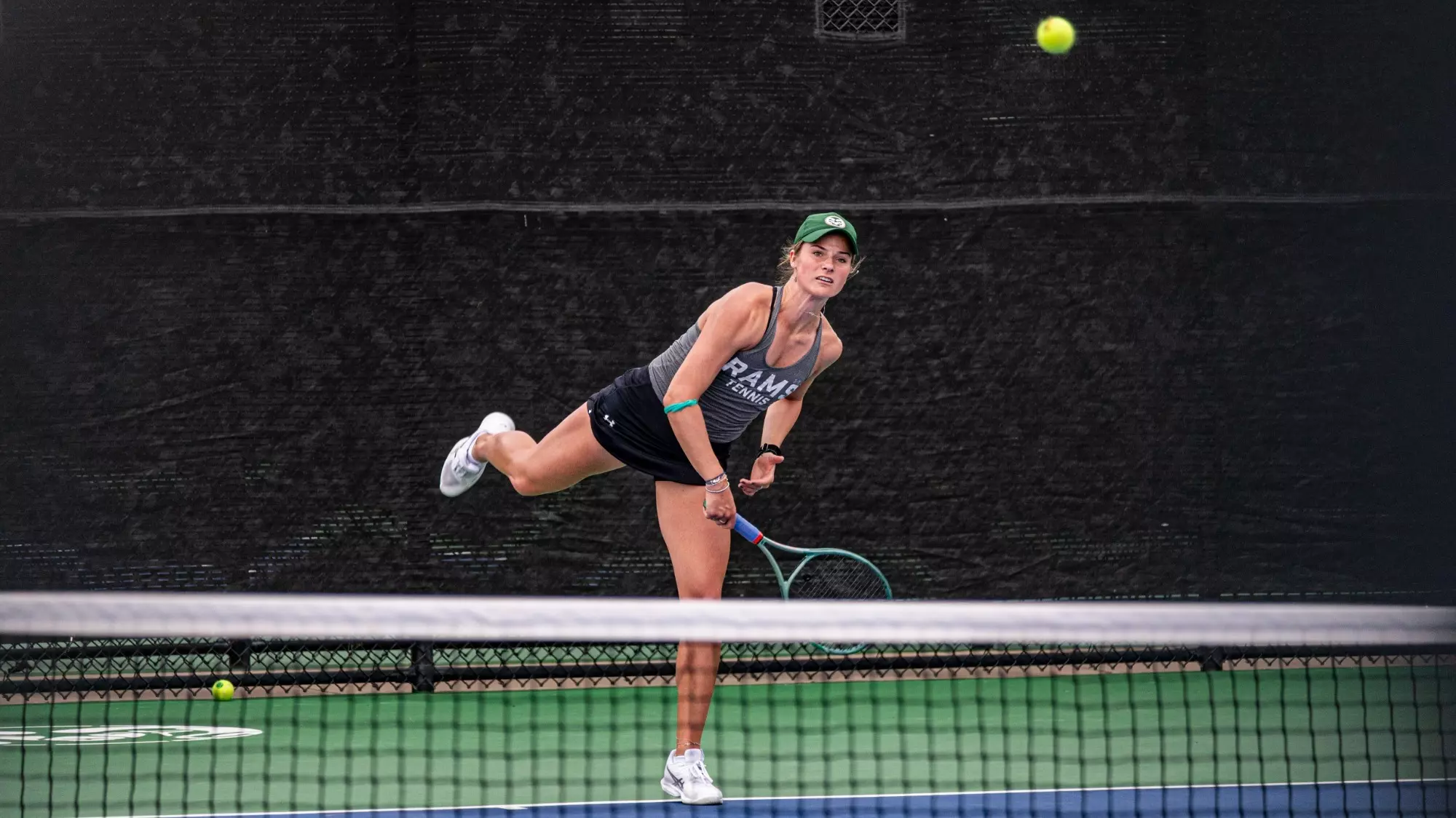
The value of Voeks to which Tran speaks is she made sure the team didn’t start those days down 2-0. She had every reason – a painful UCL injury in her right elbow – to call it a season, head to a surgeon and hope for better days ahead. Had she done that, no one would have blinked.
She hurt all the time. She wore a brace when she slept, so she didn’t sleep well. It was manageable if she didn’t extend her arm, which she did every time she served. She didn’t have to get ill to her stomach every day at practice making sure she was firing her heavy serve to prepare teammates. She didn’t have to rush to the bathroom after every match, once the adrenaline wore off and the pain she pushed to the back of her head became an undeniable reality.
She didn’t have to do any of it. But she did. That, former teammate and roommate Viktoryia Zhadzinskaya, said, is a sacrifice one can never pay back.
“As we’re talking about it I'm getting goosebumps through my body, just because it touches me deep. I was close with her through those moments, and I truly think that I saw her affected a lot,” Zhadzinskaya said. “I know that it's probably just a part of how much it actually affected her, and I think it's just difficult. It's you're struggling not just on the court, but it definitely is gonna affect your mental state overall. I just have so much … Thinking of how resilient and how powerful she is being able to go through it and hold yourself the way that she did.”
Stepping out on the court each match, the players felt the effects, especially early. It was daunting knowing they started a match down. Over time, as a team, the Rams started to look at it as a challenge to be accepted.
They won just four matches after posting double-digit victory totals each of the three seasons prior – a run the program had not been on in more than a decade. Voeks, battling through it all, clinched two of those wins and posted another crucial win in a third victory.
She might have had trouble seeing straight when she looked in the mirror, but it was easier than sitting out and having to look her two senior roommates in the eyes every day at home.
Voeks chose the version she could live with -- physical over mental anguish.
“I felt like I could handle the pain, and come spring, it became evident that there was -- obviously, there's always a choice -- but there wasn't a choice for our team. I wanted to be there for our seniors. We were a limited lineup,” Voeks said. “If I was out, we sort of automatically forfeited in a way. I lived with two seniors. I saw how hard they worked. That didn't seem fair to them. Pain is something that's manageable, but that's sort of season-ending for them as well, and that didn't seem fair.
“I knew what the pain was. I didn't know exactly what the feeling of not knowing if I was going to come back the same after that time off would be. So between the two options, I wanted to be there for the team. I wanted to keep playing.”
The first tinge came her freshman season, at the Jon Messick Invitational the team hosts every season. Flash forward to the next Messick, it was worse. Working with trainer Julie Wonch, the plan was to get her through that tournament, call it a season and have it repaired.
This wasn’t just a tennis thing, either. Driving a car was tough, as was opening a door or pushing herself off a seat. Any kind of weight placed on the elbow produced a surge of torment.
On the court it was amplified. She describes the sensation as feeling like the two bones were being pulled apart and then snapped together. That was because the ligament in the elbow was so torn and relaxed they could. For good measure, toss in a bit of nerve entrapment which at times led to her losing feeling in her ring and pinky fingers.
For us it was just unbelievable thinking like, ‘hey, you can't even complain about your things knowing Logan is out there going through it and doing it for the team.’Viktoryia Zhadzinskaya
Her understanding was after the Messick Invite in the fall of 2024, she would shut it down, only to find out she wasn’t going to do any more damage. All it depended upon was how much suffering she could sustain.
When she examined the big picture and what it would mean for the Rams if she stepped aside, she made her decision. The oddity was, despite the discomfort, the team wasn’t the only benefactor.
So was Voeks. Because a player who showed up as a freshman fighting her confidence found some without being at her physical peak. That, and a player who based their game on power, found other ways to win points and matches.
Voeks didn’t count on that at all.
“I'm still working through that, especially as I return to play. I think -- mean, obviously, confidence is – a lot of it is mental. Most of it is mental,” she said. “I think having that, almost that comfort that I was going out and giving 100% and maybe that my elbow only allowed 80% on the day. I was giving 100% of that, so I was doing what I can. So if I'm missing my serves, there really weren't any fixes I could do. It was my elbow. And there was sort of I had to find a way to actually use my skills to work around that.
“And I learned, hey, I'm not only a serve. I'm not only a forehand. I have all of these other skills that I learned to do to shorten points and sort of work around the fact that I was limited in how long I could be out there on that court. And, yeah, I still don't really know how it happened. I'm guessing a bit of taking the focus away so much on myself and putting it on the fact that I just really and truly wanted to make it through every match. I wanted to stay on that court. I didn't want to be the reason we lost. I wanted to add a win. But if it meant me going out there and playing the opposite of my game style is to stay on the court as long as possible, I was willing to do that. And it sort of … I learned a lot of new skills and learned that the skills I do have, even if they're not at their best, are often good enough.”
A damaged elbow never kept her out, but a high fever led to the only one dual she missed – the regular-season finale. The universe can be cruel, and as it turns out, Voeks played a lot of three-set matches last season. She smiles, noting she won a lot of those first sets, then when the pain really started to build, she would drop the second. The third was about staying on the court, extending the match with the idea it gave a teammate a chance to win their match before clinch hit.
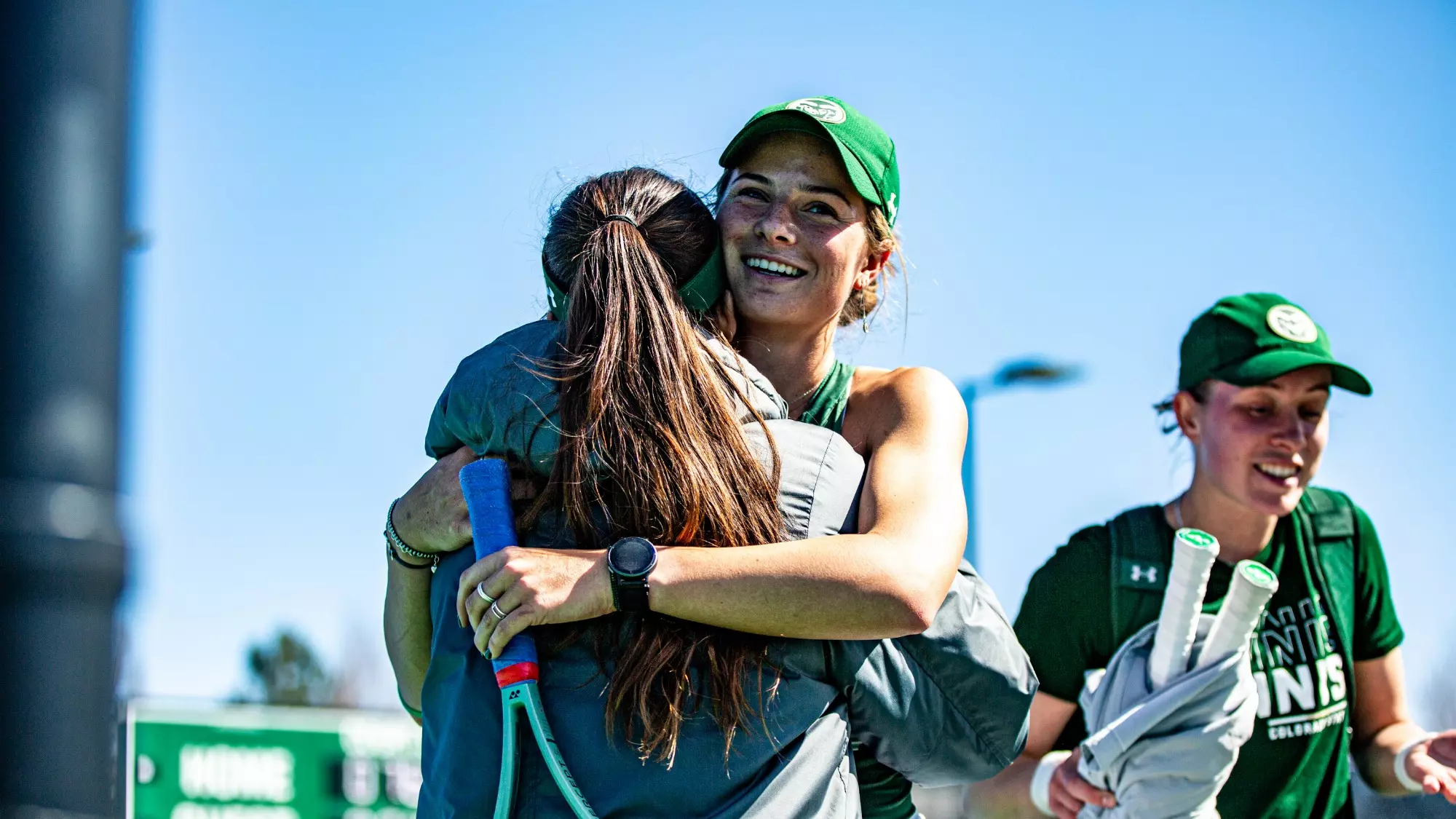
It was her win against New Mexico which sealed the team’s first conference win, resulting in a mob embrace which acknowledged more than a team victory.
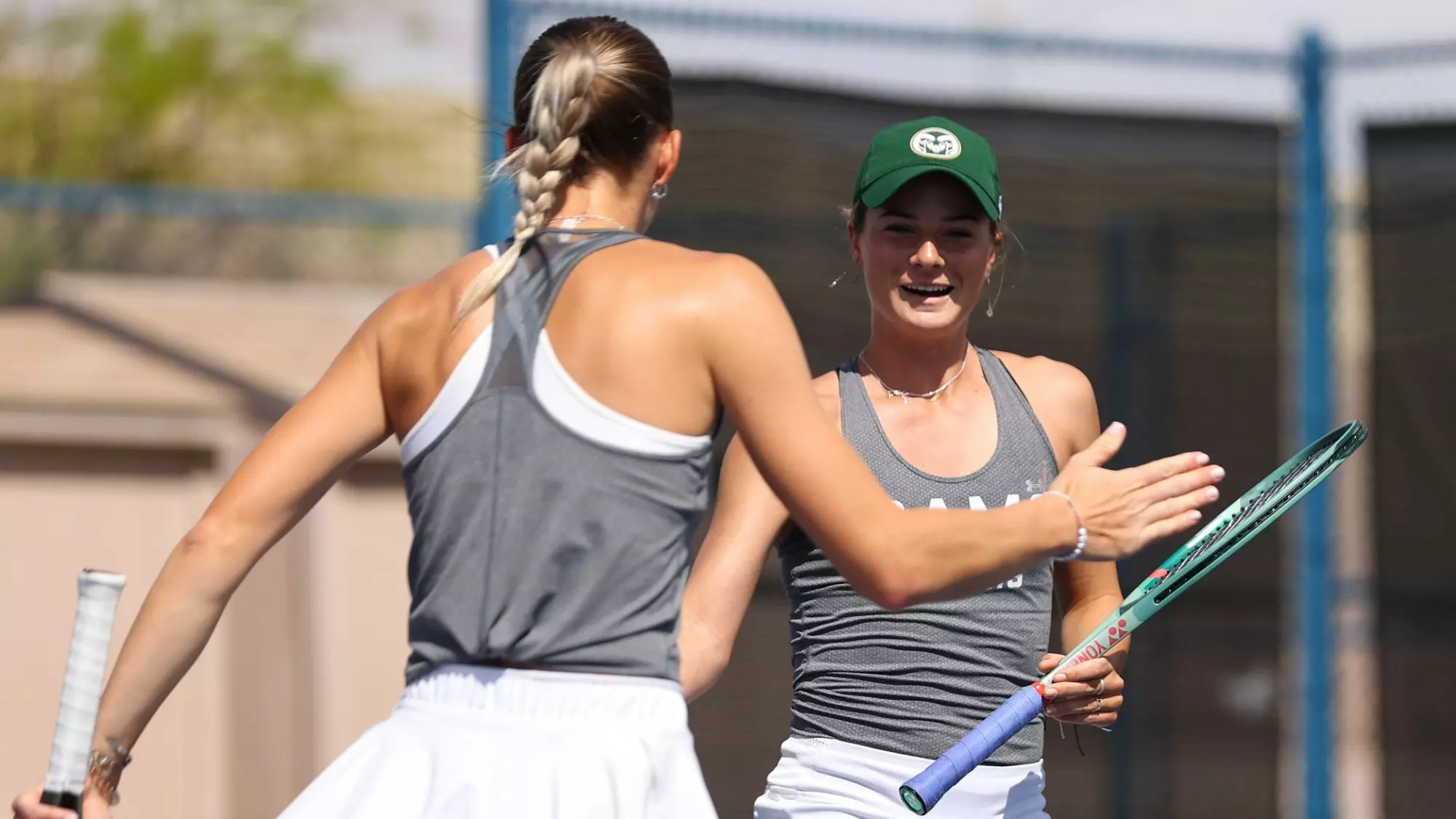
“We always would tell her that no one would ever have a second thought about it If she wouldn't play,” Zhadzinskaya said about conversations she and Sarah Weekley would have with Voeks. “We would rather her not play than her suffer, but I think she's such a selfless person in a good way when it comes to it that she wanted to do her best for the team and for others and push through. For us it was just unbelievable thinking like, ‘hey, you can't even complain about your things knowing Logan is out there going through it and doing it for the team.’”
Along the way, Voeks improved her footwork. She came to understand the game at a higher level, reading opponents and setting up shots. The reverse happened, where she went from mentally beating herself up after one missed point to seeing when the opponent was struggling and attacking the weakness.
All the while, Wonch and Tran were keeping a close eye on her. Voeks wasn’t one to tell them when she had reached a point, so they were the ones who had to make sure she pulled back when necessary. Particularly at practice.
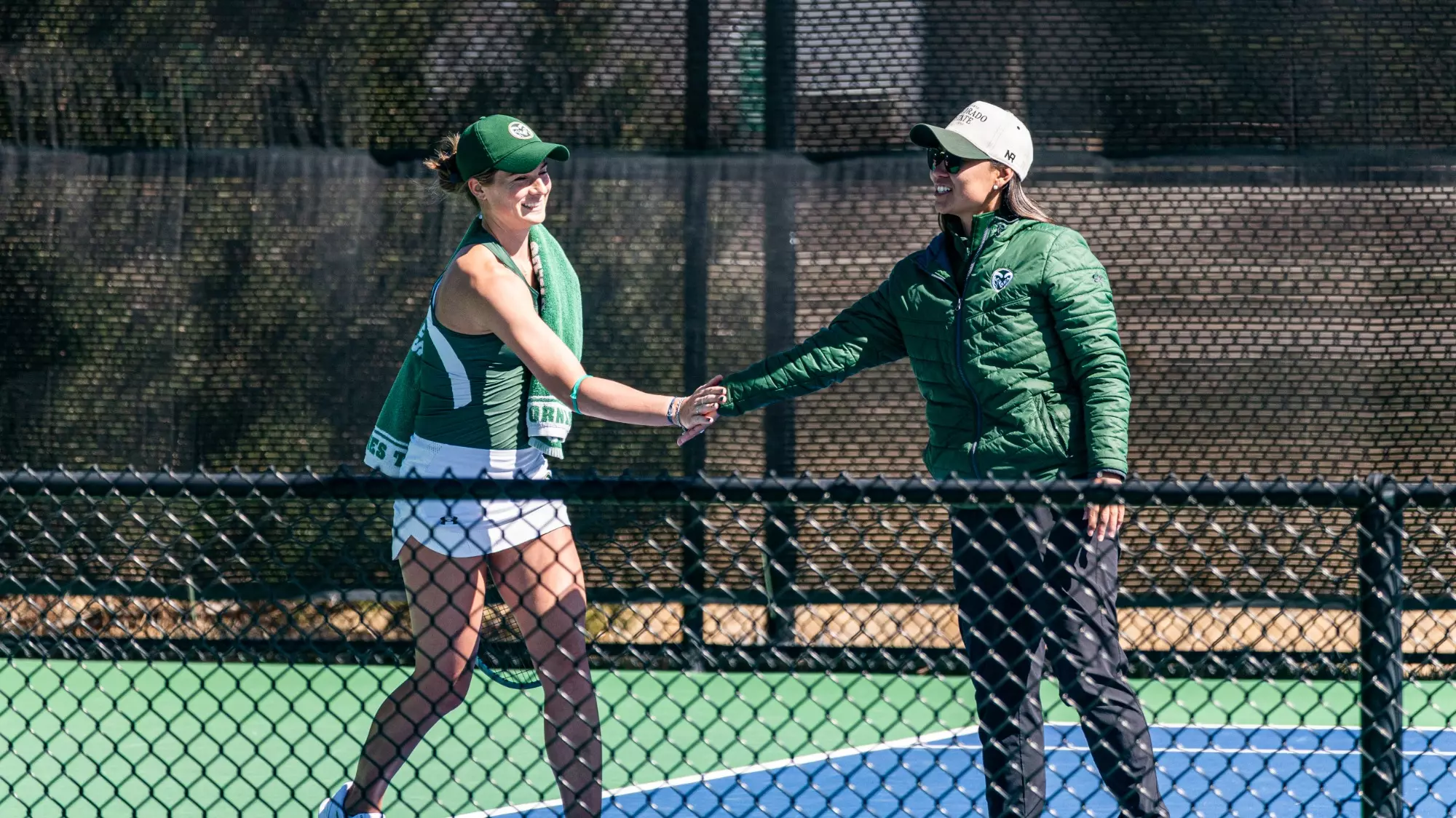
“Logan is one of the hardest-working players we've had in this program. And she's willing to do whatever it takes and run through a wall for her teammates,” Tran said. “Holding her back from running through the wall was the hard part. We didn't want her to hurt herself.”
Surgery came on May 21. About a week later, she and her mother made the drive home, going all the way straight through since Voeks couldn’t sleep anyway. Being home brought about a different type of pain – that of waiting and being patient.
First came the cast, followed by a couple of months in a brace. No tennis.
Rehab started with the brace on, exercises focusing on range of motion. Eventually, she started working with bands. She was frustrated because she wanted to do more. She felt she was ready to do some weight training and was told no. Still, she had to admit to herself she was making progress.
Along the way, the right people were putting up guardrails. Back on campus for the start of the year and the next step in rehab, she spent as much time with Wonch as anybody. Then finally, she could hit balls again, off to the side at the Messick Invite. She was allowed to hand drop balls and hit five backhands and five forehands.
“Julie was amazing in fully limiting me. I would hit maybe 15 balls,” Voeks said. “If I was lucky, I worked up to quite a few when we went to Air Force and then I was practicing about half an hour. I think I worked up to almost an hour and 15 of practice. We started out very slow, like very few reps.”
This was how she spent the fall, watching her teammates compete and working her way back. Her younger sister, Dylan, joined the team as a freshman this year, and she would help coach her at matches. Logan realized some of the things she learned about herself, her game and how to read opponents, she could pass along to Dylan.
It was an awakening of sorts, and she also knew she was on the cusp of returning. The one final step was getting her serve back. The last step with it requiring extension. She went home for the winter break, where Dylan played the role of her backstop. And disciplinarian because who knows better about how stubborn Logan is than Dylan?.
On a scale of 1-10, Dylan puts her sister at an 11. For instance, Logan had a crack in her windshield, yet they argued for more than an hour about who was actually going to drive when they had to make a trip to Denver.
Back in Charlston, Dylan knew the assignment when Logan practiced serves.
“I would hide balls. I mean, I've known her my whole life, so it's easy to read when she's in pain or all that,” Dylan said. “So, I would have to physically hide the balls from her to stop her from serving more and pushing herself.”
The season is quickly approaching, and Logan being Logan, is – in her words – stubbornly expecting to play in the opener. She agrees, yes, ultimately it is Tran’s choice, but she’s going to try to force her coach’s hand.
This is where they differ. Not about Logan’s talent, or even her dedication. It’s Logan’s viewpoint of herself. Stubborn, Tran said, brings along a negative connotation. She finds no negative to the way Logan approaches her goals.
“We had to navigate this, because Logan is such a unique personality, where she's strong-willed, and she loves tennis. She wants to be on the court, she never wants to sit, she is happy when she's playing,” Tran said. “And so obviously, as a coach, it's hard to see somebody in pain, and so we had to talk every day about what was best for her, rely heavily on the trainer to say what she could be cleared for. And so we worked together to do what's best for her, but she was such a selfless player that she wanted to do what's best for the team, and she stepped up and played for us, and she was a huge impact on our team.”
Not only did she play hurt, Logan spent the season moving up the lineup, eventually playing at the No. 3 spot, where she was against the Lobos. This season, the makeup is different. Tran now has 10 players to choose from to fill out a lineup of six single spots. Fingers crossed, she hopes her team never finds itself in the precarious spot it lived in last season.
Either way, Logan wants to play. She did during the team’s Green and Gold scrimmage Jan. 17, but she was limited, with Wonch and Tran inspecting every move. She still has a week to prove to them she can make it through a full match. This year is not about handling the pain; it’s about avoiding it and not having a setback.
Logan is antsy, not because she went through so much last year, but simply because she feels she’s ready. But also, in some way, because she came out the back end of it a better player, a smarter player. When she talks about her game, she no longer puts herself in the box of living off a big serve and forehand.
She has tools. Multiple. Even, just maybe, a newfound joy for the game she loves.
“It is a tricky thing. Obviously, I'm still in the sport, so I don't know. I'm hoping to get to that point where I am proud of myself,” Logan said. “I'm happy. It's been a bit weird. I came into college I wasn't happy on the court, but my body felt fine. It was just I wasn't confident in my game style. Then last year, I was confident in my game style, enjoying the points in pain, so it wasn't fun. So I haven't enjoyed myself yet. I'm hoping this season I'm able to combine a bit of both again.
“And so, I think if I can do that, yes, I will. I am proud of making it through. Because it was questionable every day I woke up if I could do it, and it was a long season.”
One with immense value a team could not quantify. One with immense value the player could not have foreseen.
Support Colorado State Athletics: Tickets | Ram Club | CSU NIL Marketplace