
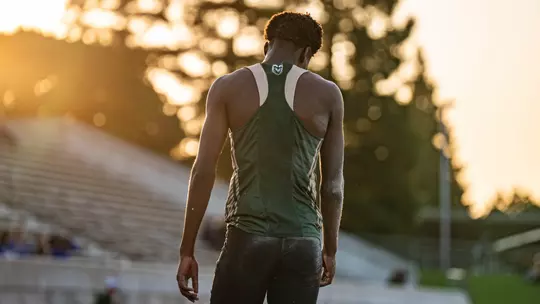
Built so They Don't Look Down
Ndayiragije Shukurani is raising the bar and refusing to settle beneath it
Liv Sewell
Fly high, and don’t even think about the way down, because the bar continues to raise.
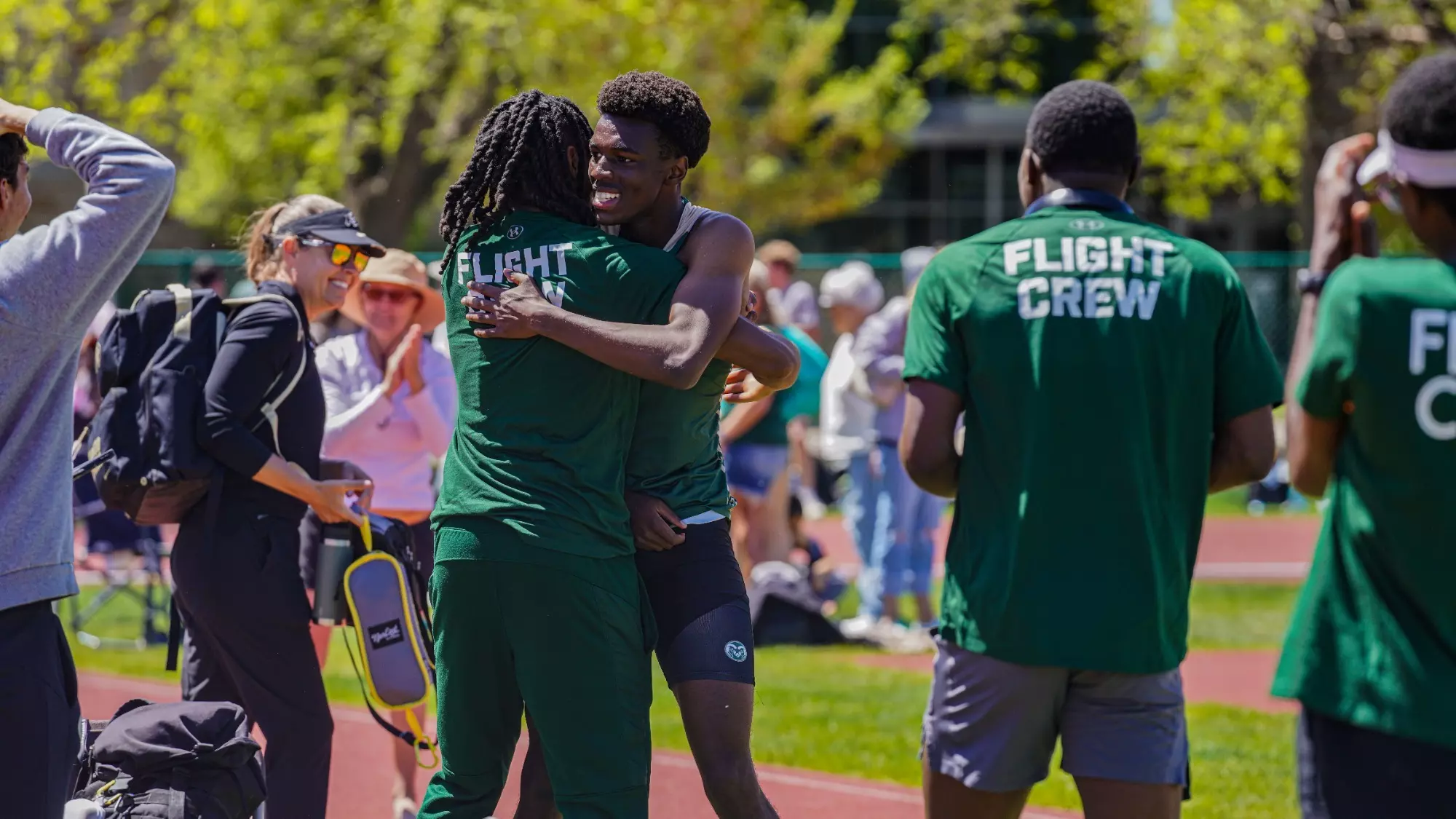
For Colorado State’s jumping crew a pun like that is more than a cliché tossed around in a weight room. It’s an ethos they walk in every day. They call themselves the “Flight Crew” and the name more than fits.
But even the highest flyers start with something simple. A rhythm. A vibe. Something to lock in before sprinting off the runway. For Ndayiragije Shukurani — known by his team as Shuku — the vibe comes through YoungBoy in his headphones. The beat drops and his shoulders loosen. The world narrows. And the runway is the only thing ahead of him.
“I mean, I listen to music,” Shukurani said. “I feel like listening to music really helps just keep me locked in. It depends on the vibe, but if I'm getting ready for a meet, I might listen to YoungBoy.”
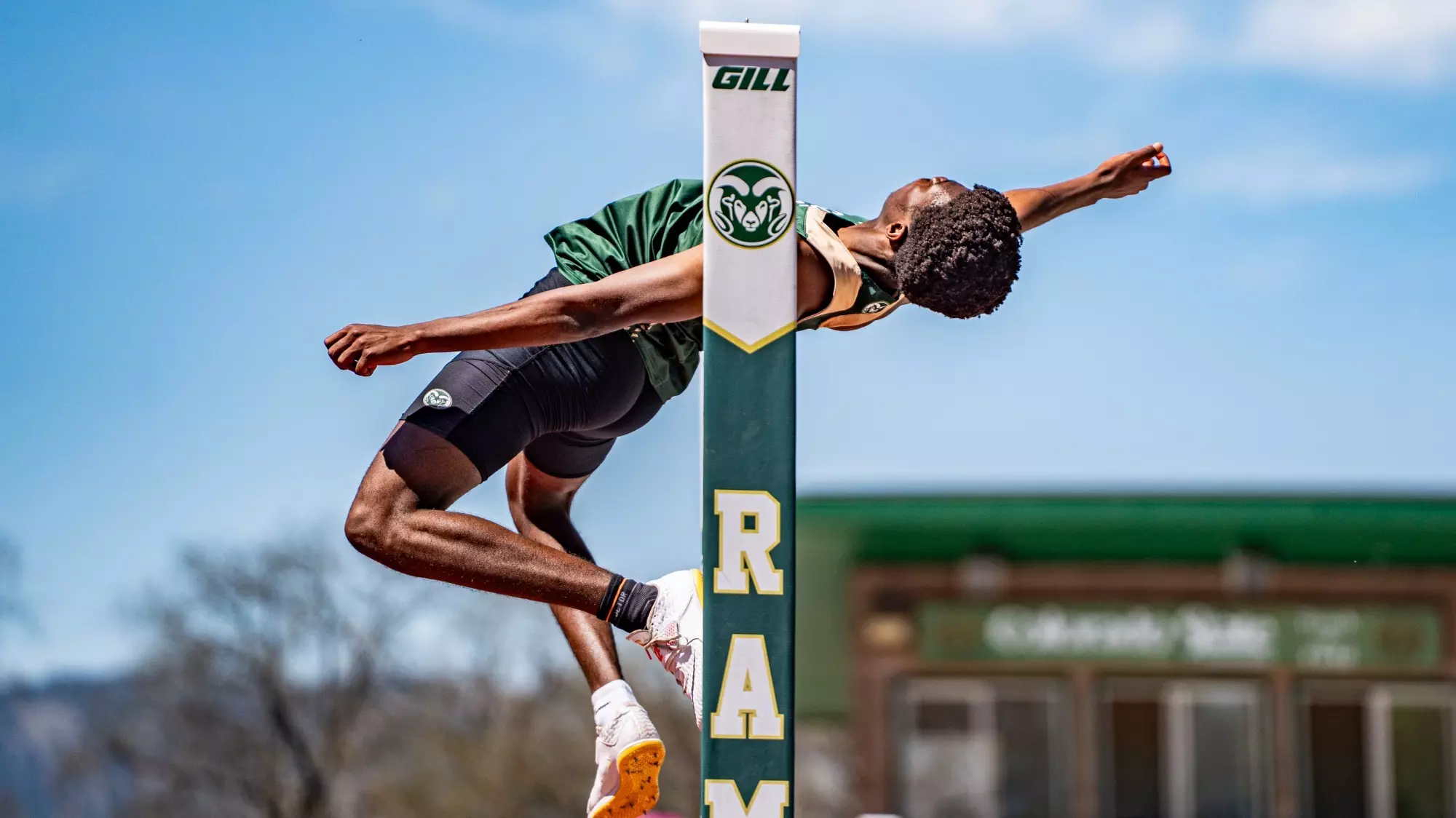
As a sophomore, he recently took the No. 1 spot in the CSU indoor record book for high jump with his leap of 7-foot-2 at a meet in Colorado Springs.
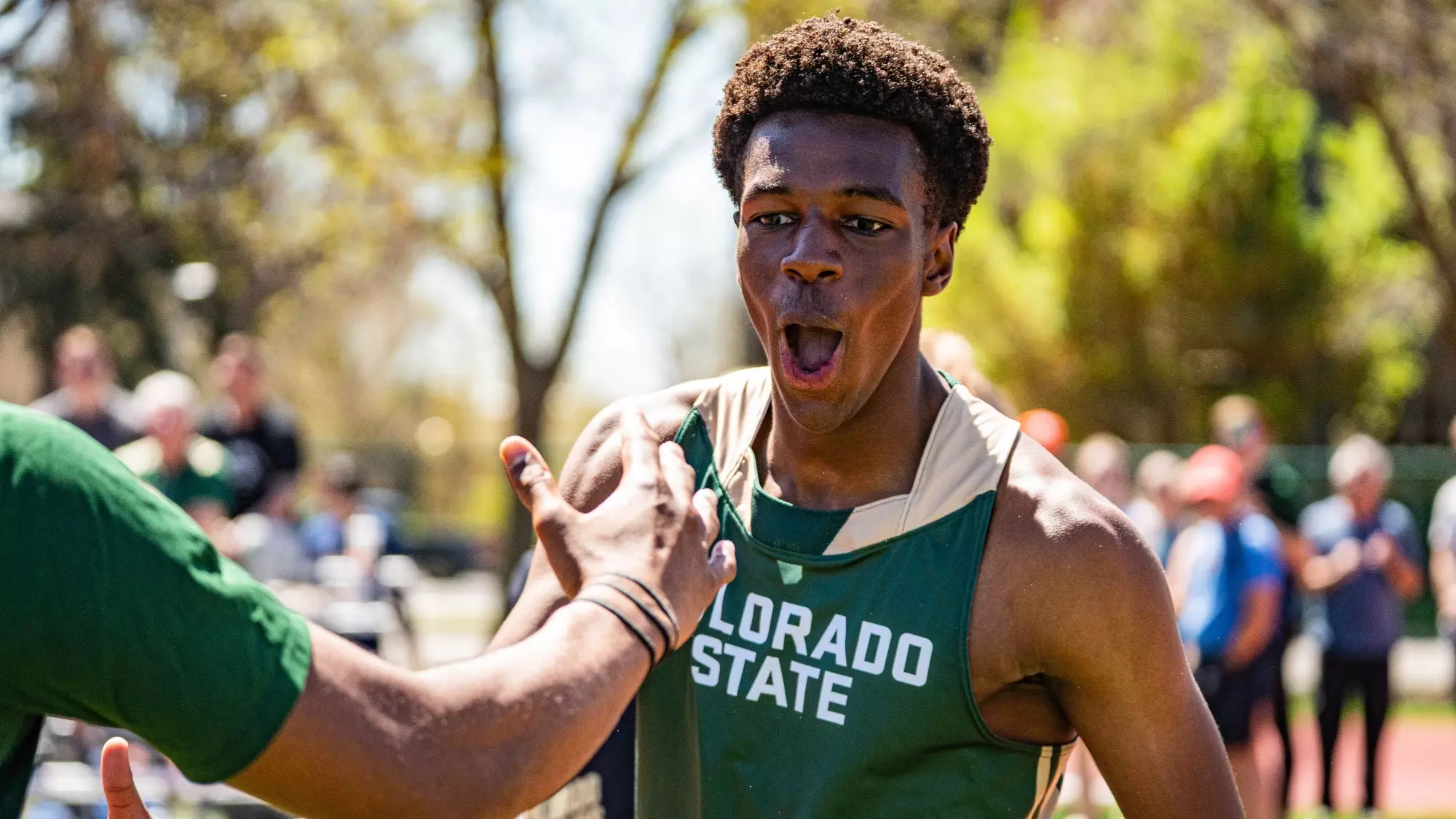
The mark places him in elite company nationally with him now currently tied for 12th in the country. He celebrated of course, but someone else might have reveled in the spotlight a little bit longer.
“I mean, yeah, it's cool but it's just something I can tick off,” he said. “It's not too crazy to me because there's obviously more I need to accomplish. So I don't take it as like nothing too crazy.”
Personal success is never the full story. It isn’t just about rankings, though they do have plenty of those. Because the indoor record book doesn’t lie.
Shukurani not only holds the school record in the high jump, he also ranks No. 2 all-time in the triple jump at 52-2.5. Just behind him at No. 3 is junior Jamison Taylor (51-10.25). Taylor’s name shows up again in the long jump record book at No. 3 (24-6), alongside teammate Isamel Dembele, who ranks No. 7 at 24-2.25.
This isn’t a one-athlete show, better yet, a constellation.
For jumping coach Maria Creech, the depth of talent means just as much as the individual accolades.
“It's only my fourth year at a Division I program and coaching in the college world, so it helps me with my confidence to see them succeed and get better, and I think that in turn helps me give them more confidence,” Creech said. “When you have multiple jumpers doing well, then they can feed off each other and feed all that chemistry together. I think that's really where our success comes from is that if one of them does well, then they trust me, and then they can kind of bring that mindset and put that into the other jumpers.”
Their chemistry is obvious no matter the equation.
In the weight room, the speakers never rest. Someone is dancing between sets. The kind of playlist where no one remembers who picked the song, but everyone knows the words. On the sidelines, the cheering never dips — not even when someone scratches. Especially not then.
And off the track? Of course they are still together.
“You wouldn't expect for a crew to be so close to each other,” Shukurani said. “Because I know other schools, their groups aren't super close to each other. They're all just doing their own thing. But us here, we're all in it together. We hang out outside of just track. It's more than just track to us.”
The familiarity goes to influence their performance.
Because a coach can tell you something and a movement can make sense in your mind but it’s all up to the moment to see if it works. And sometimes, when it’s coming from a friend, it’s an easier pill to swallow.
“They all know how to coach each other,” Creech said. “They all listen to me coach each of them, so I trust them all being without me and still coaching and saying the same things that I would say. And sometimes hearing it from each other is better than hearing it from me.”
Jumping is individual by nature. One athlete, one bar, one moment. But for this group, the moments have since merged into something larger than one person. And still, success comes with its own weight. Because when a team gets this close—this good—it can become tempting to believe they’ve hit the top.
But jumpers, by instinct really, continue to look up.
“I want to keep raising the bar, no pun intended,” Creech said “I think that this is really just kind of like the start of what we can do and really what the start of what CSU flight crew can do. I want to be the number one jump school in Colorado. I want to be where people want to go to go to a jump school. I want people to want to come here to get better at jumping.”
Shukurani saw the vision while still in high school.
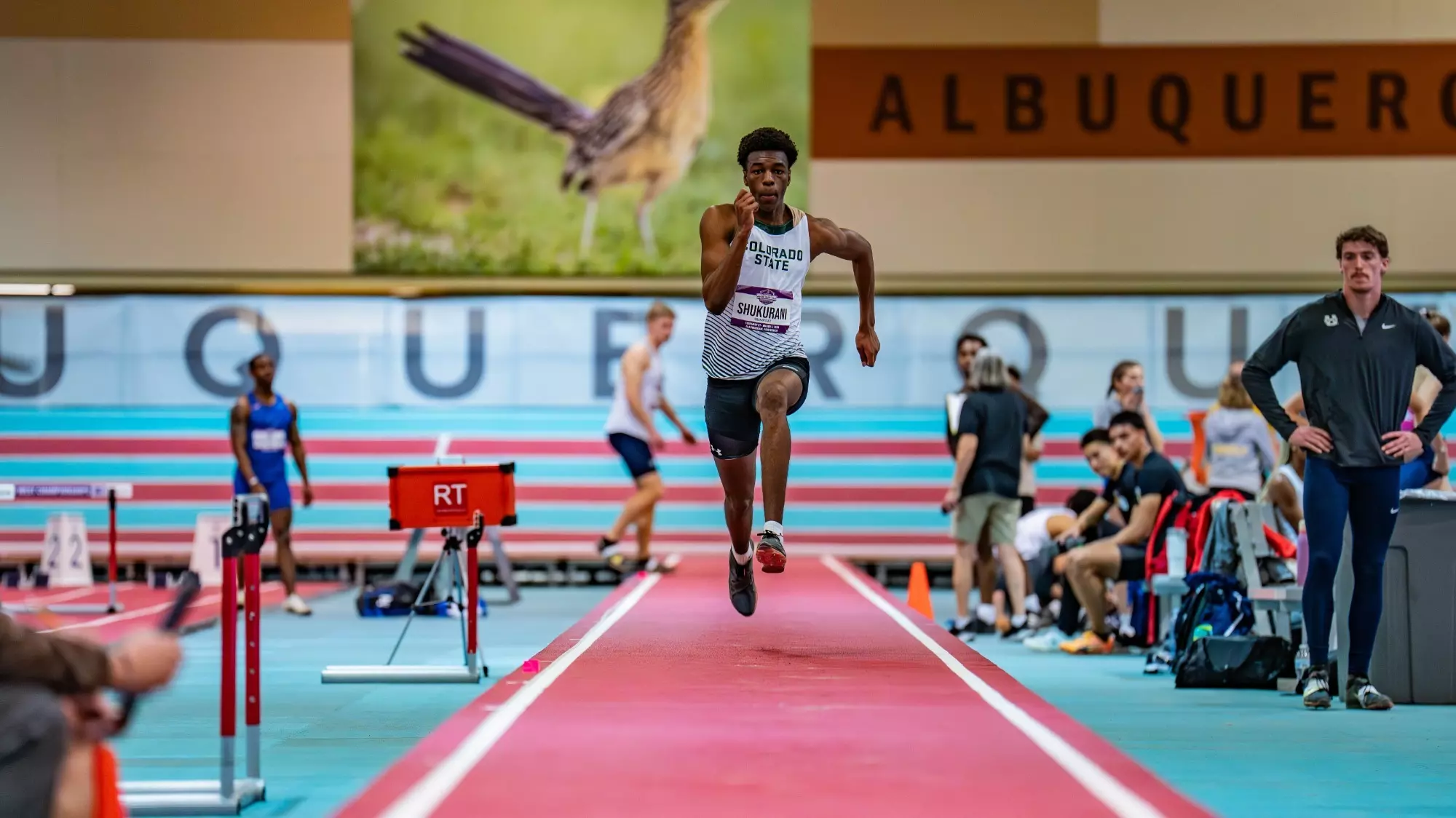
I just want to see how far I can get. Because I feel like when you set goals, that's where you want to be. You don't want to go higher. So I just want to go as high as I can.Ndayiragije Shukurani
Coming from Washington, he jumped at Everett High School. However, he didn’t start out on the track. He only joined his sophomore year after spending one on the basketball team. Finding a love for the upward progression led him to a state title his last year of high school and then eventually wearing green and gold.
During the state meet, he bested the second-place jump by two full inches with his undertaking of 6-foot-8. He has since added six inches to the bar but what’s funny is he tends to see this year as his freshman one. Catching up on the year he missed in high school.
“I mean, having started my sophomore year, it was completely new to me,” Shukurani said. “So, just going up from there — sophomore, junior, senior year — I felt like last year being my freshman year here was my true high school senior year. That's how I took it. And then coming in now, I feel like this is really my first year of college. And being number one in that high jump really feels good.”
The shifting in perspective can also help with the things he is new to.
Weights being one of them.
“I know from his freshman year that Shuku wasn't really in the weight room like that,” Taylor said. “So, him being able to experience a college weight-room experience really helped develop him as an athlete. And then everybody else too, everything you do, it's body dynamics, body stuff. Body development just got us better.”
Because it can seem like a fluke or it came out of nowhere but it is simply not the case. The pieces of the puzzle have long been fitting together, now they have the opportunity to truly shine as one completed thing.
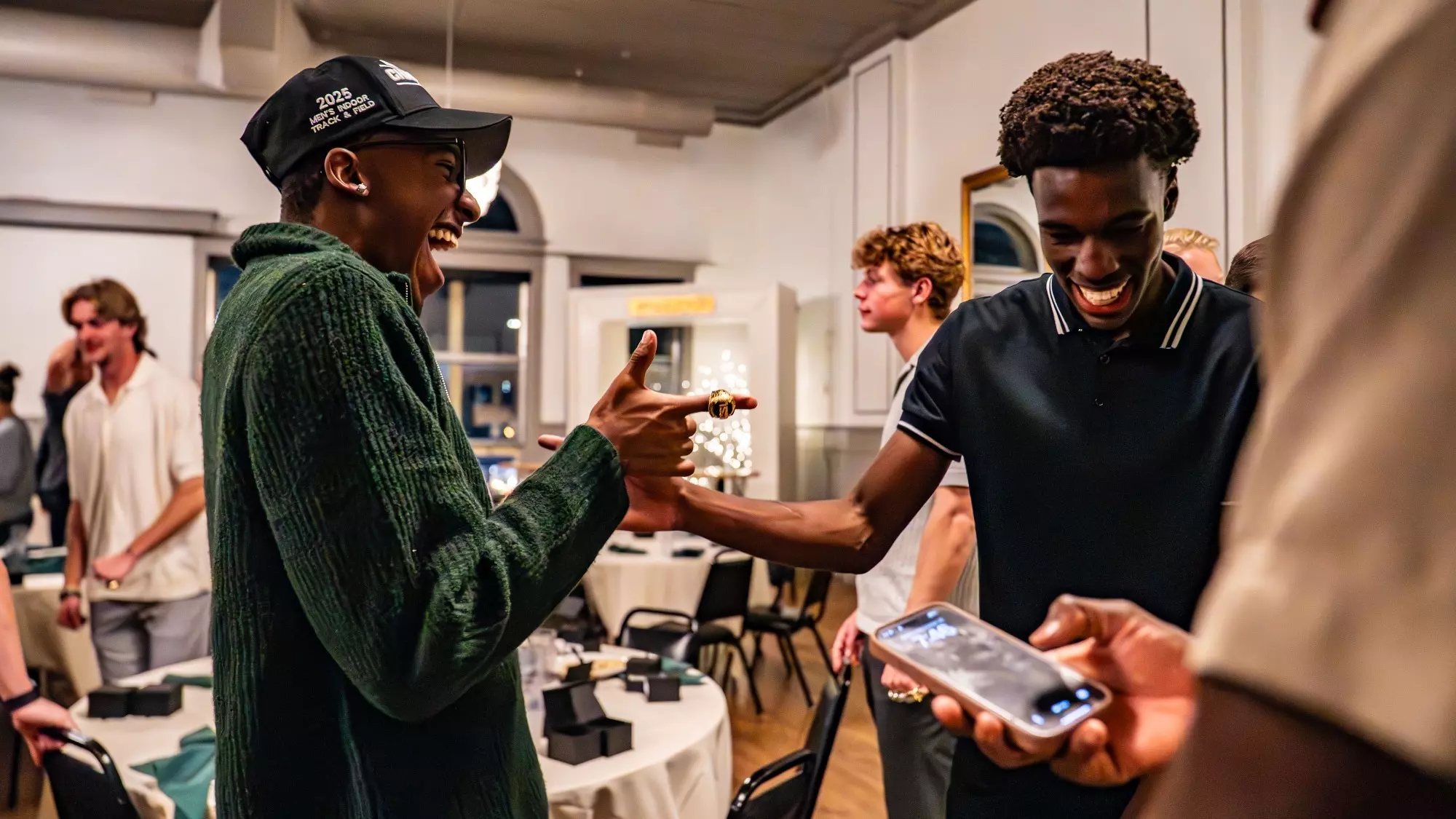
It’s still cool though. It really hasn’t stopped being cool since they donned “Flight Crew” shirts and Mountain West Championships caps.
“I'm always just in awe of how much better they are,” Creech said. “At this point, the sky's the limit. I have no idea what they can accomplish. I'm going to keep doing me and I'm going to keep coaching the way I've been coaching and try to stay consistent. But I have no idea what they're going to accomplish. And it's kind of scary. I'm not going to lie. But, yeah, who freaking knows?”
Sometimes the most frightening things are what’s ahead.
But right now the crew is how it’s always been. Together, just higher this time.
“It feels good and I think it's pretty special because before that, like records have been up for so long,” Taylor said. “Just our class, like three-year class, me and him and Ish (Dembele) are just climbing up.”
The literal rise fuels the metaphorical one. Bars move up inches at a time, but belief climbs in bigger strides. Holding each other accountable day in and day out becomes less of a chore and more of a habit. The cues before a jump — steps measured out, breath held at the start of the runway — start to feel routine. Familiar. Automatic.
And when something becomes second nature, sometimes the best thing a coach can do is step aside.
Creech understands the balance. There are moments to correct, to cue, to adjust. And then there are moments to simply let them run.
“It’s just sending it and having a good time with it,” she said. “Because they have so much fun together and they feed off each other's energy, a lot of times at meets, I kind of try to take a step back and be like, just go have fun.”
On meet days, her voice blends into theirs. The energy doesn’t rely on one person. Because roles shift depending on the space. In practice, Creech leads. In competition, the crew lifts itself with her standing quietly by.
Shukurani feels those shifts most clearly when he rotates between events: triple jump, high jump, long jump. Each demands a different rhythm. A different kind of focus. A different mental reset. Music helps. Routine helps. So does uncertainty.
Because while goals can serve as targets, they can also become ceilings.
“My first year I did have goals and then I did accomplish those goals,” Shukurani said. “Coming into my sophomore year, I decided not to set any goals. I just want to see how far I can get. Because I feel like when you set goals, that's where you want to be. You don't want to go higher. So I just want to go as high as I can.”
The thing about flight is it requires faith.
You sprint toward something which looks impossible. You plant your foot. You lean into open air and trust your body knows what to do. For a split second, there is nothing beneath you. No guarantee. No certainty. Just muscle memory and belief.
Because the bar will always continue to raise. The line will always movie. And soon, the first time Shukurani hit 7-2 will be a distant memory.
But when it does, they’ll line up the same way they always have — teammates nearby, music bleeding into the air of a practice room which never really goes quiet. They’ll measure their steps. They’ll clap for each other. They’ll dance between attempts. They’ll miss. They’ll adjust.
Then they’ll run and continue to believe in what could be next.
Support Colorado State Athletics: Tickets | Ram Club | CSU NIL Marketplace