
Colorado State University Athletics
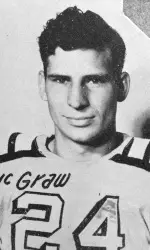
Veteran's Day feature: The McGraw brothers fought on both fronts during WWII
11/11/2014 12:00:00 AM | General
Nov. 11, 2014
By John Hirn
Nearly all Ram fans know about Fum McGraw and what he did for CSU athletics, but few are aware of his older brothers and what they did during WWII and as athletes at Colorado A&M.
Bill McGraw, the oldest of the McGraw boys arrived on the Colorado State campus as a freshman from Paonia, Colorado in the fall of 1940. Bill, a 6-2.5, 195-pound solid athlete played freshman football in 1940 and then made the varsity team playing as an end for the 1941 season.
Bill McGraw wore No. 24 in 1941 and was a member of Coach Harry Hughes' last full-season football team. Meanwhile, on the freshman team Bill's younger brother Hershiel played his first season of football with the hope to make the 1942 varsity squad.
Hersh, as he was known, was also an excellent athlete lettering in football, baseball and boxing at Paonia High School. After the 1941 season, oldest brother Bill went off to fight with the Third Marine Division in the South Pacific.
For the 1942 football season, Hersh took over his brother's spot at the end position, and also took his brother's No. 24 jersey. Hersh earned his Aggie letter for one season of football just like Bill, but later joined the US Army and was moved to Montana State University to study engineering. As the war escalated, Hersh was transferred to the infantry and sent to Wales to train for D-Day.
Meanwhile in the South pacific, Bill McGraw commanded a halftrack unit for the Marines and fought in the battle of Bougainville from November 1943 to January 1944. He then took part in the battle of Guam from July 21, 1944 to August 10, 1944. He was then sent back to Washington DC to study at the Officers Training School in Quantico, VA where he met and married his wife of 50 years, Jeannette.
Over in Europe, Hersh McGraw arrived in April of 1944 and took part in the D-Day landings on Omaha Beach on June 6. He joined up with Patton's Third Army, the same as former Aggie teammate Louis "Dude" Dent, and earned a Bronze Star for gallantry as a reconnaissance officer.
He was scheduled to receive a battlefield commission, but Hersh stepped on a landmine and his right leg had to be amputated. He was discharged in 1946 with a Purple Heart and returned to Colorado A&M to complete his degree.
Meanwhile, Bill McGraw left officers training as a captain after the war and came home to Colorado to finish his degree at Colorado A&M just like his brother Hersh.
Bill and Hersh were then joined in the fall of 1946 by their youngest brother, Thurman, who had spent the 1945-46 school year with the Marines and entered Colorado A&M as a freshman in the fall of 1946.
While Fum played on the varsity football team as a freshman (which was allowed in the immediate post-war years), his brother Hersh acted as the team manager and later became president of the "A" club for lettermen in 1947. Although Bill did not return to athletics, he and Hersh were named as "Who's Who in American Colleges and Universities".
Both Bill and Hersh graduated in 1948 and began careers that would see them in the field of athletics for many years to come.
Bill received his master's degree in 1950 and moved to Grand Junction where he later became the director of athletics and physical education for Mesa County Schools. He was a charter member of the Colorado High School Activities Association Board serving from 1965 to 1972 and president in 1967-68. He was inducted to the inaugural class of the CHSAA Hall of Fame in 1989 and was also inducted into the Colorado Coaches Hall of Fame. Bill McGraw served 20 years with the Colorado National Guard following his discharge from the Marines; he died on June 6, 1995 in Grand Junction at the age of 73.
Hersh McGraw coached athletics at Fort Morgan High School soon after earning his degree from Colorado A&M and later coached and managed athletics at the Colorado School of Mines. In 1954 he returned to Colorado A&M as the business manager of athletics and in 1956 was an assistant coach of freshman football for the Rams. He later worked as the coordinator of the building program on the growing Colorado State University campus and was instrumental in the construction of both Moby Arena and Hughes Stadium.
After leaving CSU, Hersh went on to found McGraw and Company, a land-planning and development firm that later consulted for the construction on the Auraria Campus and several other colleges in Colorado. Hersh McGraw died on Oct. 24, 1996 at the age of 71 in Fort Collins.
The two oldest brothers of CSU Legend Fum McGraw played an instrumental role both at CSU and while fighting in Europe and the South Pacific. There are many more great stories of former Aggies that have served our nation and we salute all of them this Veteran's day.

By John Hirn
CSU Athletics Historian
Nearly all Ram fans know about Fum McGraw and what he did for CSU athletics, but few are aware of his older brothers and what they did during WWII and as athletes at Colorado A&M.
Bill McGraw, the oldest of the McGraw boys arrived on the Colorado State campus as a freshman from Paonia, Colorado in the fall of 1940. Bill, a 6-2.5, 195-pound solid athlete played freshman football in 1940 and then made the varsity team playing as an end for the 1941 season.
Bill McGraw wore No. 24 in 1941 and was a member of Coach Harry Hughes' last full-season football team. Meanwhile, on the freshman team Bill's younger brother Hershiel played his first season of football with the hope to make the 1942 varsity squad.
Hersh, as he was known, was also an excellent athlete lettering in football, baseball and boxing at Paonia High School. After the 1941 season, oldest brother Bill went off to fight with the Third Marine Division in the South Pacific.
For the 1942 football season, Hersh took over his brother's spot at the end position, and also took his brother's No. 24 jersey. Hersh earned his Aggie letter for one season of football just like Bill, but later joined the US Army and was moved to Montana State University to study engineering. As the war escalated, Hersh was transferred to the infantry and sent to Wales to train for D-Day.
Meanwhile in the South pacific, Bill McGraw commanded a halftrack unit for the Marines and fought in the battle of Bougainville from November 1943 to January 1944. He then took part in the battle of Guam from July 21, 1944 to August 10, 1944. He was then sent back to Washington DC to study at the Officers Training School in Quantico, VA where he met and married his wife of 50 years, Jeannette.
Over in Europe, Hersh McGraw arrived in April of 1944 and took part in the D-Day landings on Omaha Beach on June 6. He joined up with Patton's Third Army, the same as former Aggie teammate Louis "Dude" Dent, and earned a Bronze Star for gallantry as a reconnaissance officer.
He was scheduled to receive a battlefield commission, but Hersh stepped on a landmine and his right leg had to be amputated. He was discharged in 1946 with a Purple Heart and returned to Colorado A&M to complete his degree.
Meanwhile, Bill McGraw left officers training as a captain after the war and came home to Colorado to finish his degree at Colorado A&M just like his brother Hersh.
Bill and Hersh were then joined in the fall of 1946 by their youngest brother, Thurman, who had spent the 1945-46 school year with the Marines and entered Colorado A&M as a freshman in the fall of 1946.
While Fum played on the varsity football team as a freshman (which was allowed in the immediate post-war years), his brother Hersh acted as the team manager and later became president of the "A" club for lettermen in 1947. Although Bill did not return to athletics, he and Hersh were named as "Who's Who in American Colleges and Universities".
Both Bill and Hersh graduated in 1948 and began careers that would see them in the field of athletics for many years to come.
Bill received his master's degree in 1950 and moved to Grand Junction where he later became the director of athletics and physical education for Mesa County Schools. He was a charter member of the Colorado High School Activities Association Board serving from 1965 to 1972 and president in 1967-68. He was inducted to the inaugural class of the CHSAA Hall of Fame in 1989 and was also inducted into the Colorado Coaches Hall of Fame. Bill McGraw served 20 years with the Colorado National Guard following his discharge from the Marines; he died on June 6, 1995 in Grand Junction at the age of 73.
Hersh McGraw coached athletics at Fort Morgan High School soon after earning his degree from Colorado A&M and later coached and managed athletics at the Colorado School of Mines. In 1954 he returned to Colorado A&M as the business manager of athletics and in 1956 was an assistant coach of freshman football for the Rams. He later worked as the coordinator of the building program on the growing Colorado State University campus and was instrumental in the construction of both Moby Arena and Hughes Stadium.
After leaving CSU, Hersh went on to found McGraw and Company, a land-planning and development firm that later consulted for the construction on the Auraria Campus and several other colleges in Colorado. Hersh McGraw died on Oct. 24, 1996 at the age of 71 in Fort Collins.
The two oldest brothers of CSU Legend Fum McGraw played an instrumental role both at CSU and while fighting in Europe and the South Pacific. There are many more great stories of former Aggies that have served our nation and we salute all of them this Veteran's day.

Colorado State Athletics: John Weber Spring Press Conference
Friday, April 17
State of the Rams - Episode 1 (Jason Smith)
Monday, March 02
Director of Athletics John Weber Press Conference (10/20/2025)
Monday, October 20
Colorado State Athletics: John Weber (8/6/25)
Wednesday, August 06