
Colorado State University Athletics
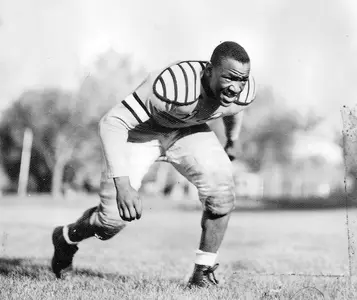
Celebrating Black History Month
2/4/2019 9:58:00 AM | General
The Aggies pioneered diversity in Athletics ahead of many peer institutions
As we celebrate Black History Month in February, we look back on the men who pioneered intercollegiate athletics at Colorado State and throughout the Rocky Mountain Region years before other schools did the same. There are many athletes who broke the so-called color barrier at CSU between 1937 and 1954 as Colorado A&M became the leader in the region for allowing any athlete, regardless of his or her race or ethnicity, to participate in intercollegiate sports.
The long history of diversity in athletics at CSU began on October 7, 1905 when Colorado Agricultural College head coach John McIntosh put sub-freshman Alfred Johnson into the season-opening game against the University of Denver.
Johnson, an African American athlete, became the first in school history to play any sport and immediately caused a controversy that nearly split the conference. Although the Aggies won the right to continue playing Johnson in 1905 and '06, there would not be another black athlete on any Aggie team for 31 years, whether by design or not.
In the fall of 1936, Denver native Howard Kinchelow enrolled at Colorado State and, in the wrestling season of 1937, joined Coach Hans Wagner's team, becoming the first black wrestler in school history. Kinchelow not only pioneered his sport for the Aggies, but he was also a key member of the Cosmopolitan Club, formed on the CAC campus in 1927 to promote racial diversity outside of athletics.
Howard Kinchelow continued to wrestle for the Aggies in 1938 and '39, helping to lead his team to conference championships in both seasons and becoming the first African-American athlete from CSU to win a conference championship. By 1940 Kinchelow had moved on from wrestling, but that is when John Mosley arrived to play football and wrestle for the Aggies.
There is no doubt most Rams fans know about John Mosley, who was the first black football player in modern times at CSU and throughout the Skyline Conference. Mosley earned all-conference honors in 1942 for wrestling and was named the school's MVP of football in 1942.
It was during the time Mosley played football that Colorado State had as its quarterback Chester Maeda, a Japanese American. While this may not seem too important today, the Aggies shocked many in the region with a Japanese American playing football while the country was at war with Japan. Athletic Director Harry Hughes only saw the talent in athletes, as did his coaches, so color and ethnicity was not an issue at the administrative level.
After Mosley's days on the gridiron and wrestling mat ended in 1943, and WWII shut down athletics for two years, Colorado A&M athletics continued to welcome any athlete despite his color or ethnicity. In 1946, George Jones, a native of Garden City, Kansas came to Colorado A&M to play football for Hans Wagner and also became the first black athlete at CSU to play basketball and run on the track team.
Jones was one of the rare athletes at the time who was able to play as a freshman due to the war, and was a star end on the Aggies football team from 1946-49. In eight seasons of intercollegiate competition, Colorado A&M had fielded African American athletes in four of the seven major varsity sports at the school.
Around the state of Colorado and within the Rocky Mountain region, few schools allowed one African American athlete in any sport, while Colorado A&M accepted any athlete despite his color. In 1947, Eddie Hanna came to Fort Collins under Coach Bob Davis' direction and became the first black athlete to be a star on the gridiron. Hanna turned heads among the conference teams and became a favorite among his peers off the field too, hosting his own radio show. Hanna could dazzle his opponents on the field with his running style and scored numerous touchdowns in his first season.
By 1948, the Colorado A&M football team had three black athletes playing on a regular basis: Jones at end, Hanna at halfback and newcomer Alfred Dawson, a halfback from Pittsburgh, Penn. No other predominantly white school fielded three African American players in football at the time, and when the Aggies made it to the Raisin Bowl in 1949 they were the only school in a bowl game with three black athletes. Eddie Hanna scored two amazing touchdowns on runs of longer than 70 yards in that famed bowl game.
When Eddie Hanna died unexpectedly after the season opener in 1949, many in the community were shocked and saddened by this very popular player's sudden death. Future Colorado Governor Roy Romer, a senior and student body president at the time, led the charge to create a memorial scholarship in Hanna's name. The school retired his number 21, making him the first football player to have his number retired. Nobody has worn it since.
Coach Bob Davis and Track Coach Harry Hughes continued to field African American athletes into the early 1950s. In 1951 one of the finest athletes to play any sport at CSU arrived on campus when Alex Burl joined both the football and track teams. Burl, a native of Denver and a 1950 graduate of Denver's Manual High School, had incredible sprinter speed. He was the first athlete to receive the Eddie Hanna Memorial Scholarship and continued to make history at Colorado A&M.
In 1952, Burl won the All-American Award in the 100-meter at the NCAA track and field championships becoming the first black athlete at CSU to be an All-American in any sport. He just missed making the 1952 Olympic team, but in 1954 won another All-American Award in the 100 meter. He was named the 1954 Nye Trophy winner, another first for African American Athletes and went on to play for the Chicago Cardinals, becoming the first African American athlete from the state of Colorado to play in the NFL.
It would be naïve to think these men did not encounter challenges and prejudices during their careers at CSU despite the school's openness to have them play on their athletic teams. Kinchelow had a Wyoming wrestler forfeit a match because he refused to compete against him. Mosley told the story about how a movie theatre manager in Salt Lake City refused to let him sit with his white teammates; Harry Hughes and Hans Wagner responded by removing the whole team from the theatre. Alex Burl told of how hotels in St. Louis, where he competed in track championships, denied him to stay in their hotels. The saddest story was when Eddie Hanna died and several funeral homes in Fort Collins refused to remove his body from the train, simply because of the color of his skin.
Colorado State athletics led the way in diversity before and just after WWII and helped pave the way for black athletes not just at CSU, but throughout the region. The University of Colorado did not field their first black football athletes until 1954 while other schools like the University of Denver followed the Aggies' lead sooner. Colorado State University salutes those men who helped pave the way, and continues its commitment to diversity and inclusion with programs such as the John Mosley Leadership Program and the programs continuing to be created under the leadership of Senior Associate A.D. for Diversity and Inclusion Albert Bimper, Jr.
The long history of diversity in athletics at CSU began on October 7, 1905 when Colorado Agricultural College head coach John McIntosh put sub-freshman Alfred Johnson into the season-opening game against the University of Denver.
Johnson, an African American athlete, became the first in school history to play any sport and immediately caused a controversy that nearly split the conference. Although the Aggies won the right to continue playing Johnson in 1905 and '06, there would not be another black athlete on any Aggie team for 31 years, whether by design or not.
In the fall of 1936, Denver native Howard Kinchelow enrolled at Colorado State and, in the wrestling season of 1937, joined Coach Hans Wagner's team, becoming the first black wrestler in school history. Kinchelow not only pioneered his sport for the Aggies, but he was also a key member of the Cosmopolitan Club, formed on the CAC campus in 1927 to promote racial diversity outside of athletics.
Howard Kinchelow continued to wrestle for the Aggies in 1938 and '39, helping to lead his team to conference championships in both seasons and becoming the first African-American athlete from CSU to win a conference championship. By 1940 Kinchelow had moved on from wrestling, but that is when John Mosley arrived to play football and wrestle for the Aggies.
There is no doubt most Rams fans know about John Mosley, who was the first black football player in modern times at CSU and throughout the Skyline Conference. Mosley earned all-conference honors in 1942 for wrestling and was named the school's MVP of football in 1942.
It was during the time Mosley played football that Colorado State had as its quarterback Chester Maeda, a Japanese American. While this may not seem too important today, the Aggies shocked many in the region with a Japanese American playing football while the country was at war with Japan. Athletic Director Harry Hughes only saw the talent in athletes, as did his coaches, so color and ethnicity was not an issue at the administrative level.
After Mosley's days on the gridiron and wrestling mat ended in 1943, and WWII shut down athletics for two years, Colorado A&M athletics continued to welcome any athlete despite his color or ethnicity. In 1946, George Jones, a native of Garden City, Kansas came to Colorado A&M to play football for Hans Wagner and also became the first black athlete at CSU to play basketball and run on the track team.
Jones was one of the rare athletes at the time who was able to play as a freshman due to the war, and was a star end on the Aggies football team from 1946-49. In eight seasons of intercollegiate competition, Colorado A&M had fielded African American athletes in four of the seven major varsity sports at the school.
Around the state of Colorado and within the Rocky Mountain region, few schools allowed one African American athlete in any sport, while Colorado A&M accepted any athlete despite his color. In 1947, Eddie Hanna came to Fort Collins under Coach Bob Davis' direction and became the first black athlete to be a star on the gridiron. Hanna turned heads among the conference teams and became a favorite among his peers off the field too, hosting his own radio show. Hanna could dazzle his opponents on the field with his running style and scored numerous touchdowns in his first season.
By 1948, the Colorado A&M football team had three black athletes playing on a regular basis: Jones at end, Hanna at halfback and newcomer Alfred Dawson, a halfback from Pittsburgh, Penn. No other predominantly white school fielded three African American players in football at the time, and when the Aggies made it to the Raisin Bowl in 1949 they were the only school in a bowl game with three black athletes. Eddie Hanna scored two amazing touchdowns on runs of longer than 70 yards in that famed bowl game.
When Eddie Hanna died unexpectedly after the season opener in 1949, many in the community were shocked and saddened by this very popular player's sudden death. Future Colorado Governor Roy Romer, a senior and student body president at the time, led the charge to create a memorial scholarship in Hanna's name. The school retired his number 21, making him the first football player to have his number retired. Nobody has worn it since.
Coach Bob Davis and Track Coach Harry Hughes continued to field African American athletes into the early 1950s. In 1951 one of the finest athletes to play any sport at CSU arrived on campus when Alex Burl joined both the football and track teams. Burl, a native of Denver and a 1950 graduate of Denver's Manual High School, had incredible sprinter speed. He was the first athlete to receive the Eddie Hanna Memorial Scholarship and continued to make history at Colorado A&M.
In 1952, Burl won the All-American Award in the 100-meter at the NCAA track and field championships becoming the first black athlete at CSU to be an All-American in any sport. He just missed making the 1952 Olympic team, but in 1954 won another All-American Award in the 100 meter. He was named the 1954 Nye Trophy winner, another first for African American Athletes and went on to play for the Chicago Cardinals, becoming the first African American athlete from the state of Colorado to play in the NFL.
It would be naïve to think these men did not encounter challenges and prejudices during their careers at CSU despite the school's openness to have them play on their athletic teams. Kinchelow had a Wyoming wrestler forfeit a match because he refused to compete against him. Mosley told the story about how a movie theatre manager in Salt Lake City refused to let him sit with his white teammates; Harry Hughes and Hans Wagner responded by removing the whole team from the theatre. Alex Burl told of how hotels in St. Louis, where he competed in track championships, denied him to stay in their hotels. The saddest story was when Eddie Hanna died and several funeral homes in Fort Collins refused to remove his body from the train, simply because of the color of his skin.
Colorado State athletics led the way in diversity before and just after WWII and helped pave the way for black athletes not just at CSU, but throughout the region. The University of Colorado did not field their first black football athletes until 1954 while other schools like the University of Denver followed the Aggies' lead sooner. Colorado State University salutes those men who helped pave the way, and continues its commitment to diversity and inclusion with programs such as the John Mosley Leadership Program and the programs continuing to be created under the leadership of Senior Associate A.D. for Diversity and Inclusion Albert Bimper, Jr.

Thursday, July 02
Wednesday, July 01
Tuesday, June 30
Wednesday, June 17