







Colorado State University Athletics
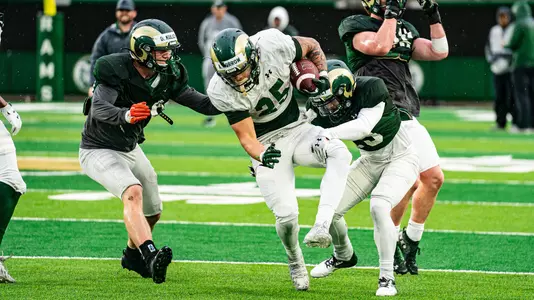
Running Backs Find Plenty of Appeal to Air Raid
4/5/2022 10:19:00 AM | Football
Carries may be down, but touches are not
FORT COLLINS, Colo. – Matt Mumme admits it's not hard to pitch the offense to quarterback recruits. Their eyes light up when told they'll throw the ball 40-50 times per game.
The same is true for head coach Jay Norvell as he searches for tall, fast, targets. All of them are enticed by the prospect of catching 50-plus passes in a season and making plays downfield.
But what do you sell a running back when the carries won't approach 20 a game? There is no workhorse in the Air Raid offense. But there is opportunity.
Ample opportunity.
"They will touch the ball. One of the biggest misnomers in our offense is our running backs don't touch the ball," Norvell said. "Our running backs actually catch the ball as much as any of our receivers, so they get their touches in other ways. We want to be able to run the ball effectively; that's important to us, and our kids are working hard at that. We're making progress."
He's not selling a bill of goods, either. Nevada's top back a year ago, Toa Taua, had nearly 50 fewer carries than did David Bailey in CSU's offense but caught nearly three times as many passes. Through it all, Taua had a 1,000-yard season, Bailey did not, and the Wolf Pack backs averaged more yards per carry.
It's why A'Jon Vivens is honestly excited about the change. He may never have another 20-carry game, but he will have games with just as many touches.
"I mean, the appeal for a running back is they just don't throw to the receivers. This is an offense that likes to score a lot," Vivens said. "You have to run the ball, so at the end of the day, I feel like this offense is so explosive and so diverse, I feel it would be appealing to a running back also who wants to put up yards rushing and receiving.
"It's been nice to have this coaching staff and their type of scheme. Coming from a receiver background, playing it the first two years, then having to play running back too ... They're more willing to put me in situations that can fit my skill set."
Avery Morrow, who came over from Nevada where he played a reserve role, didn't know exactly what he was getting into coming out of high school. As a prep, he was a 20-25 carry back, but Nevada was his only offer.
What he found when he arrived wasn't what he had known before, but he's come to love what it has to offer a running back.
"It doesn't matter what Jay Norvell tells me to do, I'm going to run through a wall for that man, just for giving me the opportunity," he said. "I love that man, and I'm not a selfish player at all. I'm going to do whatever I've got to do for the team.
"We're just as much a part of the offense as the receivers and the quarterback. Without me and my pass protection, Clay Millen can't throw the ball and people aren't catching it. I'm just as much a part of this offense. I'm a key piece, too."
While the Air Raid is pass-happy, Mumme said the goal is to still have some semblance of balance, and to be one of the top offensive teams in the nation, the goal is to average 100-150 yards per game rushing.
The Wolf Pack was on pace early in the year, but Mumme knows the sack numbers (more than 40 exceeding 200 yards in losses) and more of a reliance on throwing the ball with Carson Strong veered the offense away from the run game down the stretch.
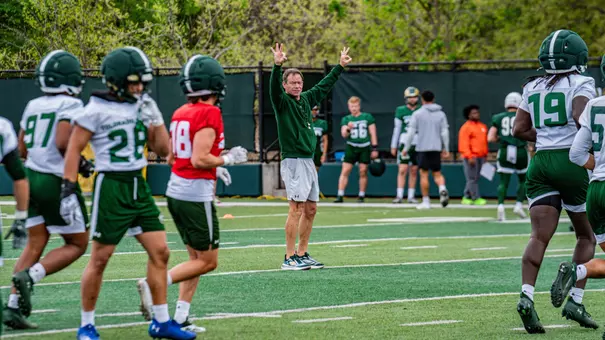
The goal is to get back to that, which is part of what the Rams are doing this spring. And for it all to work, they need complete backs.
"We want all-around backs. We want guys who are one-cut runners who can run downhill, but we also want guys who can pass protect and catch the ball out of the backfield," Norvell said. "We're getting plenty of opportunities to do that."
Morrow looks at a back like Deebo Samuel and patterns his game after him. Vivens has seen Colorado products Christian McCaffrey and Max Borghi make a name for themselves in college and the NFL by being asked to do exactly what is being requested in this offense.
The thought of being a complete back is more than appealing to them, including the pass-blocking responsibilities they shoulder.
Morrow has talks with offensive line coach Bill Best on how to be better, but also to understand what's happening on the line to grasp which threats will be sent his way. He talks with center Jacob Gardner, too, on the line calls so he's prepared.
There are some subtle nuances, but Vivens knows it's important and will make him a better player.
"It's not really a change at all. It's just learning different rules from the last offense, but at the end of the day, you learn your rules, you know who's coming," he said. "That's the thing, just getting used to the new play calls and knowing when to pass protect and when not to. Pass protection is just part of playing running back."
In their eyes, they see only benefits to their position. The offense is designed to be explosive, which requires playmakers and getting them the ball in space. That happens a lot for wide receivers, but also for the running backs.
Nevada's top three backs a year ago combined for 64 receptions. They will get the ball, and they will get it in space.
So really, what's not to like?
"I don't really get that much wear and tear on my body, and every time I get the ball, I try to make the best of my opportunity. For me, it doesn't matter if I only get the ball 15 times, I'm still going to try to get 10 yards a carry. If I get 10 carries, and I get 10 yards, that's 100 yards.
"We're a fast-passed offense, so once we get rolling it doesn't stop. That's the thing about an offense with a fast tempo. When plays get going, it gets good from there."
The same is true for head coach Jay Norvell as he searches for tall, fast, targets. All of them are enticed by the prospect of catching 50-plus passes in a season and making plays downfield.
But what do you sell a running back when the carries won't approach 20 a game? There is no workhorse in the Air Raid offense. But there is opportunity.
Ample opportunity.
"They will touch the ball. One of the biggest misnomers in our offense is our running backs don't touch the ball," Norvell said. "Our running backs actually catch the ball as much as any of our receivers, so they get their touches in other ways. We want to be able to run the ball effectively; that's important to us, and our kids are working hard at that. We're making progress."
He's not selling a bill of goods, either. Nevada's top back a year ago, Toa Taua, had nearly 50 fewer carries than did David Bailey in CSU's offense but caught nearly three times as many passes. Through it all, Taua had a 1,000-yard season, Bailey did not, and the Wolf Pack backs averaged more yards per carry.
It's why A'Jon Vivens is honestly excited about the change. He may never have another 20-carry game, but he will have games with just as many touches.
"I mean, the appeal for a running back is they just don't throw to the receivers. This is an offense that likes to score a lot," Vivens said. "You have to run the ball, so at the end of the day, I feel like this offense is so explosive and so diverse, I feel it would be appealing to a running back also who wants to put up yards rushing and receiving.
"It's been nice to have this coaching staff and their type of scheme. Coming from a receiver background, playing it the first two years, then having to play running back too ... They're more willing to put me in situations that can fit my skill set."
Avery Morrow, who came over from Nevada where he played a reserve role, didn't know exactly what he was getting into coming out of high school. As a prep, he was a 20-25 carry back, but Nevada was his only offer.
What he found when he arrived wasn't what he had known before, but he's come to love what it has to offer a running back.
"It doesn't matter what Jay Norvell tells me to do, I'm going to run through a wall for that man, just for giving me the opportunity," he said. "I love that man, and I'm not a selfish player at all. I'm going to do whatever I've got to do for the team.
"We're just as much a part of the offense as the receivers and the quarterback. Without me and my pass protection, Clay Millen can't throw the ball and people aren't catching it. I'm just as much a part of this offense. I'm a key piece, too."
While the Air Raid is pass-happy, Mumme said the goal is to still have some semblance of balance, and to be one of the top offensive teams in the nation, the goal is to average 100-150 yards per game rushing.
The Wolf Pack was on pace early in the year, but Mumme knows the sack numbers (more than 40 exceeding 200 yards in losses) and more of a reliance on throwing the ball with Carson Strong veered the offense away from the run game down the stretch.
The goal is to get back to that, which is part of what the Rams are doing this spring. And for it all to work, they need complete backs.
"We want all-around backs. We want guys who are one-cut runners who can run downhill, but we also want guys who can pass protect and catch the ball out of the backfield," Norvell said. "We're getting plenty of opportunities to do that."
Morrow looks at a back like Deebo Samuel and patterns his game after him. Vivens has seen Colorado products Christian McCaffrey and Max Borghi make a name for themselves in college and the NFL by being asked to do exactly what is being requested in this offense.
The thought of being a complete back is more than appealing to them, including the pass-blocking responsibilities they shoulder.
Morrow has talks with offensive line coach Bill Best on how to be better, but also to understand what's happening on the line to grasp which threats will be sent his way. He talks with center Jacob Gardner, too, on the line calls so he's prepared.
There are some subtle nuances, but Vivens knows it's important and will make him a better player.
"It's not really a change at all. It's just learning different rules from the last offense, but at the end of the day, you learn your rules, you know who's coming," he said. "That's the thing, just getting used to the new play calls and knowing when to pass protect and when not to. Pass protection is just part of playing running back."
In their eyes, they see only benefits to their position. The offense is designed to be explosive, which requires playmakers and getting them the ball in space. That happens a lot for wide receivers, but also for the running backs.
Nevada's top three backs a year ago combined for 64 receptions. They will get the ball, and they will get it in space.
So really, what's not to like?
"I don't really get that much wear and tear on my body, and every time I get the ball, I try to make the best of my opportunity. For me, it doesn't matter if I only get the ball 15 times, I'm still going to try to get 10 yards a carry. If I get 10 carries, and I get 10 yards, that's 100 yards.
"We're a fast-passed offense, so once we get rolling it doesn't stop. That's the thing about an offense with a fast tempo. When plays get going, it gets good from there."

Players Mentioned


Thursday, May 14
Monday, May 11
Friday, May 08
Tuesday, April 28