








Colorado State University Athletics
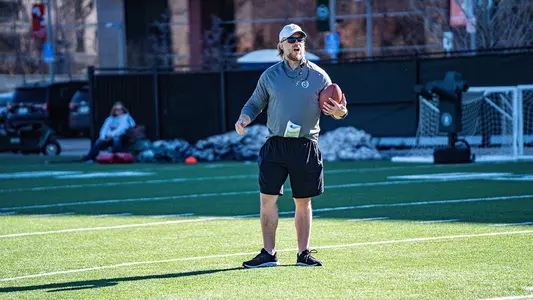
Perry Building Base for Special Teams
4/13/2023 2:00:00 PM | Football
Spring plan designed to acheive greater understanding
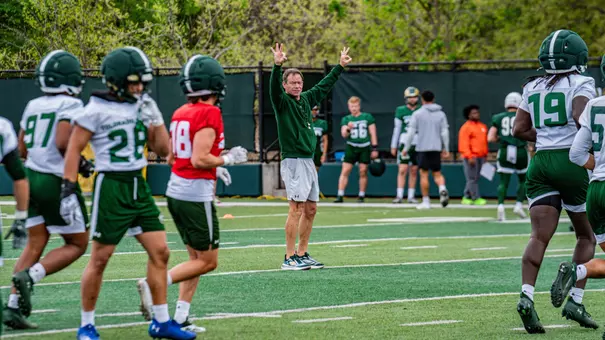
FORT COLLINS, Colo. – There's time. Tommy Perry doesn't feel like he's in a race with the clock right now.
For the special teams coach at Colorado State, who employs a unique system, there are phases of learning, and this squad is about halfway through.
"In those four phases of learning, there's screwing it up and not knowing why you're screwing it up. We've advanced beyond that," Perry said as the team exited the midway point of spring camp. "We're screwing it up now and at least we know how we're screwing it up. By the end of spring, we need to get to that point of having success and knowing why we have success."
The fourth and ultimate phase is where he wants to be by the end of fall camp, and he's confident they can get there. As opposed to last year when it was new to all the players, at least most of them have the basics down. That's helpful, because with a host of new players on hand, there's more teaching to do.
With the older set, he has some help on the field. That fourth step will be important heading into the opener.
"We're doing it right and we don't even realize we're doing it right," Perry said with a laugh. "That's where we've got to try to get to. We're keeping it to the basics, because we're introducing a lot of new blood and we're going to be doing the same thing in the summer. What I'm really looking forward to is the guys coming back, the guys who have the experience, taking that leadership role of explaining this is exactly what it's supposed to look like, watch me, let me show you. Did you see how that happened? That's why we do this and why we do that."
Linebacker Chase Wilson has been vital in that regard, said Perry, as have safeties Henry Blackburn and Jack Howell. There are newcomers he's impressed with, as well. They may not know exactly what they're doing – such as true freshman Kennedy McDowell and transfer defensive back Dominic Morris -- but they make mistakes with maximum effort. That's the type of attitude Perry can work with, and the one which caught McDowell of guard.
Moving from a high school team to a college program within a two-month frame can be jarring, and it's hard to believe all the stories until you're in the mix.
"It's the seriousness. It's how serious they take special teams here," McDowell said. "It was nothing in high school. Everybody kind of BS'd it a little bit, but here it's a serious thing. That's how you win the games. It's really important.
"Honestly, a lot of my high school coaches had said that would be the quickest way to play, and I never really believed them. Now that I'm here, now I know that's the quickest way to get on the field."
The Rams start with the top performers when it comes to filling the roles on the units, even if it may add to the load for the player. The truth is, the top players want to be on the field as much as possible and special teams is a way to make an additional impact. For most of them, the block they throw or shed may not be seen, but it makes a difference in field position.
Which is why Blackburn is so keen on playing on as many units as he can. And why he's so in tune with passing along Perry's teachings.
"I love special teams. That's the most fun part of the game," Blackburn said. "You can go fly down and hit somebody. It's the part of the game where you're playing with so much space. It's where real football is played and you can run, you can hit and do everything you need to do on special teams. I think it's the most fun phase of the game.
"There's a lot of detail that goes into special teams. That's a huge part of the game. Honestly, it's probably the most important phase of the game as far as field position and explosive plays go, so we have to take a lot of detail into that and have really good fundamentals on special teams."
What Perry brought in, and what head coach Jay Norvell wanted him to teach, isn't run-of-the-mill stuff, but Perry said it doesn't have to be that complex. It's not rocket science, but understanding is necessary for the correct reaction to take place. For him, the meeting room is an instrumental part, and it's also where he's seen the most growth.
Having the brunt of the roster learning it for a second time has helped.
"It's an either-or deal. Either he does this, and I do that, or he does this, and I do that. That's it. There doesn't need to be a laundry list of 20 different things we can do," Perry said. "Based on this alignment, based on this call, they're going to do this or that. This or that needs to be in front of the head. The scrimmage was nice because it was a lot more game like doing offense, defense then we have to punt. Then we have to kickoff. That trains the mind even more so than in regular practice. Now we have to shift gears.
"I do think the meetings have gotten much, much better. The attention to detail, the note taking, sitting up, being on time, I can tell it's important."
What he wants is the players asking the necessary questions, and at the end of almost every practice, Norvell is telling his roster that's what they need to be preparing. Not just in their position rooms, but in the bigger rooms of the three phases.
They are starting to come more frequently, which Perry views as a positive sign. When it's his turn to quiz his players, that's where Blackburn has noticed the biggest change.
"Last year he was teaching more. He was slower and being more patient with us," Blackburn said. "Now, when he asks a question, he expects the whole room to answer at the exact same time with the same verbiage that he uses. That's the expectation now, where compared to last year we were learning, and he was being patient with us. Now we're all expected to know right away what the answer to the question is and what technique is used."
McDowell admits his head is spinning, about all of it. About being a first-time college player, learning a defense and trying to work his way on the specialty units. Everything he's done has impressed the staff, who feel he can be a player who helps sooner rather than later.
But when he asks his questions, he picks his spots. And his targets.
"The older players, all they tell me is just ask questions. They understand and they were in the same position," McDowell said. "They tell me to just ask questions because we know your head is spinning. I try not to ask as many questions to Coach Perry, because I'm scared of Coach; Coach is a very scary guy. I try to ask maybe five questions a day, especially when I'm on the field. I'm a tactile learner; I learn as I do. I can't just hear it and see it and learn, I have to do it myself. After I do get a couple of reps then I ask the questions of if I did this right and it makes me better."
Perry's goals for the spring are to get the basics down. Spring will be simple to get them all on the same page, then the fall will be used to get into game specifics.
He figures he will have a good idea on who he can trust coming out of camp, with the intent he needs to deepen the talent pool when they return in the summer. Not just fall camp, but during captain's practices. The team gradually improved in the third phase a season ago, doing so through a string of injuries and defections which altered the groups on the field on a weekly basis.
Every season, alterations will be forced, and he wants the second – even the third line – to be ready to step in without diminishing returns.
"They all need to understand the nomenclature. They all need to understand the vocabulary we use," he said. "We're not really getting into any special situations; we're really trying to keep it as simple as possible. If I can get a solid one-deep in the spring of guys I can trust, that's great. As we get younger guys, we can build a two-deep and even it out. We've already had a couple of guys get nicked up and knocked down. If you're a two on special teams, you're basically a one. That is one of the positives, we have a few practices left and opportunities for guys who typically don't get a lot of reps and show they can get some stuff done."
Phase by phase, Perry believes they'll get there. It may lead to some frustrating moments at times, but he does see the teaching starting to take hold. Every day at practice provides another chance to run through it again and teach, and each day he's seeing positive steps.
Eventually, the Rams may start to hear the tick of the clock, but that isn't in the spring. Right now, some of them don't even look at the hands on the dial.
"A lot of guys are there. We just have to bring everybody along with us," Blackburn said. "We need everybody on the same page. Special teams is both sides of the ball, everybody playing at the same time. A lot of guys are there already and know it like the back of their hand, but it just needs to be a collective thing where everybody is on the same page at the same time."
For the special teams coach at Colorado State, who employs a unique system, there are phases of learning, and this squad is about halfway through.
"In those four phases of learning, there's screwing it up and not knowing why you're screwing it up. We've advanced beyond that," Perry said as the team exited the midway point of spring camp. "We're screwing it up now and at least we know how we're screwing it up. By the end of spring, we need to get to that point of having success and knowing why we have success."
The fourth and ultimate phase is where he wants to be by the end of fall camp, and he's confident they can get there. As opposed to last year when it was new to all the players, at least most of them have the basics down. That's helpful, because with a host of new players on hand, there's more teaching to do.
With the older set, he has some help on the field. That fourth step will be important heading into the opener.
"We're doing it right and we don't even realize we're doing it right," Perry said with a laugh. "That's where we've got to try to get to. We're keeping it to the basics, because we're introducing a lot of new blood and we're going to be doing the same thing in the summer. What I'm really looking forward to is the guys coming back, the guys who have the experience, taking that leadership role of explaining this is exactly what it's supposed to look like, watch me, let me show you. Did you see how that happened? That's why we do this and why we do that."
Linebacker Chase Wilson has been vital in that regard, said Perry, as have safeties Henry Blackburn and Jack Howell. There are newcomers he's impressed with, as well. They may not know exactly what they're doing – such as true freshman Kennedy McDowell and transfer defensive back Dominic Morris -- but they make mistakes with maximum effort. That's the type of attitude Perry can work with, and the one which caught McDowell of guard.
Moving from a high school team to a college program within a two-month frame can be jarring, and it's hard to believe all the stories until you're in the mix.
"It's the seriousness. It's how serious they take special teams here," McDowell said. "It was nothing in high school. Everybody kind of BS'd it a little bit, but here it's a serious thing. That's how you win the games. It's really important.
"Honestly, a lot of my high school coaches had said that would be the quickest way to play, and I never really believed them. Now that I'm here, now I know that's the quickest way to get on the field."
The Rams start with the top performers when it comes to filling the roles on the units, even if it may add to the load for the player. The truth is, the top players want to be on the field as much as possible and special teams is a way to make an additional impact. For most of them, the block they throw or shed may not be seen, but it makes a difference in field position.
Which is why Blackburn is so keen on playing on as many units as he can. And why he's so in tune with passing along Perry's teachings.
"I love special teams. That's the most fun part of the game," Blackburn said. "You can go fly down and hit somebody. It's the part of the game where you're playing with so much space. It's where real football is played and you can run, you can hit and do everything you need to do on special teams. I think it's the most fun phase of the game.
"There's a lot of detail that goes into special teams. That's a huge part of the game. Honestly, it's probably the most important phase of the game as far as field position and explosive plays go, so we have to take a lot of detail into that and have really good fundamentals on special teams."
What Perry brought in, and what head coach Jay Norvell wanted him to teach, isn't run-of-the-mill stuff, but Perry said it doesn't have to be that complex. It's not rocket science, but understanding is necessary for the correct reaction to take place. For him, the meeting room is an instrumental part, and it's also where he's seen the most growth.
Having the brunt of the roster learning it for a second time has helped.
"It's an either-or deal. Either he does this, and I do that, or he does this, and I do that. That's it. There doesn't need to be a laundry list of 20 different things we can do," Perry said. "Based on this alignment, based on this call, they're going to do this or that. This or that needs to be in front of the head. The scrimmage was nice because it was a lot more game like doing offense, defense then we have to punt. Then we have to kickoff. That trains the mind even more so than in regular practice. Now we have to shift gears.
"I do think the meetings have gotten much, much better. The attention to detail, the note taking, sitting up, being on time, I can tell it's important."
What he wants is the players asking the necessary questions, and at the end of almost every practice, Norvell is telling his roster that's what they need to be preparing. Not just in their position rooms, but in the bigger rooms of the three phases.
They are starting to come more frequently, which Perry views as a positive sign. When it's his turn to quiz his players, that's where Blackburn has noticed the biggest change.
"Last year he was teaching more. He was slower and being more patient with us," Blackburn said. "Now, when he asks a question, he expects the whole room to answer at the exact same time with the same verbiage that he uses. That's the expectation now, where compared to last year we were learning, and he was being patient with us. Now we're all expected to know right away what the answer to the question is and what technique is used."
McDowell admits his head is spinning, about all of it. About being a first-time college player, learning a defense and trying to work his way on the specialty units. Everything he's done has impressed the staff, who feel he can be a player who helps sooner rather than later.
But when he asks his questions, he picks his spots. And his targets.
"The older players, all they tell me is just ask questions. They understand and they were in the same position," McDowell said. "They tell me to just ask questions because we know your head is spinning. I try not to ask as many questions to Coach Perry, because I'm scared of Coach; Coach is a very scary guy. I try to ask maybe five questions a day, especially when I'm on the field. I'm a tactile learner; I learn as I do. I can't just hear it and see it and learn, I have to do it myself. After I do get a couple of reps then I ask the questions of if I did this right and it makes me better."
Perry's goals for the spring are to get the basics down. Spring will be simple to get them all on the same page, then the fall will be used to get into game specifics.
He figures he will have a good idea on who he can trust coming out of camp, with the intent he needs to deepen the talent pool when they return in the summer. Not just fall camp, but during captain's practices. The team gradually improved in the third phase a season ago, doing so through a string of injuries and defections which altered the groups on the field on a weekly basis.
Every season, alterations will be forced, and he wants the second – even the third line – to be ready to step in without diminishing returns.
"They all need to understand the nomenclature. They all need to understand the vocabulary we use," he said. "We're not really getting into any special situations; we're really trying to keep it as simple as possible. If I can get a solid one-deep in the spring of guys I can trust, that's great. As we get younger guys, we can build a two-deep and even it out. We've already had a couple of guys get nicked up and knocked down. If you're a two on special teams, you're basically a one. That is one of the positives, we have a few practices left and opportunities for guys who typically don't get a lot of reps and show they can get some stuff done."
Phase by phase, Perry believes they'll get there. It may lead to some frustrating moments at times, but he does see the teaching starting to take hold. Every day at practice provides another chance to run through it again and teach, and each day he's seeing positive steps.
Eventually, the Rams may start to hear the tick of the clock, but that isn't in the spring. Right now, some of them don't even look at the hands on the dial.
"A lot of guys are there. We just have to bring everybody along with us," Blackburn said. "We need everybody on the same page. Special teams is both sides of the ball, everybody playing at the same time. A lot of guys are there already and know it like the back of their hand, but it just needs to be a collective thing where everybody is on the same page at the same time."

Players Mentioned

DB
/ Football
DB
/ Football
DL
/ Football
DB
/ Football
LB
/ FootballThursday, May 14
Monday, May 11
Friday, May 08
Tuesday, April 28