







Colorado State University Athletics
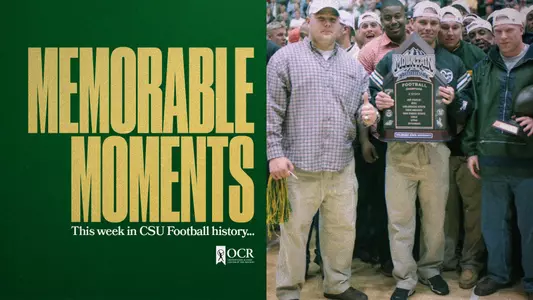
Memorable Moments: How the Mountain West Was Won
8/29/2024 2:00:00 PM | Football
Rams christened new conference with a title
It has been 25 years since the Mountain West was formed, and as we kick off the 132nd season of CSU football, we look back on those early days and how the conference was established, led by two CSU legends.
On Tuesday, May 26, 1998, CSU athletic director Tim Weiser came into assistant athletic director/sports information director Gary Ozzello's office to tell him CSU President Dr. Albert Yates needed to see them at noon. Ozzello's first question was, "who is getting fired?" because when you had to see the president right away, it was big news. Dr. Yates did have big news as the two men sat down in the president's office.
Dr. Yates handed over a press release to both Weiser and Ozzello saying to them, "We are releasing this at 3 p.m. today guys, look it over for any changes."
Ozzello, dumbfounded at what he read, looked at the paper again and again in near disbelief. The press release stated eight schools from the Western Athletic Conference, including CSU, had decided to split from the 16-member organization to form a new intercollegiate athletic conference.
The split stemmed from two major issues which started when the WAC grew into the NCAA's largest Division I athletic conference at the time. First, athletic directors had decided to realign the WAC which would have eliminated great rivalries, most notably CSU and Air Force. With so many teams to play against in one conference, the possibility that students might never have the chance to play great rivals like BYU, Utah and Air Force over a four-year period existed. The 1996 season created the first interruption in the CSU/Utah rivalry since 1976 and a possibility that the Rams might not play the Falcons arose, which could have interrupted the in-state rivalry for the first time since 1977. The possibility rivalries could be lost made Dr. Yates and other WAC member university presidents upset.
The other main reason for the split stemmed from poor financial support in the conference by other schools. Colorado State and BYU made it to multiple bowl games, but because they had to split the revenue between 15 other schools, they lost money on their post-season games. Television contracts also played a key role with revenue being split.
Less than two weeks prior to the May 26th announcement, Dr. Yates and four other WAC defector presidents met at Denver International Airport to discuss their displeasure since the WAC had expanded and how they should divorce themselves from that conference. Two more schools were invited making the eight member defectors CSU, BYU, Air Force, Wyoming, New Mexico, Utah, San Diego State and WAC newcomer UNLV. They did not rule out the possibility of a ninth member school in the future.
WAC commissioner Karl Benson was shocked and amazed the schools pulled such a drastic move. Dr. Yates said in a Rocky Mountain News article, "I believe the recommendation from the athletic directors served as the lightning rod for some of us to ask some questions about the viability of a 16-team league. We look on this as the only viable alternative to preserve our individual athletic programs."
The schools had until September 1, 1998, to officially split from the WAC with a new unnamed conference to take effect on July 1, 1999. WAC schools and the media saw Colorado State as the instigator of the split, with Dr. Yates and his highly successful coach out in front to drive the other seven members away. Some schools had been members of the WAC since its inception in 1962, when they split from the old Mountain States Conference in a similar manner.
For the first time in 31 seasons, the Colorado State football team, along with all other sports, opened the 1999 season in a new athletic conference. History repeated itself just as in 1937, when Harry Hughes and the Colorado State Aggies led the way to form the Mountain States Conference (also known as the Skyline Conference).
This time though, the Rams dominated the new conference compared to the 1937 Aggies who dropped to the cellar. The Rocky Mountain News rated the 1999 Rams near the top of their class as the season approached. The team received a "B" report card in the pre-season with coach Sonny Lubick a strong 'A' on the list by reporter Angel Hernandez.
Matt Newton, a junior who backed up Ryan Eslinger in 1998, started for the Rams with little experience. He had wide receivers Dallas Davis, Pete Rebstock and Frank Rice to pass to, with senior running back Kevin McDougal ready to blast his way through the opposing defensive line.
On defense, Clark Haggans and Greg Pollard anchored the front four with Ula Tuitele and Rick Crowell as exceptionally tough linebackers. In the defensive backfield, Erik Olson and Aaron Sprague led the safety positions as Justin Gallimore and Terrance Gibson rounded out the cornerbacks.
The biggest issue which faced the 1999 Rams came in the form of a then rare 12-game schedule with all seven MWC opponents and two WAC opponents that wanted revenge. Many WAC schools felt left in the lurch and wanted to beat the new Mountain West.
Sonny Lubick and his Rams did not disappoint its fans and tied with both BYU and Utah for the first Mountain West Championship in football. They repeated as the outright conference champions in 2000, making the move away from a conference that today no longer hosts football well worth a meeting in Denver's airport just more than 25 years ago.
On Tuesday, May 26, 1998, CSU athletic director Tim Weiser came into assistant athletic director/sports information director Gary Ozzello's office to tell him CSU President Dr. Albert Yates needed to see them at noon. Ozzello's first question was, "who is getting fired?" because when you had to see the president right away, it was big news. Dr. Yates did have big news as the two men sat down in the president's office.
Dr. Yates handed over a press release to both Weiser and Ozzello saying to them, "We are releasing this at 3 p.m. today guys, look it over for any changes."
Ozzello, dumbfounded at what he read, looked at the paper again and again in near disbelief. The press release stated eight schools from the Western Athletic Conference, including CSU, had decided to split from the 16-member organization to form a new intercollegiate athletic conference.
The split stemmed from two major issues which started when the WAC grew into the NCAA's largest Division I athletic conference at the time. First, athletic directors had decided to realign the WAC which would have eliminated great rivalries, most notably CSU and Air Force. With so many teams to play against in one conference, the possibility that students might never have the chance to play great rivals like BYU, Utah and Air Force over a four-year period existed. The 1996 season created the first interruption in the CSU/Utah rivalry since 1976 and a possibility that the Rams might not play the Falcons arose, which could have interrupted the in-state rivalry for the first time since 1977. The possibility rivalries could be lost made Dr. Yates and other WAC member university presidents upset.
The other main reason for the split stemmed from poor financial support in the conference by other schools. Colorado State and BYU made it to multiple bowl games, but because they had to split the revenue between 15 other schools, they lost money on their post-season games. Television contracts also played a key role with revenue being split.
Less than two weeks prior to the May 26th announcement, Dr. Yates and four other WAC defector presidents met at Denver International Airport to discuss their displeasure since the WAC had expanded and how they should divorce themselves from that conference. Two more schools were invited making the eight member defectors CSU, BYU, Air Force, Wyoming, New Mexico, Utah, San Diego State and WAC newcomer UNLV. They did not rule out the possibility of a ninth member school in the future.
WAC commissioner Karl Benson was shocked and amazed the schools pulled such a drastic move. Dr. Yates said in a Rocky Mountain News article, "I believe the recommendation from the athletic directors served as the lightning rod for some of us to ask some questions about the viability of a 16-team league. We look on this as the only viable alternative to preserve our individual athletic programs."
The schools had until September 1, 1998, to officially split from the WAC with a new unnamed conference to take effect on July 1, 1999. WAC schools and the media saw Colorado State as the instigator of the split, with Dr. Yates and his highly successful coach out in front to drive the other seven members away. Some schools had been members of the WAC since its inception in 1962, when they split from the old Mountain States Conference in a similar manner.
For the first time in 31 seasons, the Colorado State football team, along with all other sports, opened the 1999 season in a new athletic conference. History repeated itself just as in 1937, when Harry Hughes and the Colorado State Aggies led the way to form the Mountain States Conference (also known as the Skyline Conference).
This time though, the Rams dominated the new conference compared to the 1937 Aggies who dropped to the cellar. The Rocky Mountain News rated the 1999 Rams near the top of their class as the season approached. The team received a "B" report card in the pre-season with coach Sonny Lubick a strong 'A' on the list by reporter Angel Hernandez.
Matt Newton, a junior who backed up Ryan Eslinger in 1998, started for the Rams with little experience. He had wide receivers Dallas Davis, Pete Rebstock and Frank Rice to pass to, with senior running back Kevin McDougal ready to blast his way through the opposing defensive line.
On defense, Clark Haggans and Greg Pollard anchored the front four with Ula Tuitele and Rick Crowell as exceptionally tough linebackers. In the defensive backfield, Erik Olson and Aaron Sprague led the safety positions as Justin Gallimore and Terrance Gibson rounded out the cornerbacks.
The biggest issue which faced the 1999 Rams came in the form of a then rare 12-game schedule with all seven MWC opponents and two WAC opponents that wanted revenge. Many WAC schools felt left in the lurch and wanted to beat the new Mountain West.
Sonny Lubick and his Rams did not disappoint its fans and tied with both BYU and Utah for the first Mountain West Championship in football. They repeated as the outright conference champions in 2000, making the move away from a conference that today no longer hosts football well worth a meeting in Denver's airport just more than 25 years ago.

Saturday, September 12
Saturday, September 12
Monday, September 07
Monday, September 07