





Colorado State University Athletics
VAC Corner: Do you know about Julius
5/30/2010 12:00:00 AM | Football
May 30, 2010
Colorado State's athletic department on this Memorial Day weekend wishes to recognize all the men and women in our armed services, many of whom were students, who gave the last full measure of devotion so that our nation might live.
By John Hirn
ColoradoAggies.com
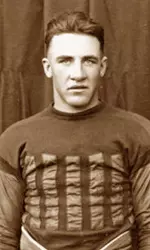
FORT COLLINS, Colo. -- Julius "Hans" Wagner spent 38 years on the CSU campus and is truly one of the greatest Aggies that ever graced the halls of the South College Gym.
A charter member of the Colorado State University Sports Hall of Fame, he attended Colorado Agricultural College from 1922-27. He earned three letters in football and four letters in wrestling, picked up all-conference honors three times in football, held conference records in shot and discus in 1925-26, and won four wrestling championships in the light-heavy and heavyweight classes.
The captain of the 1925 conference champion Colorado Aggies football team, he earned his degree in electrical engineering and joined the Aggie staff as the head wrestling coach, assistant coach of track, and assistant coach of football; he was promoted to head coach of football later in his career.
Wagner, called Hans by everyone he knew, came from Westcliffe, Colo., in 1922 and stayed on the campus as a student or coach until his untimely death in 1960. Any man that played football or was part of athletics during Wagner's life knew him as well as they knew Wagner's mentor, the legendary Harry Hughes. Hughes once said of Wagner that he was the greatest football player he ever coached and many said he was one of the finest athletes to ever come through Colorado State University.
Wagner even drew respect from legendary CU football player Kayo Lam.
"He was the best all-around athlete I ever saw...and the toughest," Lam said of Wagner, his one-time foe.
The 1946 football media guide said that he was in such good shape 19 years after his graduation from the school that, "Hans has made it a point to pin every mat protégé he has trained."
His career in athletics during the finest years of the Hughes era only added to the great football teams of the day. As a championed wrestler, Wagner utilized his abilities as a tough tackle on the Aggie line. As fine as his football skills were, Wagner was an even greater wrestler. He redefined the sport on the Aggie campus and his four conference championships as a student-athlete earned him respect throughout the Rocky Mountain region. He was a leader in both sports, team captain on the 1925 football team and popular around the campus.
Wagner's career as an accomplished athlete only began his great career as a coach and mentor at Colorado State. In 1927 he pulled triple duty as the head coach of wrestling, assistant coach of football and assistant coach of the track team.
John Mosley, the first black wrestler in school history, recognized Wagner as a pioneer in breaking the racial barrier several years before Jackie Robinson made his Major League debut with the Brooklyn Dodgers.
"Hans was tops as our coach," Mosley said. "He did not see a color line in wrestling and treated all of his athletes as equals."
In 1940, Wagner brought the first national champion athlete in school history, Gene Grenard, home from the NCAA championships. In 1948, Don "Tuffy" Mullison finished third in the NCAA championships, then repeated that third-place finish in 1949 when the NCAA championships were held at the South College Gym in Fort Collins.
In 27 years as the head wrestling coach, Wagner won 24 conference championships for the Aggies and tied two more conference championships. He was a member of the NCAA national rules committee for wrestling, inducted into the Helms Amateur Hall of Fame for wrestling and coached such Aggie legends as Fum McGraw, Ollie Woods, George Jones and Dan Sniff in the mat sport. No other coach in school history has won as many conference titles.
As a football coach, Wagner spent 15 years as Harry Hughes' right-hand man and line coach. From 1927-41, Wagner helped Hughes earn three conference football championships and in later years took on more responsibility from the legendary mentor. In 1942, when Hughes stepped down as head football coach, Wagner took over as the natural successor to the man he had spent so many years coaching under.
Ram fans will look at Wagner's football record today and wonder what happened to his teams as they returned from World War II. Mullison, a player on the 1946 football team, looked back on those years during a 1997 interview.
"They never gave Hans a chance in 1946 and kicked him out," said Mullison, who meant that alumni and boosters showed up on Wagner's doorstep to force him to resign after a dismal start to the 1946 football season.
Wagner did reluctantly resign and Hughes finished the season for him, but his ability as an assistant coach and excellence as the head wrestling coach made him a valuable asset to athletics at Colorado A&M.
In 1947, new head football coach Bob Davis appointed Wagner as the head coach of the freshman football team and lead scout. He remained as assistant to Hughes in coaching track and continued to bring home champions in wrestling.
Wagner decided after the 1955 football season that it was time to move on from coaching. He resigned all of his coaching duties and handed the head wrestling job over to Mullison in January of 1956.
In 1956, Wagner took a new job at Colorado A&M as it transitioned into Colorado State University in 1957. He decided to use his skills as an engineer and became the coordinator of the new building program as President William E. Morgan directed the school into university status.
On Aug. 29, 1960, Wagner and his brother Frank drove with their wives through Wyoming on their way back home to Colorado after a fishing trip. On a remote, gravel country road near Pinedale, Wyo., the Wagners hit an oil truck and the two men were killed instantly. Hans left behind his wife Josephine, daughter Diane and son Richard. He is buried in Grandview Cemetery in Fort Collins, not far from his mentor Harry Hughes.
Now, 50 years after his death, Wagner's great achievements in athletics can never be forgotten at Colorado State University. He left an indelible mark on the men that he coached and stood tall and proud for his Aggie teams.