





Colorado State University Athletics
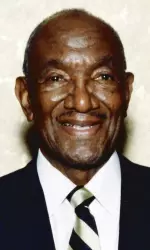
Remembering Lt. Col. John W. Mosley
5/26/2015 12:00:00 AM | Football

by John Hirn, CSU Athletics historian
Lt. Col. John W. Mosley Mentoring Program overview
He was to Colorado State University what Jackie Robinson was to Major League Baseball. On Friday May 22, Lt. Col. John W. Mosley died at the age of 93, leaving behind the ultimate legacy in diversity for CSU.
Born in Denver on June 21, 1921, Mosley graduated as valedictorian from Denver's Manual High School in 1939 and attended Colorado State College of Agriculture and Mechanic Arts (as CSU was known at that time) in the fall to study veterinary medicine.
Mosley arrived with his closest friend, Charles Cousins, and the two men settled into a house on Meldrum Street with all nine of the school's other black students. Cousins and Mosley nicknamed their group the "Lonesome Boys" because they had been segregated from the rest of campus life. They shared food and stuck together to prevent any trouble with the local authorities.
As a football star at Manual, John Mosley decided he wanted to play for the Aggies, despite both the freshman and varsity teams having all white athletes at the time. Coach Harry Hughes instructed his freshman head coach Lewis Engleberg to allow Mosley an opportunity to try out for the freshman team in 1939.
In a 2008 interview Mosley described how those early practices went when his fellow teammates realized a black athlete was trying to earn a spot on the team.
"I went to catch a ball and the next thing I knew I was waking up on the ground after being knocked unconscious by a hit from one of my own teammates," Mosley recalled. "There were not many guys that wanted me there and they thought they could intimidate me by hitting me harder and harder so I might quit."
When Mosley returned to his house that night, Charles Cousins said to him, "I told you not to play! Now quit playing before you really get hurt."
Mosley did not give up, and his talents as an athlete began to earn the respect of his peers. Mosley emphasized that it was Lewis "Dude" Dent who really helped stick up for him in his first year, and throughout his next three seasons on the varsity squad.
In 1940, Mosley made the varsity team as a fullback and continued to prove his talents on the field. Harry Hughes stood by his player and allowed Mosley the opportunity to play varsity football. He became the first black football player in the Mountain States Conference, also known as the Skyline Conference, and the first black football player at CSU since the 1905 and 1906 seasons.
Other schools in the Rocky Mountain Region outwardly accepted Mosley, but many of the athletes on those opposing teams rejected Mosley on the field.
"Opposing players would purposely hit me, hard and illegally, in order to get me to fight back," Mosley shared in that 2008 interview. "Coach Hughes told me not to fight back, but it was very difficult. However, Dent and other teammates would come in to let the opposing player know they would not put up with that kind of action. I would show him on the next play with a clean and legal hit that I knew he was there and I could fight back without being dirty."
This echoes what happened to Jackie Robinson in 1947, but it was eight years prior to Robinson's debut with the Brooklyn Dodgers. In 2008, Mosley discussed how his career at CSU compared to the early days of Jackie Robinson's baseball career. He stated that just like Robinson, the Aggie football players that did not want him on their team changed their minds once they saw that Mosley had the athletic talent to play the game.
Mosley also wrestled for Coach Hans Wagner while at CSC, and eventually earned all-conference honors in 1943. By his junior and senior years, Mosley was elected class vice president. This feat alone marked how far the Aggie students had come, considering the only nine African American students were not living on campus when Mosley arrived in 1939.
Following his 1943 graduation, Mosley entered into a legendary career in the military as a member of the acclaimed Tuskegee Airmen and became one of the first Black pilots to fly bombers in combat during both the Korean and Vietnam Wars. He retired in 1970 as a Lieutenant Colonel and continued to lead his community.
John Mosley's courage to stand up and become a prominent student-athlete and leader for the Colorado Aggies helped pave the way for other black athletes to attend Colorado A&M College immediately after World War II. George Jones, for example, came to Colorado A&M in 1946 and played football, became the first African American track athlete and basketball player in school history and was one of three black players on the 1949 Raisin Bowl team. Then men like Eddie Hanna, Alfred Dawson, Alex Burl and many more came to Fort Collins to be given a chance to play their sports at a time when many colleges around the country still prevented them from playing.
John Mosley was inducted into the CSU Sports Hall of Fame in 1998 and the Colorado Sports Hall of Fame in 2009.
In 2011 CSU established the Lt. Col. John Mosley Student-Athlete Mentoring program. The program is designed to assist student-athletes by serving as a resource while strengthening time-management skills, encouraging academic success, enhancing leadership opportunities and creating a sense of belonging and connection to the campus and its surrounding community.
Colorado State University has lost one of its greatest men, but his legacy, much like the legacy of Jackie Robinson, will continue to live on with current and future Rams for decades to come.
The funeral service for Mosley is scheduled for Saturday, May 30, at 11 a.m., at New Hope Baptist Church in Denver (3701 Colorado Blvd.). According toThe Denver Post, Mosley's son Eric said his father would have preferred to see donations in lieu of flowers to the John and Edna Scholarship Fund, run by the Denver Foundation, or to the Mile High Flight Program run by the Hubert L. "Hooks" Jones local chapter of the Tuskegee Airmen Inc."