

Colorado State University Athletics
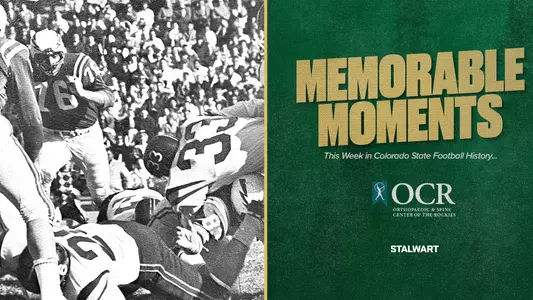
Memorable Moments: Air Force
10/26/2023 2:00:00 PM | Football
Rams and Falcons Played last Collegiate Game at DU Stadium Ending an Era of football
Few fans remember the Air Force Falcons played their first six seasons at the University of Denver's stadium, also known as Hilltop Stadium. When the Academy was founded, it was first housed at Lowry Air Force Base until the current campus was completed in Colorado Springs. So, naturally it made sense for the Falcons to play their home football games in Denver and rent out DU Stadium.
On Nov. 4, 1961, the CSU Rams, amid the worst losing streak in the nation and in school history, traveled to Denver to take on the Falcons in their home finale at DU Stadium. The University of Denver football program had been dropped after the 1960 football season, making the Falcons the lone collegiate tenant at the 35-year-old facility. Air Force was not the only football team that played at DU Stadium; the AFL Denver Broncos used the stadium during pre-season games while the Denver Bears finished the baseball season.
As the Rams and Falcons took the field, nobody realized it would be the last time two college teams would play on the hallowed grounds of the DU campus. The venerable old stadium had seen a lot of football and other events since it opened in 1926, including the annual Fourth of July Fireworks show many Denverites couldn't miss.
DU Stadium had also been used as a neutral ground for many schools, including the Colorado Aggies who played the Colorado School of Mines, New Mexico, Colorado College and of course Air Force there. The most memorable neutral DU Stadium game for the Aggies occurred in 1931 when Harry Hughes' team took on Coach Dana Bible's University of Nebraska Cornhuskers in an unemployment relief game on December 5th. The Aggies had beat every team in the state of Colorado and Nebraska were undefeated champions of the Big 6 Conference. With the US in the midst of its worst depression in history, gate receipts helped raise money for those in need, split 50/50 to each state. Since DU Stadium was the largest football venue in Colorado, the game was naturally played there for maximum benefits.
Although not a bowl game at the time, by today's standards it may have been looked upon as the Unemployment Bowl. Two strong teams meeting in a post-season game that had not been on either school's schedules even at the end of their seasons. The Aggies, behind Albert "Red" White, Lora McDonald and sophomore Glenn Morris played Nebraska tougher than they ever had in school history. Leading 7-0 by the third quarter, the Aggies ran out of gas as the Cornhuskers, stacked with All-American Hugh Rhea and George Saur, overcame the smaller green and gold team winning 20-7.
DU Stadium was built as the largest stadium in Colorado just two years after Folsom Field in Boulder. Many fans remember the massive gothic statues that adorned the entrance to the west stands and the half circle shaped stands themselves, not to mention light poles added that stood in front of the stands, blocking the view of some. (New lights replaced years later were located behind the stands).
The Aggies and Pioneers played 25 consecutive games against DU from 1926 to 1952 at DU Stadium, the most road games CSU has ever played in a row. The reason, it always helped with the gate receipts for a school that needed a split of the home team's attendance.
Hughes also had two anniversary celebrations at DU Stadium, marking his 25th and 30th years as the Aggies head coach. Hughes and his men also played the first night game in school history on the DU Stadium turf against what is now Regis University. In 1940, the Aggies played a third of their games at DU Stadium, the most CSU has played at an off-campus facility in one year.
On Nov. 30, 1957, the Colorado State University football team played the Air Force Falcons at DU Stadium for the first time. Air Force became the sixth school CSU had played on the hallowed grounds of the Denver campus. That 1957 contest was a win over the young Falcons, but the Rams would not beat Air Force again until 1966.
By 1960, the University of Denver decided it did not wish to put so much money toward football and the administration dropped the program after the last game of the 1960 season, coincidentally the last game was played against CSU. One year later, CSU faced Air Force at the venerable old stadium, another loss during the darkest days of CSU football when it lost 26 games in a row over three seasons. The Rams faced Air Force in the first game of the 1962 season, opening Falcon Stadium. So, the Rams and Falcons played the last game at one college stadium and the first at another.
CSU is the only school in Colorado to play the last college football game at three different Colorado stadiums; DU Stadium (1961), Mile High Stadium (2000) and Hughes Stadium (2016). DU Stadium continued to house the Broncos for seven pre-season games and two regular season games until Bears Stadium was expanded and renamed Mile High Stadium in 1968. The University of Denver finally demolished their football stadium 11 years after dropping football, in 1971. Today the site is the home of DU Tennis and Soccer, no remnants of the old field can be seen, or the memories of great football played there.
On Nov. 4, 1961, the CSU Rams, amid the worst losing streak in the nation and in school history, traveled to Denver to take on the Falcons in their home finale at DU Stadium. The University of Denver football program had been dropped after the 1960 football season, making the Falcons the lone collegiate tenant at the 35-year-old facility. Air Force was not the only football team that played at DU Stadium; the AFL Denver Broncos used the stadium during pre-season games while the Denver Bears finished the baseball season.
As the Rams and Falcons took the field, nobody realized it would be the last time two college teams would play on the hallowed grounds of the DU campus. The venerable old stadium had seen a lot of football and other events since it opened in 1926, including the annual Fourth of July Fireworks show many Denverites couldn't miss.
DU Stadium had also been used as a neutral ground for many schools, including the Colorado Aggies who played the Colorado School of Mines, New Mexico, Colorado College and of course Air Force there. The most memorable neutral DU Stadium game for the Aggies occurred in 1931 when Harry Hughes' team took on Coach Dana Bible's University of Nebraska Cornhuskers in an unemployment relief game on December 5th. The Aggies had beat every team in the state of Colorado and Nebraska were undefeated champions of the Big 6 Conference. With the US in the midst of its worst depression in history, gate receipts helped raise money for those in need, split 50/50 to each state. Since DU Stadium was the largest football venue in Colorado, the game was naturally played there for maximum benefits.
Although not a bowl game at the time, by today's standards it may have been looked upon as the Unemployment Bowl. Two strong teams meeting in a post-season game that had not been on either school's schedules even at the end of their seasons. The Aggies, behind Albert "Red" White, Lora McDonald and sophomore Glenn Morris played Nebraska tougher than they ever had in school history. Leading 7-0 by the third quarter, the Aggies ran out of gas as the Cornhuskers, stacked with All-American Hugh Rhea and George Saur, overcame the smaller green and gold team winning 20-7.
DU Stadium was built as the largest stadium in Colorado just two years after Folsom Field in Boulder. Many fans remember the massive gothic statues that adorned the entrance to the west stands and the half circle shaped stands themselves, not to mention light poles added that stood in front of the stands, blocking the view of some. (New lights replaced years later were located behind the stands).
The Aggies and Pioneers played 25 consecutive games against DU from 1926 to 1952 at DU Stadium, the most road games CSU has ever played in a row. The reason, it always helped with the gate receipts for a school that needed a split of the home team's attendance.
Hughes also had two anniversary celebrations at DU Stadium, marking his 25th and 30th years as the Aggies head coach. Hughes and his men also played the first night game in school history on the DU Stadium turf against what is now Regis University. In 1940, the Aggies played a third of their games at DU Stadium, the most CSU has played at an off-campus facility in one year.
On Nov. 30, 1957, the Colorado State University football team played the Air Force Falcons at DU Stadium for the first time. Air Force became the sixth school CSU had played on the hallowed grounds of the Denver campus. That 1957 contest was a win over the young Falcons, but the Rams would not beat Air Force again until 1966.
By 1960, the University of Denver decided it did not wish to put so much money toward football and the administration dropped the program after the last game of the 1960 season, coincidentally the last game was played against CSU. One year later, CSU faced Air Force at the venerable old stadium, another loss during the darkest days of CSU football when it lost 26 games in a row over three seasons. The Rams faced Air Force in the first game of the 1962 season, opening Falcon Stadium. So, the Rams and Falcons played the last game at one college stadium and the first at another.
CSU is the only school in Colorado to play the last college football game at three different Colorado stadiums; DU Stadium (1961), Mile High Stadium (2000) and Hughes Stadium (2016). DU Stadium continued to house the Broncos for seven pre-season games and two regular season games until Bears Stadium was expanded and renamed Mile High Stadium in 1968. The University of Denver finally demolished their football stadium 11 years after dropping football, in 1971. Today the site is the home of DU Tennis and Soccer, no remnants of the old field can be seen, or the memories of great football played there.
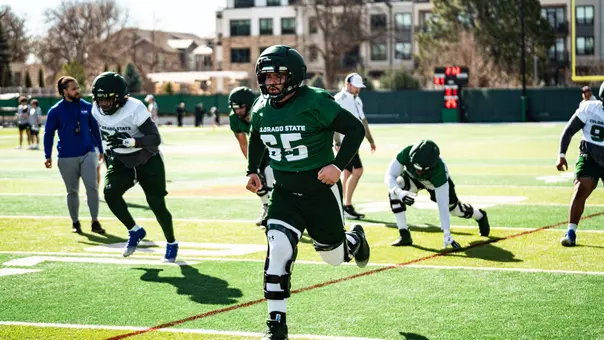
Colorado State Football: K'saan Farrar - 2026 Spring Scrimmage #1
Saturday, March 28
Colorado State Football: Oumar Diomande - 2026 Spring Scrimmage #1
Saturday, March 28
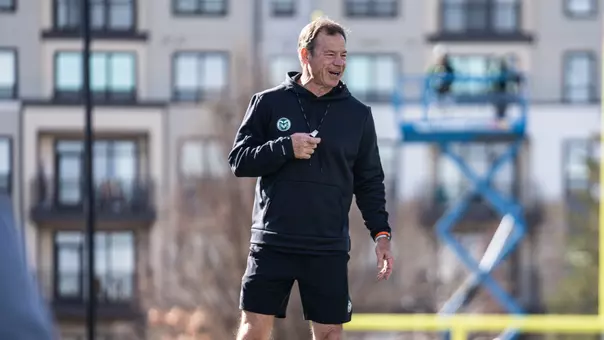
Colorado State Football: Jim Mora - 2026 Spring Scrimmage #1
Saturday, March 28
Rams Live Exclusive - Spring Football Preview
Tuesday, February 24